
Tiwa Savage's Foundation Brings Berklee to Lagos: 120 Trained, 18 Win Scholarships
Tiwa Savage, one of Africa's most celebrated musical exports, is turning her global success into a pipeline for the continent's next generation of stars. Through her newly launched Tiwa Savage Music Foundation, the Afrobeats icon has brought together over 100 aspiring artists in Lagos for intensive training workshops in collaboration with Berklee College of Music — and 18 of th
Tiwa Savage, one of Africa's most celebrated musical exports, is turning her global success into a pipeline for the continent's next generation of stars. Through her newly launched Tiwa Savage Music Foundation, the Afrobeats icon has brought together over 100 aspiring artists in Lagos for intensive training workshops in collaboration with Berklee College of Music — and 18 of them just won life-changing scholarships worth over $2 million.
Tiwa Savage's Foundation Brings Berklee to Lagos: 120 Artists Trained, 18 Win $2M Scholarships to Study in Boston
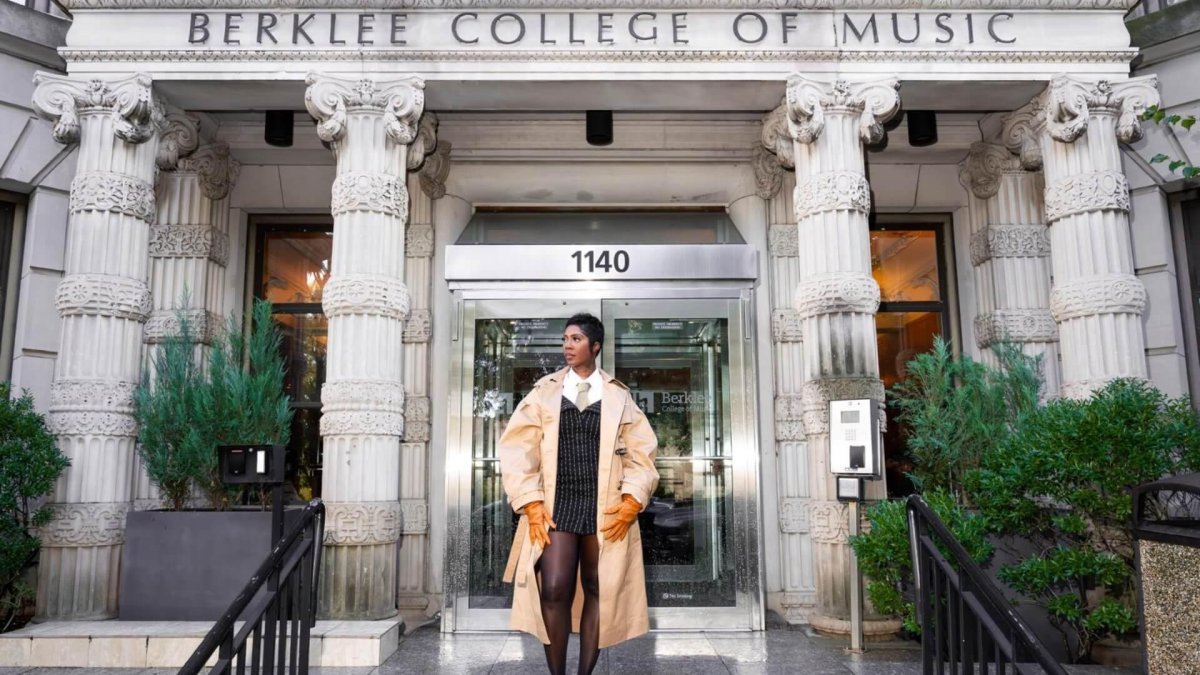
Lagos, Nigeria — June 2026 — Tiwa Savage launched the Tiwa Savage Music Foundation in February 2026 to create structured pathways for young African musicians. The foundation partnered with Berklee College of Music to host the first Berklee event ever held in West Africa. Applications opened on February 24, 2026, drawing hundreds of submissions from across Nigeria. The four-day intensive program ran from April 23 to 26, 2026, at the National Theatre in Lagos. One hundred twenty singers, songwriters, producers, and sound engineers completed the workshops. Eighteen participants received fully funded scholarships worth over two million dollars for three years of study at Berklee's Boston campus.
Building a New Model for African Music Education
The Tiwa Savage Music Foundation opened its doors in February 2026 with a clear mandate to professionalize music training inside Nigeria. Its partnership with Berklee College of Music marked the first time the Boston institution hosted a formal program in West Africa. The four-day intensive ran April 23 through 26, 2026, inside the National Theatre in Lagos. Faculty members traveled from the United States to deliver daily sessions on music production, songwriting, sound engineering, harmony, and ear training. Additional modules covered music publishing, copyright, and entertainment law. Tiwa Savage herself studied at Berklee on a scholarship, and she designed the curriculum to replicate that rigorous experience on Nigerian soil. Applications opened February 24, 2026, and closed within weeks after receiving overwhelming interest from across the country.
Participants arrived each morning at the National Theatre for hands-on instruction that combined Berklee's technical standards with the rhythmic realities of Afrobeats. Instructors emphasized both creative craft and the legal frameworks that protect artists' work once they enter the industry. The schedule left little room for theory alone; every afternoon included practical exercises in the theatre's recording spaces. By the end of day four, the 120 trainees had produced demo tracks, drafted publishing agreements, and mapped out three-year career plans. This level of detail had rarely been available inside Nigeria before the foundation's launch.
The decision to anchor the program at the National Theatre carried symbolic weight. The historic venue sits at the heart of Lagos cultural life and has hosted generations of Nigerian performers. Placing Berklee faculty inside those walls signaled that global standards could operate within familiar African spaces. Organizers arranged daily meals featuring local dishes so that participants never felt they had left home to access world-class instruction. The foundation covered all costs, removing financial barriers that often exclude talented young people from such opportunities.
Tiwa Savage attended every session and sat in on workshops alongside the students. Her presence reminded participants that the foundation's founder had once walked the same path from Lagos stages to international recognition. She answered questions about navigating major label contracts and maintaining creative control after global success. Faculty members noted that her direct involvement raised the intensity of every class. The model she created deliberately reverses the old pattern in which African artists traveled abroad for training; here the training traveled to them.
By the close of the four days, the foundation had established a repeatable template. Organizers documented every module, every faculty schedule, and every participant outcome. These records will guide future editions scheduled for other Nigerian cities and, eventually, additional African capitals. The partnership agreement with Berklee includes provisions for annual return visits, ensuring the program does not remain a one-time event.
A Historic Investment in Nigerian Talent
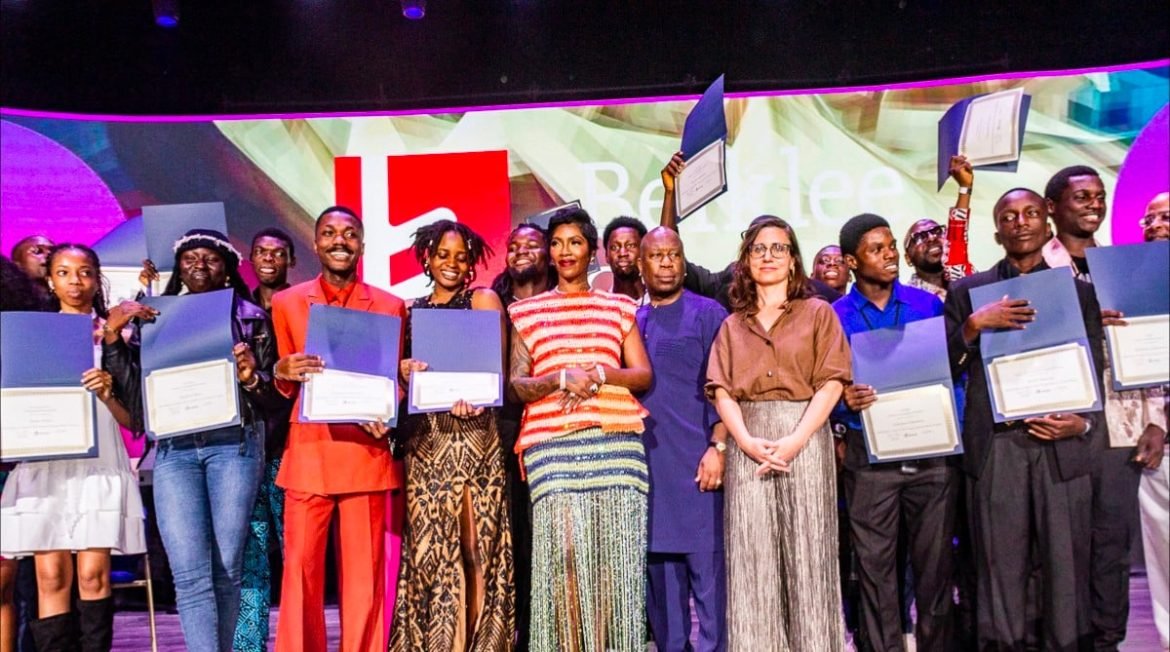
One hundred twenty participants completed the full program at the National Theatre. They represented every corner of the Nigerian music ecosystem, from emerging vocalists to established producers seeking updated skills. Berklee faculty delivered every session in person, adapting Boston coursework to the acoustics and equipment available in Lagos. At the finale on April 26, eighteen outstanding participants received fully funded scholarships totaling more than two million dollars. Each scholarship covers three years of study at Berklee's Boston campus. Lagos State Governor Babajide Sanwo-Olu attended the ceremony and addressed the graduates directly. Comedian Kiekie co-hosted the event, keeping the atmosphere celebratory while underscoring the professional stakes.
Governor Sanwo-Olu's presence signaled official recognition that music education now forms part of Lagos economic planning. He spoke about the city's growing creative sector and the need for trained professionals who can compete internationally. His administration has already committed resources to support future cohorts. The foundation views this government partnership as essential for scaling the model beyond a single event.
Tiwa Savage addressed the graduates with a statement that captured the evening's significance. She said, "Seeing 18 of our students receive life-changing scholarships to Berklee in Boston is proof that our talent is truly global. This is only the beginning of our mission." The audience responded with sustained applause that lasted several minutes. Many participants later described the moment as the first time they believed their careers could extend beyond local stages.
The scholarship recipients include singers, songwriters, producers, and sound engineers. Their departure for Boston later this year will mark the largest single cohort of Nigerian musicians ever to study at Berklee simultaneously. The foundation has arranged mentorship pairings so that each recipient maintains ties to Lagos while abroad. These connections will facilitate knowledge transfer upon their return.
Comedian Kiekie's role as co-host added levity without diminishing the ceremony's weight. She interviewed several graduates onstage, drawing out personal stories of financial hardship overcome through the free program. Her presence also attracted mainstream Nigerian media coverage that might otherwise have overlooked an educational initiative. The combination of political, artistic, and entertainment figures on one stage illustrated the broad coalition now supporting structured music training.
Bridging Global Standards and African Creativity
Damien Bracken, Dean of Admissions at Berklee, spoke at the Lagos finale about the partnership's long-term goals. He emphasized that the program prioritizes creative exploration alongside career development for African artists. Bracken noted that Berklee has long recruited African talent but had never before delivered its curriculum on the continent. The Lagos workshops tested whether the same pedagogical approach could succeed when adapted to local genres and production realities. Early results suggest the model works. Faculty members reported that participants absorbed advanced concepts in harmony and ear training faster than expected, likely because Afrobeats already demands sophisticated rhythmic awareness.
Tiwa Savage framed the initiative as an effort to "bring the world's highest standards of music education home to Nigeria." She has argued that Afrobeats now generates billions in global revenue yet still lacks formal educational infrastructure. Most successful Nigerian artists learned through informal apprenticeships or self-teaching. The foundation seeks to close that gap without requiring every talented musician to leave the continent. By hosting Berklee faculty in Lagos, the program demonstrates that rigorous training can occur inside Africa.
The need for such infrastructure extends beyond Nigeria. Across the continent, music industries in Accra, Nairobi, and Johannesburg face similar shortages of trained producers, engineers, and rights administrators. The Lagos model offers a template that could be replicated with local adaptations. Faculty members have already discussed returning to deliver shorter modules in other cities once the Boston cohort completes its first year.
Senegal provides an instructive parallel. Institutions such as the Saint-Louis Jazz Festival and the Dakar Biennale have long combined international standards with deep local traditions. Senegalese musicians trained in these environments regularly export Mbalax and other genres worldwide while maintaining strong ties to Dakar. The Tiwa Savage Music Foundation explicitly references these examples when planning its expansion. Organizers have begun conversations with Senegalese cultural bodies about joint programs that would link Lagos-trained engineers with Dakar-based festivals.
The partnership also addresses a practical bottleneck in Africa's creative economy. Many Afrobeats hits are recorded in makeshift studios because few engineers possess formal training in acoustics or mixing. The Lagos workshops included dedicated sound-engineering tracks that directly target this shortage. Participants practiced on equipment comparable to what they will encounter in Boston, reducing the learning curve once they arrive.
Tiwa Savage: From Berklee Scholar to Industry Builder
Tiwa Savage's own path began with a scholarship to Berklee. She left Lagos as a backup singer for international artists and returned with the technical foundation that propelled her to Afrobeats stardom. Her discography blends Afrobeats, R&B, and pop, earning her recognition as one of the genre's most versatile performers. She has performed on global stages and collaborated with artists across continents. That trajectory informs every decision she makes through the foundation. She understands both the creative demands of Afrobeats and the business structures required to sustain long careers.
Her decision to invest personal resources in the foundation reflects a shift among African artists who now view infrastructure building as part of their legacy. Rather than simply mentoring individuals informally, she has created an institution that will outlast any single career. The scholarship recipients will carry her influence into Boston classrooms and, eventually, back into Nigerian studios. This cycle of training and return represents a deliberate strategy to retain talent on the continent.
Tiwa Savage has repeatedly stated that "this is only the beginning." She has outlined plans for additional cohorts, regional expansions, and partnerships with African universities. Her genre-blending mastery gives her credibility when she advises students on navigating international markets while remaining rooted in African sounds. Participants frequently cite her example as proof that rigorous training and commercial success are compatible.
The foundation's launch in February 2026 coincided with a period of rapid growth for Afrobeats. Streaming platforms now report billions of streams from the genre each month. Yet most of that revenue still flows through structures controlled outside Africa. By training engineers, publishers, and lawyers alongside performers, the program aims to capture more of that value domestically. Tiwa Savage's personal experience with international contracts gives her unique authority to guide this transition.
Her public statements consistently return to the theme of collective advancement. She has described the foundation as repayment for the opportunities she received early in her career. This framing resonates with audiences across West Africa who remember when few pathways existed for musicians outside traditional patronage systems. The structured, merit-based selection process at the National Theatre marks a clear departure from those older models.
What the Scholarship Means for Africa's Creative Economy
The two-million-dollar scholarship investment represents the largest single commitment to African music education by a private foundation in recent years. Eighteen Nigerian professionals will arrive in Boston with three years of funded study ahead of them. Their training will cover every aspect of the music industry, from performance to rights management. When they return, they will bring technical skills currently scarce across the continent. This knowledge transfer could accelerate the professionalization of studios, labels, and festivals throughout West Africa.
Africa's creative economy has grown rapidly, yet formal training programs remain limited. Most producers and engineers still learn on the job. The gap becomes especially visible when Nigerian artists attempt to scale productions for global audiences that demand broadcast-quality mixes. The Boston cohort will return equipped to close that gap. Their presence in Lagos studios after graduation could raise standards industry-wide within five years.
The program also addresses the business side of music. Modules on copyright and entertainment law equipped participants to negotiate contracts and protect intellectual property. These skills matter as Afrobeats publishing deals grow more complex. The foundation expects several scholarship recipients to specialize in rights administration, creating a new class of African music executives.
Governor Sanwo-Olu's attendance at the finale underscored the economic stakes. Lagos State has identified the creative sector as a priority for job creation. Trained professionals who remain in Nigeria after their Boston studies will generate employment for others. The foundation has already begun tracking alumni outcomes to measure this multiplier effect.
Similar investments in other sectors have shown that returning professionals often launch their own training initiatives. The foundation anticipates that some of the eighteen will eventually teach future cohorts, multiplying the original two-million-dollar outlay many times over. This self-replicating structure distinguishes the program from one-off scholarships that send talent abroad permanently.
A Blueprint for the Continent
Tiwa Savage's model could inspire other African artists to invest in education infrastructure rather than solely in personal projects. The africanews video documenting the program carries the hashtag #AfThisIsCulture, signaling its broader significance for the continent. The footage shows participants moving from classroom exercises to stage performances, illustrating how global methods can enhance rather than erase African creative identities. Viewers across Senegal, Ghana, and Kenya have already contacted the foundation about replicating the format locally.
The broader cultural renaissance now visible from Dakar to Nairobi to Johannesburg gains momentum when artists build institutions. Senegal's Saint-Louis Jazz Festival and Dakar Biennale demonstrate how sustained investment in training and presentation can elevate local genres onto world stages. The Tiwa Savage Music Foundation applies similar logic to Afrobeats, a genre that already commands global attention but still lacks supporting educational systems. The Lagos workshops prove that such systems can be established without requiring every participant to emigrate.
Future editions may incorporate faculty from multiple African countries. Early discussions have included Senegalese instructors who could teach modules on rhythm traditions that intersect with Afrobeats. These cross-border exchanges would strengthen the continental network that the foundation envisions. The goal is not to centralize training in Lagos but to create nodes of excellence across the region.
The program's success also challenges assumptions about where expertise resides. Berklee faculty traveled to Lagos rather than requiring students to travel to Boston for initial training. This reversal acknowledges that African cities already host vibrant music scenes capable of hosting world-class instruction. The foundation plans to document every adaptation made during the Lagos sessions so that future hosts in other cities can avoid reinventing the same solutions.
Media coverage of the event, including the africanews segment, has reached audiences far beyond Nigeria. Young musicians in Accra and Johannesburg now inquire about application timelines for the next cycle. This visibility alone expands the pipeline of talent the foundation can draw upon in subsequent years.
The Road Ahead
The eighteen scholarship recipients will begin their studies in Boston in the coming months. The foundation has arranged pre-departure orientation sessions to prepare them for the transition. Each recipient will maintain monthly contact with Lagos-based mentors throughout their three years abroad. These connections will ensure that technical knowledge acquired in Boston translates directly into Nigerian studio practices upon return.
Tiwa Savage has committed to annual updates on the cohort's progress. She has stated that the foundation will track not only academic performance but also the professional networks the students build in the United States. Those networks could open distribution channels and publishing opportunities that benefit the wider African industry. The foundation views the Boston period as an investment in both individual careers and collective capacity.
Future workshops in Lagos will incorporate lessons from the first cohort. Organizers plan to add advanced modules on live sound reinforcement and festival production once the initial graduates return. The National Theatre has already agreed to host additional sessions, and the Lagos State government has signaled continued support. This continuity transforms a single event into an ongoing institution.
The next generation of African artists will encounter a different landscape because of these efforts. Rather than navigating informal apprenticeships alone, they will find structured programs that combine Berklee methods with African rhythmic traditions. Tiwa Savage's continued commitment ensures that the foundation will expand rather than plateau after the first successful cycle. The model she has established offers a concrete path for other artists who wish to convert personal success into lasting infrastructure.
By the time the Boston cohort completes its studies, the foundation expects to have trained several hundred additional participants through shorter Lagos workshops. This steady pipeline will gradually raise the overall skill level of Nigeria's music workforce. The long-term effect on Africa's creative economy will be measured not only in hit records but in the number of sustainable careers the industry can support. Tiwa Savage has positioned her foundation to deliver both outcomes.
By Amara Diop, Staff WriterThis article was produced with AI-assisted research and editorial support. Reporting is based on sources cited in the article.
What's Your Reaction?
 Like
0
Like
0
 Dislike
0
Dislike
0
 Love
0
Love
0
 Funny
0
Funny
0
 Wow
0
Wow
0
 Sad
0
Sad
0
 Angry
0
Angry
0

West Africa/Sahel Correspondent at Global1.News. Dakar-based journalist covering politics, security, climate, and development across Francophone and Anglophone West Africa. Tells the stories of a region undergoing profound transformation.











Comments (0)