
Tijuana welcomes Iran’s World Cup team as it crosses the border after Trump’s threats
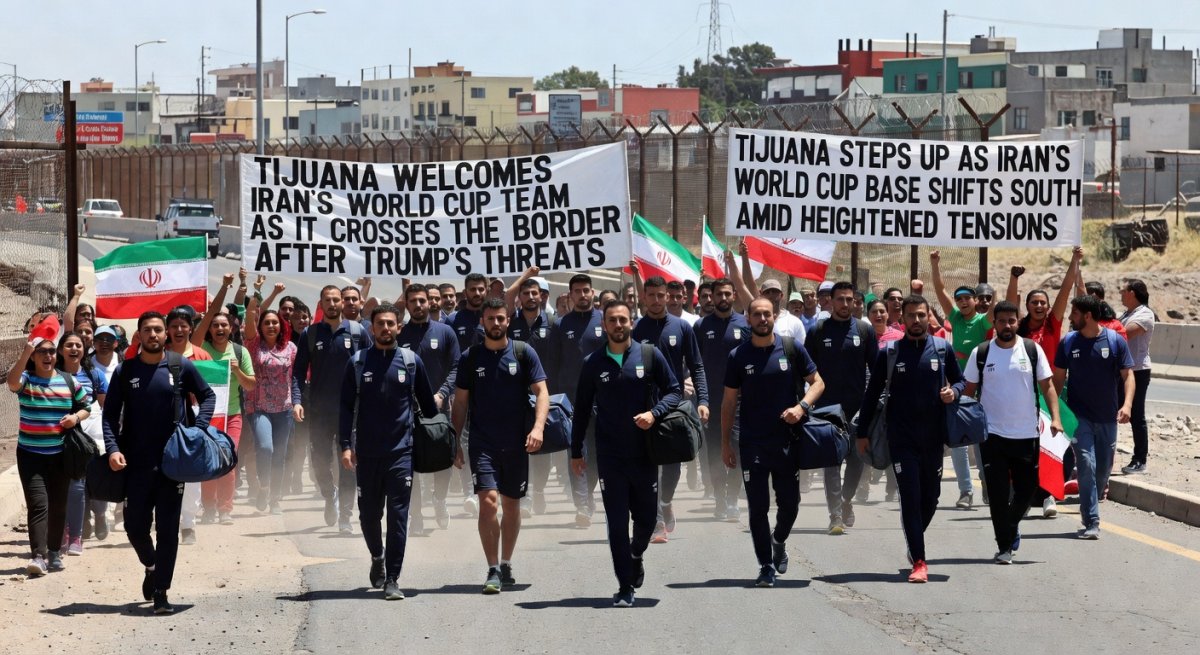
Tijuana Steps Up as Iran’s World Cup Base Shifts South Amid Heightened Tensions
In a development that underscores the intricate interplay of sports, diplomacy, and border politics, Tijuana has become the unexpected new home for Iran’s national soccer team headquarters ahead of the 2026 FIFA World Cup. Baja California state officials are now racing to finalize security protocols and logistical arrangements following FIFA’s authorization this week for the move from Arizona. The decision arrives against the backdrop of ongoing conflict in the Middle East and recent statements from U.S. political figures that raised concerns about the team’s planned presence north of the border.
The relocation highlights how international sporting events can quickly become entangled in broader geopolitical currents. For a border city like Tijuana, already accustomed to managing high-profile cross-border flows, the arrival of the Iranian squad represents both an opportunity and a complex operational challenge.
FIFA’s Relocation Decision and Its Immediate Triggers
FIFA’s approval to shift Iran’s operational base from Arizona to Tijuana reflects the governing body’s priority of ensuring a stable environment for all participating nations. The move was driven by the need to sidestep potential disruptions tied to recent U.S. political rhetoric. By placing the team in Baja California, FIFA has effectively kept the squad within the broader North American hosting region while addressing practical security considerations. Mexican authorities received the request with relatively short notice, prompting an inter-agency coordination effort involving state and municipal governments. The focus has centered on providing the Iranian delegation with secure training facilities, accommodation, and transportation links that maintain compliance with FIFA’s technical requirements.Security and Logistical Preparations in Baja California
Baja California officials are treating the assignment as a high-priority operation. Planning encompasses everything from venue access control and medical support to traffic management around training sites. Tijuana’s proximity to the U.S. border offers convenient connectivity for media and support staff, yet it also requires careful coordination with federal entities on both sides of the international boundary. The state’s experience hosting large-scale events and managing cross-border logistics provides a foundation for these arrangements. Still, the compressed timeline has required rapid identification of suitable venues and the deployment of additional personnel to meet FIFA’s standards for team security and operational smoothness.Geopolitical Context and Cross-Border Implications
The shift occurs at a moment when regional dynamics are particularly sensitive. The Middle East conflict has already influenced travel advisories and diplomatic postures across multiple continents. In this environment, the movement of a national team across an international border carries symbolic weight beyond the pitch. For Mexico, the decision reinforces its role as a co-host committed to facilitating participation for every qualified nation. Tijuana’s emergence as the base also illustrates the practical advantages of the trilateral hosting model, allowing flexibility when circumstances on one side of the border become less favorable. Observers note that such adjustments, while unusual, demonstrate the resilience built into the tournament’s organizational framework.Broader Effects on the 2026 World Cup Preparations
This episode offers an early test of how the three host countries will manage unforeseen political or security variables in the lead-up to 2026. Local governments in Mexico are gaining valuable experience in rapid-response planning that could inform future contingencies. At the same time, the situation underscores the importance of clear communication channels between FIFA, national federations, and host authorities. For fans and stakeholders, the relocation is unlikely to alter match schedules or core tournament logistics. It does, however, emphasize that successful delivery of a multi-nation World Cup requires constant adaptation to external pressures. Tijuana’s preparations will be watched closely as a model for balancing hospitality with rigorous security protocols. Looking ahead, the Iranian team is expected to establish its operations in Tijuana in the coming weeks, with training and acclimatization activities proceeding under the new arrangements. Mexican and Baja California authorities have signaled their commitment to ensuring the delegation experiences a secure and professional environment. As the tournament draws nearer, similar coordination efforts will likely become routine across all three host nations, setting precedents for how sports diplomacy can navigate an uncertain global landscape.By Rosa Martinez, Staff Writer
This article was produced with AI-assisted research and editorial support. Reporting is based on sources cited in the article.
What's Your Reaction?
 Like
0
Like
0
 Dislike
0
Dislike
0
 Love
0
Love
0
 Funny
0
Funny
0
 Wow
0
Wow
0
 Sad
0
Sad
0
 Angry
0
Angry
0

Rosa Martinez
Latin America/Andes Correspondent at Global1.News. Based in Bogota, covering politics, environment, energy, and social movements across the Andean region. Passionate about environmental journalism and communities protecting their land.














Comments (0)