
Congress passes reform allowing elections to be voided for foreign interference
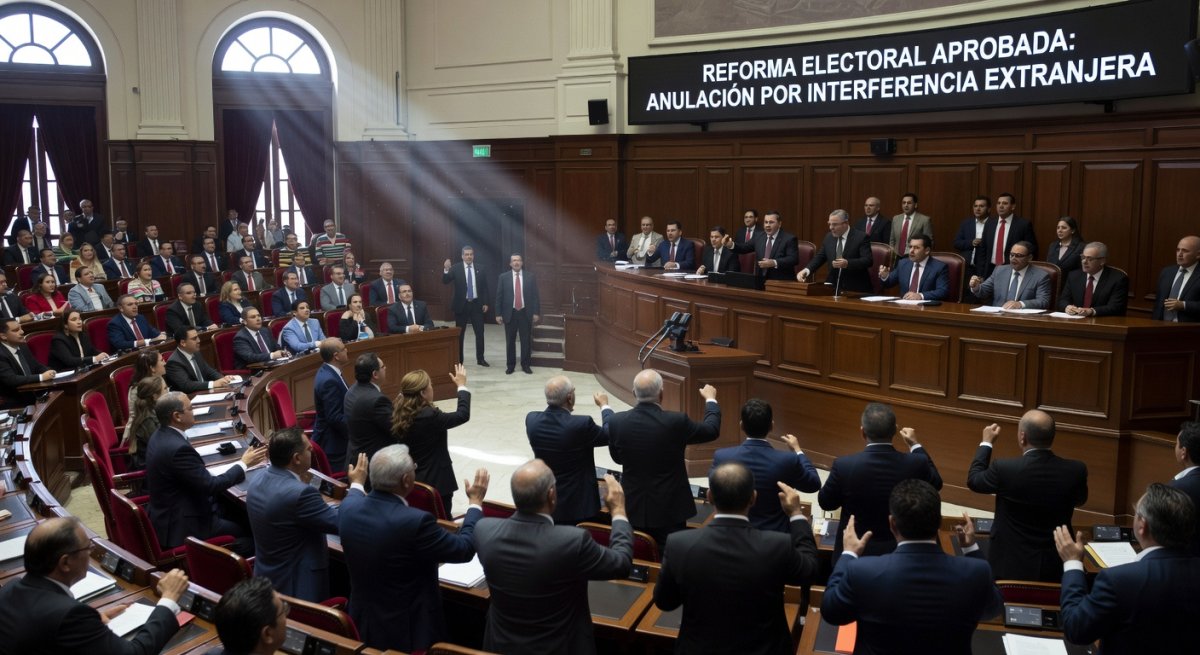
Mexico’s Congress has approved a sweeping electoral reform that empowers authorities to annul national or local election results if foreign interference is proven, marking a significant shift in how the country safeguards its democratic processes amid rising global concerns over external meddling in politics. The measure emerged from an unexpected addition to the legislative agenda and was finalized after a grueling 32-hour special session that stretched into the early hours. Sponsored by Morena Deputy Ricardo Monreal, the bill now allows courts and electoral bodies to void outcomes tainted by outside actors, a development that arrives at a time when Mexico prepares for future electoral cycles and regional tensions over information flows and influence operations continue to grow.
This reform matters because it introduces a new legal tool for protecting sovereignty at the ballot box, yet it also raises questions about enforcement thresholds, potential political weaponization, and the balance between security and open democratic participation. Lawmakers from the ruling coalition pushed the changes through with amendments that broadened the scope beyond initial drafts, reflecting both urgency and compromise in a polarized environment.
The Marathon Session That Delivered the Reform
The approval came after legislators worked through the night in an extended session that tested endurance and procedural limits. What began as a routine special sitting evolved into a 32-hour marathon once the foreign-interference provision surfaced as a late addition. Deputies debated the measure’s language, scope, and safeguards, ultimately settling on a version that integrates nullification powers into existing electoral law. Ricardo Monreal, the Morena sponsor, guided the bill through revisions that addressed concerns from opposition voices while preserving the core intent. The final text reflects heavy amendments aimed at clarifying definitions of interference and outlining the roles of the National Electoral Institute and federal courts. Observers noted that the compressed timeline limited broader public consultation, a point critics have highlighted as the reform moves toward implementation.Why Foreign Interference Provisions Now Carry New Weight
Foreign influence in elections has become a recurring theme across Latin America, with documented cases of disinformation campaigns, funding trails, and cyber activities traced to actors outside national borders. Mexico’s new framework responds to this reality by creating an explicit mechanism to respond when evidence emerges that external forces have materially altered voter information or turnout. The reform does not invent the concept of electoral integrity from scratch; instead, it codifies remedies that previously existed only in scattered regulations or international commitments. By tying annulment directly to proven foreign involvement, the law signals that sovereignty extends beyond physical borders into the digital and informational spaces where campaigns now unfold. Community leaders in border states and urban centers alike have expressed interest in how these rules might deter covert operations that could sway local races.Political Context and the Path Through Amendments
The measure’s journey through Congress revealed the fault lines that often accompany electoral legislation. Morena’s majority provided the votes needed for passage, yet the bill underwent substantial rewriting to secure enough support and address procedural objections. Amendments reportedly tightened evidentiary standards and clarified which institutions hold authority to initiate nullification proceedings. Opposition parties voiced reservations about timing and breadth, arguing that the surprise placement on the calendar left insufficient opportunity for expert testimony or regional input. Supporters countered that the urgency stems from real-time threats observed in recent regional elections elsewhere in the hemisphere. The resulting compromise text attempts to thread between robust protection and safeguards against misuse, though analysts expect litigation to test those boundaries once the law takes effect.Background on Mexico’s Evolving Electoral Safeguards
Mexico has long maintained an independent electoral authority designed to insulate vote counting from partisan pressure. Successive reforms since the 1990s strengthened transparency, introduced proportional representation elements, and expanded citizen oversight. The current change builds on that foundation by confronting a newer category of risk that existing statutes addressed only indirectly. Foreign interference concerns have surfaced in public debate through reports of coordinated social-media activity and funding patterns that cross borders. While Mexico’s institutions have monitored these developments, the absence of a clear annulment pathway limited responses to administrative sanctions or diplomatic channels. The new reform closes that gap, aligning domestic law more closely with international norms on electoral non-interference while preserving the principle that only Mexican voters decide Mexican outcomes.What Comes Next for Implementation and Oversight
With passage complete, attention now turns to the regulatory framework that will guide investigations and court proceedings. Electoral authorities must develop protocols for collecting admissible evidence of foreign involvement, a process expected to involve coordination with intelligence and cybersecurity agencies. Legal scholars anticipate early challenges that will define the precise threshold for “tainted” results and the timeline for any rerun elections. Political parties across the spectrum are already studying how the law might influence campaign strategies and international partnerships. Civil-society organizations focused on transparency have signaled plans to monitor the first applications, emphasizing the need for public reporting on any nullification cases. As Mexico moves toward its next federal and state contests, the reform’s effectiveness will be measured not only by whether it deters interference but also by whether it maintains public confidence in the fairness of the process itself.By Rosa Martinez, Staff Writer
This article was produced with AI-assisted research and editorial support. Reporting is based on sources cited in the article.
What's Your Reaction?
 Like
0
Like
0
 Dislike
0
Dislike
0
 Love
0
Love
0
 Funny
0
Funny
0
 Wow
0
Wow
0
 Sad
0
Sad
0
 Angry
0
Angry
0

Rosa Martinez
Latin America/Andes Correspondent at Global1.News. Based in Bogota, covering politics, environment, energy, and social movements across the Andean region. Passionate about environmental journalism and communities protecting their land.















Comments (0)