
The Waves of Return: Nigerians Head Home from South Africa
The Waves of Return: Nigerians Head Home from South Africa In recent days, Nigeria has joined other African nations in bringing some of its citizens back from South Africa. A flight carrying 268 Nigerians arrived in Lagos after departing Johannesburg on Thursday morning. These passengers form part of roughly 1,000 people who have registered with the Nigerian consulate in South
The Waves of Return: Nigerians Head Home from South Africa
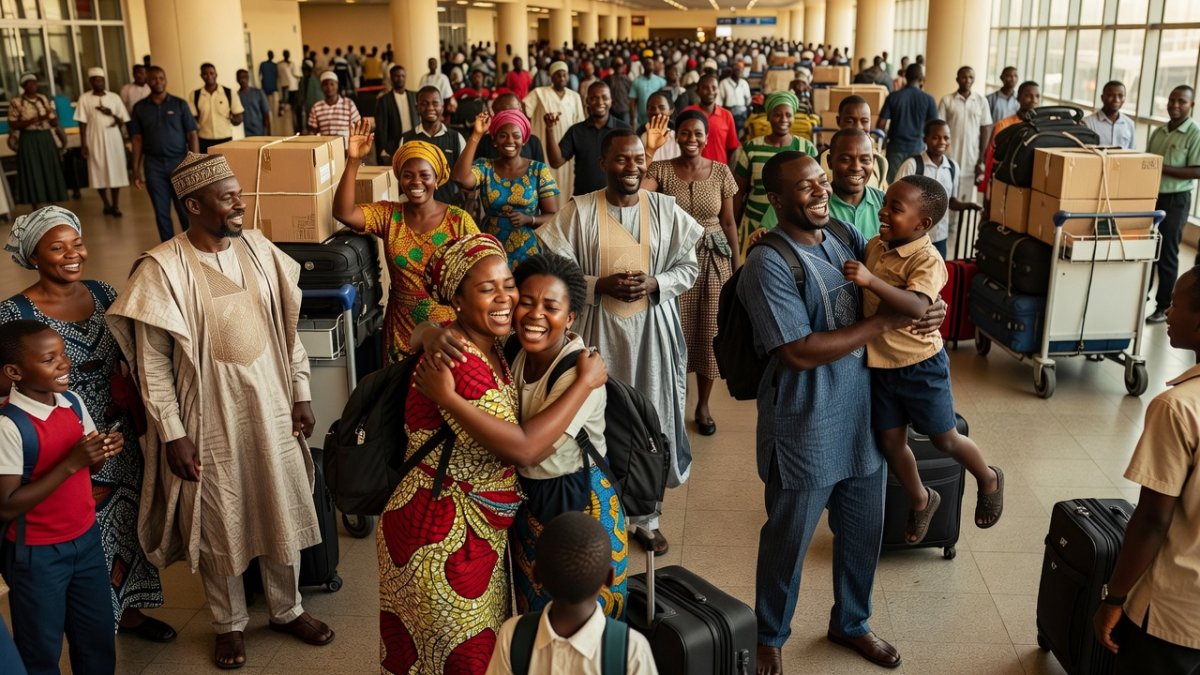
In recent days, Nigeria has joined other African nations in bringing some of its citizens back from South Africa. A flight carrying 268 Nigerians arrived in Lagos after departing Johannesburg on Thursday morning. These passengers form part of roughly 1,000 people who have registered with the Nigerian consulate in South Africa for repatriation. Ghana, Zimbabwe, and Malawi have already completed similar evacuations ahead of a 30 June deadline set by certain campaigners for undocumented migrants to depart.
Many people from across Africa arrived in South Africa around the end of white-minority rule in 1994, seeking improved opportunities. Yet with unemployment exceeding 30 percent, anti-migrant feelings have grown stronger. Protest marches have taken place in major cities, and some individuals have faced xenophobic attacks.
Voices from the Journey: Personal Stories of Displacement
At Johannesburg's main international airport, one Nigerian passenger named Justin shared his experience with the BBC. He had lived in South Africa since 1998. Justin explained that he was leaving because of the conditions given to them, including the instruction to depart on or before 30 June, and because of the way people were being killed. He said he no longer felt safe after being attacked in a taxi, where he had to run away and leave his phone and other belongings behind. He described how they were called names and told to leave the country, and how begging only led to more insults.
After arriving in Lagos, hairdresser and mother-of-three Chinwe Osuala spoke about her own encounters with violence during an earlier wave of attacks. She was personally attacked at her business premises but received help from the police when she called them. The experience left her worried about her family's future, noting that one could not walk around freely and that the children were scared. That fear for the children was the main reason she returned, even though she would miss friends who had cried when she left. She pointed out that not all South Africans are xenophobic and that some love others deeply and genuinely.
Roots of Tension: Economic Pressures and Rising Sentiments
Protesters have linked migrants to South Africa's high unemployment rate and the strain on public services such as schools and hospitals. Nigeria's Consul General in South Africa, Ninikanwa Okey-Uche, told the BBC that migrants make up less than 10 percent of the population and cannot be blamed for problems in education, health care, policing, or unemployment. She described migrants as being scapegoated for broken systems.
There are no official figures on deaths from xenophobic violence in recent weeks. Police have reported that two Mozambican men were killed in Western Cape province earlier this month, though no motive was given. Mozambican authorities stated that the death toll was higher and that their citizens had been killed as a result of xenophobia.
Official Stances and the Path Forward
The head of Nigeria's Diaspora Commission, Abike Dabiri-Erewa, explained that the country's emergency management agency would help transport returnees to destinations across Nigeria's 36 states. Returnees have received financial assistance of more than 100,000 naira, along with mobile phone credit.
A spokesman for South Africa's Border Management Agency told local television that none of the passengers on the flight had documents to live in South Africa legally. Okey-Uche noted that delays in processing applications could leave some people undocumented. She called for South African authorities to do more against those propagating xenophobic attacks and anti-foreigner sentiments, including making arrests of people who are known and not hiding, some of whom are running for election.
President Cyril Ramaphosa addressed the nation on television, announcing measures such as jailing employers who hire undocumented workers, setting up dedicated courts to speed up deportations, and creating a biometric database. He also warned South Africans against taking the law into their own hands.
A West African Lens on Continental Migration
From a Senegalese viewpoint, these returns highlight patterns of movement that many West African families know well. People cross borders seeking work and stability, yet they often encounter fresh uncertainties. The stories of Justin and Chinwe Osuala echo the quiet decisions families make when safety for children becomes the priority. In West Africa, similar choices arise when economic pressures or social tensions shift the ground beneath long-settled lives.
The fact that migrants represent less than 10 percent of South Africa's population, as noted by the consul general, reminds us that blame placed on newcomers rarely matches the actual numbers. Instead, deeper issues in services and jobs remain unaddressed. This pattern appears across the continent, where communities built over decades can feel suddenly fragile.
Pan-African Bonds in Times of Challenge
Despite the pain of departure, Chinwe Osuala spoke of South African friends who cried at her leaving and loved her genuinely. Such connections reflect the pan-African ties that survive political deadlines and street protests. As local government elections approach in November, with migration becoming a campaign topic, the need for measured leadership grows clearer.
President Ramaphosa's call against vigilante actions and the consul general's appeal for arrests of known instigators point toward paths that protect both citizens and long-term residents. For West Africans watching these events, the lesson lies in strengthening everyday solidarity so that economic hardship does not fracture the shared African story of movement, resilience, and mutual support.
By Amara Diop, Staff WriterThis article was produced with AI-assisted research and editorial support. Reporting is based on sources cited in the article.
What's Your Reaction?
 Like
0
Like
0
 Dislike
0
Dislike
0
 Love
0
Love
0
 Funny
0
Funny
0
 Wow
0
Wow
0
 Sad
0
Sad
0
 Angry
0
Angry
0

West Africa/Sahel Correspondent at Global1.News. Dakar-based journalist covering politics, security, climate, and development across Francophone and Anglophone West Africa. Tells the stories of a region undergoing profound transformation.












Comments (0)