
The Day the Nightmare Began in Sinjar
The Day the Nightmare Began in Sinjar On 3 August 2014, nineteen-year-old Shireen sat studying for her high school examinations in her family home in Sinjar, northern Iraq. Islamic State militants stormed the house without warning, tearing her from her parents and siblings in a single violent moment. Within hours she was transported to Tal Afar and sold as a sex slave to an IS
The Day the Nightmare Began in Sinjar
On 3 August 2014, nineteen-year-old Shireen sat studying for her high school examinations in her family home in Sinjar, northern Iraq. Islamic State militants stormed the house without warning, tearing her from her parents and siblings in a single violent moment. Within hours she was transported to Tal Afar and sold as a sex slave to an IS fighter. Three months later she was resold to Abu Omar in Mosul, becoming his third wife alongside two Iraqi women who lived separately yet regularly beat her. Abu Omar told her he loved her, yet subjected her to repeated rape. Shireen later reflected that such words held no meaning when accompanied by violence that destroyed her life. These personal details illustrate how IS policy of systematic sexual enslavement targeted Yazidi girls and women from the first day of the assault on Sinjar, converting individual homes into sites of abduction and trafficking.
Recognising an Ongoing Genocide Against the Yazidis
By mid-2014 IS had seized almost one-third of Iraqi territory. The United Nations later described the assault on the Yazidi religious minority as an ongoing genocide. At least 12,000 Yazidis were killed or kidnapped in the opening weeks alone. Entire villages emptied as fighters separated men for execution and women and girls for sale in markets across Tal Afar, Mosul and Raqqa. The policy was deliberate: destroy Yazidi identity through forced conversion, sexual violence and dispersal of families. Historical context reveals that Yazidis, who revere Melek Tawwus the Peacock Angel as the foremost emanation of their god Yasdan, had already endured centuries of marginalisation. IS propaganda labelled the angel the devil, compelling captives like Shireen to convert under threat of death. The scale of these crimes demanded international recognition, yet local authorities and humanitarian agencies struggled to document every case amid continuing displacement.
Dr Nagham Nawzat: From Mosul Graduate to Lifeline for Survivors
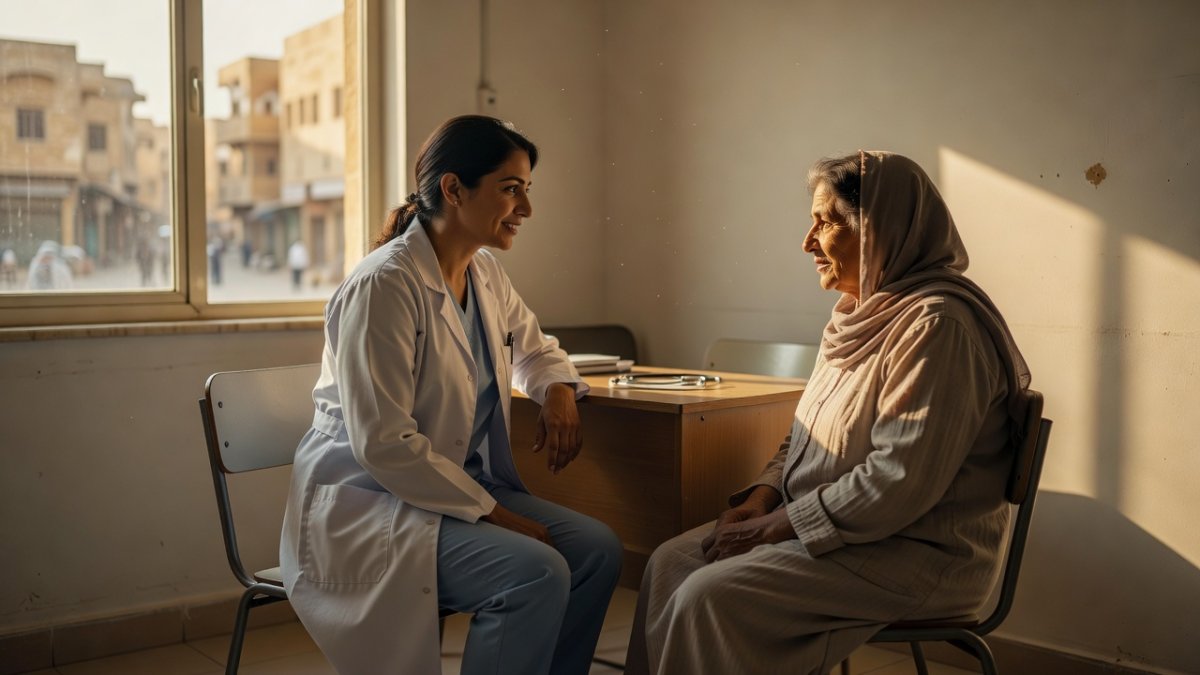
Dr Nagham Nawzat, born in Mosul in 1976 to a Yazidi family, graduated from Mosul Medical College in 2002 with a degree in gynaecology. Her lifelong ambition had been to study medicine so she could teach women about healthcare and provide them support. By July 2018 she had treated an estimated 1,200 of the 2,023 Yazidi women liberated from IS territories, according to Hussein al-Qaidi, director of the Kidnapped Affairs department at the Kurdistan Regional Government in Duhok. In March 2016 she received the International Women of Courage Award from then-US Secretary of State John Kerry. Her approach combines thorough physical examinations with attentive listening, offering survivors positive reinforcement like a big sister. This method directly addresses both the physical consequences of sexual slavery and the psychological trauma that follows years of captivity, forced labour and isolation.
The Duhok Survivors Centre: Iraq's Sole Specialised Facility
The Duhok Survivors Centre, funded by the United Nations Population Fund, remains the only facility in Iraq dedicated exclusively to gender-based violence survivors. Located in Iraq's Kurdish region, it provides a safe space where women can receive confidential medical care and counselling. Dr Nawzat conducts post-traumatic medical assessments that begin with physical check-ups and move to open conversations about fears and experiences. The centre's existence highlights gaps in national policy: despite the scale of IS crimes, specialised services for Yazidi women are concentrated in one location. Funding from UNFPA has enabled consistent operations, yet the centre's limited capacity underscores the need for broader governmental commitment. Survivors travel from across the region, often after months or years in displacement camps, seeking the integrated care unavailable elsewhere in Iraq.
Two Years of Captivity: Daily Realities Inside Abu Omar's House
Shireen spent more than two years confined to a house in Mosul. Two guards stood at the entrance; she was forbidden even to step into the garden for fresh air. Her daily routine consisted of cooking, washing dishes and cleaning for Abu Omar and his family. She was raped frequently. IS militants had already killed her uncle and many friends; her father and one sister remain missing since 2014. During captivity she was told that her faith's most revered angel was the devil, forcing her conversion to Islam. These restrictions and violations formed part of a calculated system of control that stripped women of autonomy, identity and hope. When Iraqi forces liberated Mosul in 2016, Shireen emerged physically alive yet carrying the weight of prolonged sexual violence, family loss and religious coercion that no policy document could fully capture.
Depression, Nightmares and the Slow Path Toward Healing
After release Shireen suffered severe depression and constant nightmares. Dr Nawzat sat with her, affirming that she was brave, words that helped restore a sense of self-worth. The gynaecologist's post-traumatic approach recognises that physical recovery alone cannot address the mental scars left by systematic rape and isolation. Many survivors share similar symptoms: anxiety, sleep disorders and difficulty trusting others. The centre's emphasis on listening creates space for women to speak without judgment, countering the shame IS sought to impose. Historical patterns of conflict-related sexual violence show that without sustained psychological support, survivors face lifelong impairment. Dr Nawzat's work therefore connects directly to broader human-rights obligations: states must not only rescue victims but also fund long-term care that restores dignity and enables reintegration into society.
International Recognition and the Continuing Struggle for Justice
Dr Nawzat's 2016 award from Secretary Kerry drew global attention to the Yazidi survivors' plight and to the dedicated medical professionals supporting them. Yet recognition alone does not deliver justice. Thousands of Yazidi women remain missing or unaccounted for, while perpetrators evade prosecution. The Kurdistan Regional Government's Kidnapped Affairs department continues to track cases, but coordination with federal Iraqi authorities remains uneven. Shireen's testimony, like those of more than 1,200 women treated by Dr Nawzat, forms part of the evidentiary record needed for future accountability mechanisms. From a human-rights perspective, the Yazidi experience echoes patterns seen in other conflict zones where women bear the brunt of targeted sexual violence. Sustained funding for centres like the one in Duhok, expanded legal pathways for survivors, and honest documentation of the genocide remain essential if policy is ever to match the scale of human suffering endured since August 2014.
By Fatima Al-Rashid, Staff WriterThis article was produced with AI-assisted research and editorial support. Reporting is based on sources cited in the article.
What's Your Reaction?
 Like
0
Like
0
 Dislike
0
Dislike
0
 Love
0
Love
0
 Funny
0
Funny
0
 Wow
0
Wow
0
 Sad
0
Sad
0
 Angry
0
Angry
0
Gulf/MENA Correspondent at Global1.News. Based in Doha, covering Gulf politics, energy markets, diplomacy, and development across the Middle East and North Africa. Tracks the economic transformation of the Gulf states.













Comments (0)