
Taber Billboard Fuels Alberta Separation Debate Before Vote
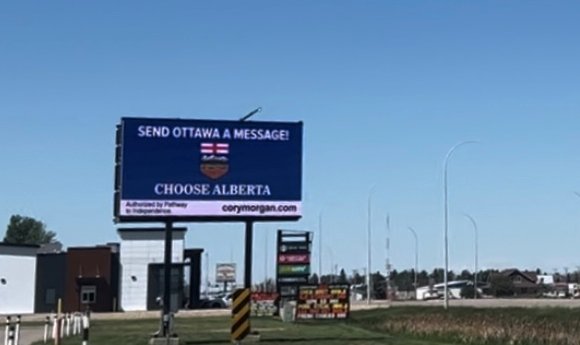
Keywords: Alberta separation, Taber billboard, Pathway to Independence, October 2026 referendum, Danielle Smith, western alienation, Canadian federalism, Cory Morgan, Naheed Nenshi, equalization payments, energy policy, national unity The Controversy Surrounding the Taber Billboard The "Choose Alberta" billboard supporting separation from Canada continues to stand off Highway 3
The Controversy Surrounding the Taber Billboard
The "Choose Alberta" billboard supporting separation from Canada continues to stand off Highway 3 in Taber, Alberta, drawing sustained attention as the date for a provincial referendum approaches. This advertisement, funded by Cory Morgan of Pathway to Independence, has become a focal point for discussions about expression and local governance in the province. Its persistence reflects ongoing debates over how communities manage political messaging in public spaces.
Placed to initiate a wider campaign, the billboard was intended as an early step while additional materials were prepared. Its visibility has instead amplified scrutiny, transforming a routine booking into a matter of principle regarding advertising rights. Observers note that such placements can quickly intersect with broader questions of regional identity and federal relations, particularly in areas with longstanding economic concerns tied to energy production.
Analysis of the situation reveals how a single advertisement can illuminate divisions within Alberta's political landscape. The sign's message aligns with sentiments that view federal policies on energy and transfers as imbalanced, echoing patterns seen in past provincial-federal frictions. This local flashpoint thus serves as an entry point for examining how individual actions connect to larger movements testing the boundaries of Canadian unity.
Further context shows the billboard campaign operates independently of official processes yet captures public interest at a critical juncture. With thousands of related lawn signs distributed across the town, the effort underscores organised grassroots activity. Such developments invite measured consideration of how early campaign visibility might shape voter engagement leading into the scheduled vote.
The Town of Taber's Official Stance
On June 3, the Town of Taber issued a statement clarifying that the billboard's views belong solely to the advertiser and do not reflect municipal positions. Following this clarification, the town requested that the sign owner remove the advertisement. This sequence illustrates the challenges local authorities face when political content appears in their jurisdictions without prior coordination.
The response highlights a distinction between tolerance for legal expression and official endorsement, a balance often navigated in Canadian municipalities. By distancing itself while seeking removal, Taber demonstrates caution about perceived alignment with contentious issues. Such actions can influence how future political advertisements are handled, potentially affecting the flow of information in community settings.
Implications extend to questions of precedent in local decision-making. When governments at this level intervene in advertising choices, it raises considerations about consistency across different viewpoints in public debates. The town's approach, while limited in further commentary, points to the complexities of maintaining neutrality amid rising separatist visibility.
Connections to Canadian federalism emerge here through the lens of jurisdictional boundaries. Municipalities operate within provincial frameworks, yet their handling of expression can indirectly touch national unity matters. Taber's measured initial statement followed by a removal request exemplifies how local bodies contribute to the wider discourse without overstepping into provincial referendum territory.
Pathway to Independence and the Campaign's Intent
Cory Morgan, as head of Pathway to Independence, has defended the advertisement as lawful and non-offensive, arguing against local government control over debate sides. He described the request for removal as setting an undesirable precedent that could limit one perspective in public spaces. This stance positions the organisation as focused on principle rather than provocation.
The campaign's origins were modest, with the billboard booked primarily to launch activities during printing delays for additional signs. Unexpected attention has since provided a platform for standing firm on advertising access. Morgan noted that the development offered an early opportunity to address such issues, illustrating how unplanned visibility can reinforce campaign messaging.
Broader analysis connects this effort to Alberta's energy sector dynamics and debates over equalization payments. Pathway to Independence's activities, including three signs now in Taber, reflect organised responses to perceived federal overreach on climate and resource policies. These elements fuel separatist sentiment without directly participating in the official referendum structure.
The distribution of thousands of lawn signs further demonstrates the scale of preparatory work. This grassroots component suggests sustained outreach ahead of October 19, 2026, potentially amplifying discussions on provincial autonomy. The approach underscores a strategy of building visibility through multiple channels while navigating local pushback.
Linking the Local Dispute to the Provincial Referendum
The Taber billboard controversy intersects with the referendum scheduled for October 19, 2026, which was announced by Premier Danielle Smith on May 21, 2026. Confirmed through an order in council from the premier and cabinet, the vote will ask Albertans whether they wish to remain in Canada or initiate a binding independence process. This timing places local expressions like the advertisement within a formal provincial framework.
The referendum represents the first such exercise in decades, designed to gauge support for further steps toward sovereignty. While the "Choose Alberta" campaign remains separate from this official mechanism, it mirrors underlying sentiments that the vote aims to address. NDP Leader Naheed Nenshi has characterised the question itself as ridiculous, highlighting partisan divides even before ballots are cast.
Analysis of these connections reveals how billboard disputes can preview larger conversations about federal-provincial tensions. Grievances rooted in energy policy and Ottawa's role have historically driven western movements, and the Taber situation brings these into municipal focus. The outcome on October 19 could either validate or temper such expressions, depending on voter response.
Implications for Canadian federalism include the potential for the referendum to reshape intergovernmental relations. A result favouring further independence steps might intensify negotiations over resource management and transfers, while rejection could reinforce existing structures. The local controversy thus acts as a microcosm of these national stakes, encouraging careful observation of how sentiment evolves.
Roots of Western Alienation in Alberta's History
Western alienation in Alberta stems from accumulated frustrations with federal energy policies, equalization payments, and perceived overreach from Ottawa. These factors have periodically surfaced in provincial politics, creating fertile ground for sovereignty discussions. The current billboard reflects continuity with these patterns rather than an isolated event.
Historical context shows similar tensions influencing policy debates across decades, particularly around resource development and fiscal arrangements. Alberta's energy sector remains central to these narratives, as federal climate initiatives often clash with provincial priorities. Such dynamics have sustained movements advocating greater autonomy or separation.
Connections to Canadian federalism are evident in how these grievances test the federation's flexibility. Equalization formulas and regulatory frameworks have long been points of contention, prompting calls for reform or exit. The Taber advertisement, by highlighting "Choose Alberta," taps into this reservoir of sentiment at a moment when formal mechanisms like the referendum provide an outlet.
Further examination indicates that these roots extend beyond Alberta, with parallel sentiments appearing in Saskatchewan and other western regions. This broader pattern suggests systemic issues within confederation that require ongoing attention. The controversy thus serves as a reminder of how local symbols can embody longstanding structural debates.
Potential Impacts on National Unity and Federal-Provincial Relations
The persistence of the Taber billboard amid the approaching referendum carries implications for national unity, as it amplifies voices questioning Alberta's place in Canada. With the vote positioned to potentially trigger binding processes, early controversies like this one may influence public discourse and turnout. Measured responses from all levels of government will be essential in maintaining constructive dialogue.
Federal-provincial relations could face renewed strain depending on the referendum's direction. Issues such as energy regulation and fiscal transfers, already central to alienation narratives, might require renegotiation if separatist support grows. The local handling in Taber offers a preview of how jurisdictions might navigate these pressures without escalating divisions.
Analysis points to the value of evidence-based approaches in addressing these tensions. By focusing on specific grievances like those tied to the energy sector, stakeholders can identify targeted adjustments rather than broad confrontations. The billboard campaign's emphasis on principle illustrates one method of advancing debate within legal bounds.
Ultimately, the situation underscores the federation's resilience through open expression and scheduled democratic exercises. As October 19, 2026, nears, the interplay between municipal actions, provincial initiatives, and national implications will continue to unfold, shaping Canada's evolving unity landscape.
Tags: Alberta separation, Taber billboard, Pathway to Independence, October 2026 referendum, Danielle Smith, western alienation, Canadian federalism, Cory Morgan, Naheed Nenshi, equalization payments, energy policy, national unity
Internal linking suggestions: Link to previous coverage of the May 21 announcement and related stories on western Canadian movements. Social media teaser: "Taber's billboard debate offers a window into Alberta's referendum tensions—read the full measured analysis."By Alex Thompson, Staff Writer
This article was produced with AI-assisted research and editorial support. Reporting is based on sources cited in the article.
What's Your Reaction?
 Like
0
Like
0
 Dislike
0
Dislike
0
 Love
0
Love
0
 Funny
0
Funny
0
 Wow
0
Wow
0
 Sad
0
Sad
0
 Angry
0
Angry
0

Canada Correspondent at Global1.News. Based in Toronto, covering Canadian politics, energy, trade, and US-Canada relations. Provides the Canadian perspective on North American and global affairs.













Comments (0)