
T. Rex Took 40 Years to Reach Full Size, Study Finds
The Surprise in the Bones Picture a Tyrannosaurus rex lumbering across the late Cretaceous landscape. Most of us grew up thinking these giants packed on their eight tons in a couple of decades, like an overgrown teenager hitting a growth spurt. A fresh look at 17 tyrannosaur fossils tells a slower story. The animals apparently needed about 40 years to reach full size, stretchin
The Surprise in the Bones
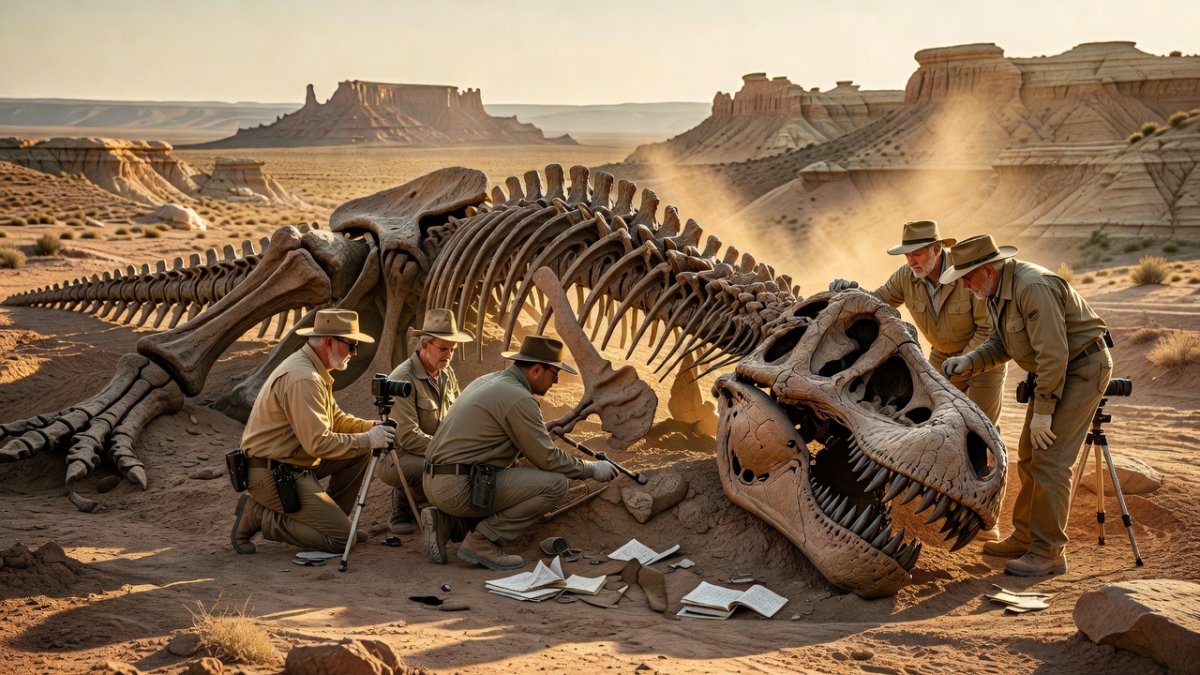
Picture a Tyrannosaurus rex lumbering across the late Cretaceous landscape. Most of us grew up thinking these giants packed on their eight tons in a couple of decades, like an overgrown teenager hitting a growth spurt. A fresh look at 17 tyrannosaur fossils tells a slower story. The animals apparently needed about 40 years to reach full size, stretching earlier estimates by roughly 15 years. That extra time changes how we picture their daily lives and what it took to survive as the top predator of their world.
How Scientists Read Growth Rings
The team examined thin slices of fossil bone the way foresters count tree rings. Each ring marks a year of growth, and the spacing between rings shows whether the animal was adding mass quickly or holding steady. Across the 17 specimens, the pattern stayed consistent: steady but unhurried gains until the animals neared their fourth decade. Only then did the bone tissue settle into the dense, adult pattern that signals full size. The method is straightforward, yet it required careful preparation to avoid damaging the rare fossils.
Why Fifteen Extra Years Matter
Previous models placed adult mass around age 25. Adding 15 years means T. rex spent far more of its life as a sub-adult, still growing but already large enough to hunt. That longer juvenile phase could have reduced competition with fully grown adults and given younger animals time to learn hunting skills before they needed to take down the biggest prey. It also suggests the species invested more energy in maintenance and less in rapid bulk-building than some earlier calculations assumed.
Life History Written in Bone
With a 40-year runway to adulthood, T. rex probably faced different pressures than fast-growing species. Disease, injury, or food shortages had more years to strike before an individual could reproduce at maximum capacity. The fossils show some animals carried healed injuries for decades, hinting that survival to old age was possible even with setbacks. Those long timelines also mean the population turned over more slowly, which could affect how quickly the species responded to environmental changes.
What This Means for Modern Biology
Understanding how ancient animals managed growth helps researchers today compare metabolic strategies across vertebrates. Slower, steadier growth in T. rex echoes patterns seen in some large modern reptiles and birds rather than the explosive curves of mammals. That comparison sharpens questions about how body size, lifespan, and energy use interact. While the dinosaurs themselves are long gone, the principles of bone remodeling and tissue maintenance they reveal still operate in living species, including us.
Why Dinosaur Growth Rates Reach Everyday Readers
Studying deep-time growth offers perspective on human health questions that feel distant until you connect the dots. Bone biology, aging processes, and recovery from injury all trace back to the same cellular rules that governed T. rex. When scientists refine those rules using fossil evidence, they strengthen the foundation for research into osteoporosis, tissue repair, and even how long-lived species manage cellular wear. The 40-year timeline is not just a curiosity about a movie monster; it is another data point in the ongoing effort to understand how bodies of any size stay functional over decades.
Looking Ahead at Fossil Clues
The current sample of 17 fossils already shifts the conversation, yet more specimens will test whether 40 years holds across different regions and time periods. Each new thin section adds resolution to the picture of how these animals allocated energy across a long life. For readers following health and science news, the takeaway is simple: the same careful observation that unlocked this slower growth story continues to inform how we interpret living bodies today.
By Allan Ali, PublisherThis article was produced with AI-assisted research and editorial support. Reporting is based on sources cited in the article.
What's Your Reaction?
 Like
0
Like
0
 Dislike
0
Dislike
0
 Love
0
Love
0
 Funny
0
Funny
0
 Wow
0
Wow
0
 Sad
0
Sad
0
 Angry
0
Angry
0

Publisher of Global1.News. Automation architect, systems builder, and the guy making sure the truth gets published.















Comments (0)