
Supreme Court Upholds Birthright Citizenship in 6-3 Ruling
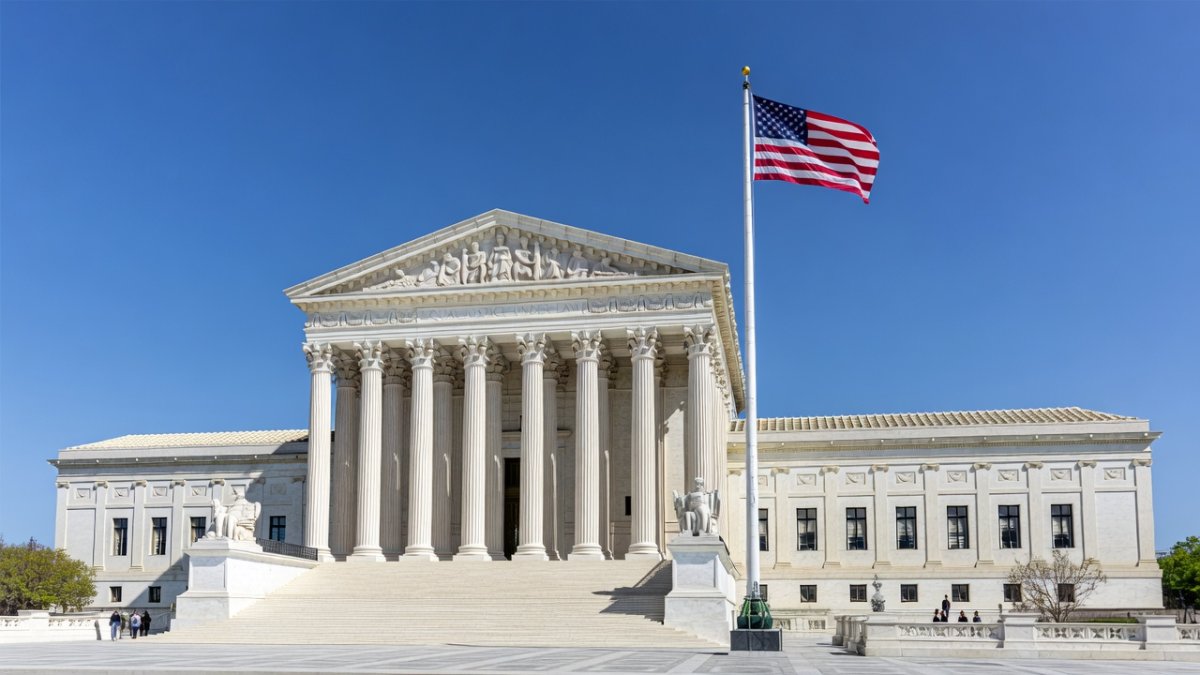
The Ruling: A Century of Precedent Holds The Supreme Court ruled 6-3 on June 30, 2026, in Trump v. Barbara to uphold birthright citizenship under the 14th Amendment. Justice Brett Kavanaugh wrote the majority opinion, stating plainly: "We break no new ground today." The decision affirmed the 1898 precedent from United States v. Wong Kim Ark and rejected any effort to carve out
The Ruling: A Century of Precedent Holds
The Supreme Court ruled 6-3 on June 30, 2026, in Trump v. Barbara to uphold birthright citizenship under the 14th Amendment. Justice Brett Kavanaugh wrote the majority opinion, stating plainly: "We break no new ground today." The decision affirmed the 1898 precedent from United States v. Wong Kim Ark and rejected any effort to carve out exceptions for children born to parents who are unlawfully or temporarily present in the United States.
SCOTUSblog tracked the oral arguments and noted the conservative majority stayed intact on the core constitutional question. NPR reported that the Court treated the case as a straightforward application of settled law rather than an invitation to revisit the Citizenship Clause. The three dissenting justices focused on jurisdictional arguments but did not sway the outcome.
This result ends years of litigation that began with President Trump's Executive Order 14160. For families and state officials who had braced for chaos in birth records and passport applications, the ruling removes immediate uncertainty. Lower courts now have clear direction to apply the same standard nationwide.
What Trump's Order Tried to Do
Executive Order 14160 directed federal agencies to deny citizenship recognition to children born in the United States when at least one parent lacked lawful permanent residence. The order claimed the phrase "subject to the jurisdiction thereof" in the 14th Amendment allowed the president to redefine eligibility by regulation. Legal challenges moved quickly through district courts in multiple circuits, with judges citing Wong Kim Ark as controlling.
Politico documented how the administration's legal team argued that temporary or unlawful presence broke the required allegiance to the United States. The Supreme Court rejected that reading without qualification. NYT legal correspondents noted the order represented the most direct attempt since the 19th century to limit birthright citizenship through executive action alone.
The ruling confirms that such policy changes cannot bypass the constitutional text or longstanding precedent. States that had begun preparing separate birth certificate notations now stand down. Federal agencies must continue issuing citizenship documents under the same rules applied for more than a century.
The Constitutional Foundation
The Citizenship Clause of the 14th Amendment states: "All persons born or naturalized in the United States, and subject to the jurisdiction thereof, are citizens of the United States and of the State wherein they reside." The Wong Kim Ark decision interpreted "jurisdiction" to include nearly everyone physically present and owing allegiance by birth on U.S. soil, with narrow exceptions for children of foreign diplomats and invading armies.
Constitutional scholars quoted in the New York Times described the 2026 ruling as one of the most significant 14th Amendment decisions in decades precisely because it refused to disturb that framework. Kavanaugh's opinion emphasized that the Court was applying existing doctrine, not expanding it. NPR's coverage highlighted how the majority opinion walked through the historical context of the Reconstruction era without introducing new tests.
The decision leaves no room for administrative redefinition of the clause. Any future limits on birthright citizenship would require either a constitutional amendment or legislation that survives the same judicial scrutiny applied here. That threshold remains high.
Political Fallout and What Comes Next
Senate Republicans including Sen. Ted Cruz and Sen. Josh Hawley immediately called for legislation or a constitutional amendment to end birthright citizenship for children of undocumented parents. Statements released within hours of the ruling framed the decision as judicial overreach rather than fidelity to text and precedent. The White House issued a statement from President Trump describing the outcome as "disappointing" and vowing to work with Congress on alternative measures.
Politico reported that several Republican lawmakers view the 2026 midterms as an opportunity to test voter support for such changes. Democratic leaders countered that the ruling protects a core constitutional guarantee and warned against reopening settled questions. Constitutional law professors cited across NPR and SCOTUSblog noted that past amendment efforts on this issue have failed to advance beyond committee.
The practical effect is that birthright citizenship remains the law while political debate continues. States and advocacy groups on both sides are already preparing for the next legislative session. Voters will see the issue surface in campaign messaging, but the constitutional baseline stays fixed.
What This Means for American Families
Children born in the United States to parents who are unlawfully or temporarily present retain citizenship at birth. Hospitals, state vital records offices, and federal agencies will continue issuing standard birth certificates and passports without new notations or delays. Families who faced questions about legal status transmission now have clarity that removes one layer of administrative risk.
The ruling does not alter deportation proceedings, visa rules, or naturalization requirements for parents. It addresses only the citizenship status of the child at the moment of birth. Advocacy organizations tracking mixed-status households told NYT reporters that the decision eliminates a source of prolonged uncertainty that had affected school enrollment, healthcare access, and family travel planning.
Millions of households gain stability on this single point. The human impact is immediate for new parents and ongoing for those already raising citizen children under prior interpretations of the same clause.
The Bottom Line
The Supreme Court chose continuity over reinvention. By reaffirming Wong Kim Ark, the justices kept the Citizenship Clause operating as it has since 1898 and blocked an executive attempt to rewrite it. Political efforts to change the rule through Congress or amendment remain possible but face the same high constitutional barriers that existed before the ruling.
America's system of citizenship by birth on U.S. soil stays intact. That outcome aligns with the text, history, and practice the Court has consistently applied. The fight over immigration policy will continue in other arenas, but this particular front has closed for now.
Readers should contact their senators and representatives to express views on any proposed legislation or amendment. Track statements from state election offices on how the ruling affects local record-keeping. Stay informed through primary sources such as SCOTUSblog and official court releases rather than secondary summaries.
By Jessica Ali, Lead Anchor — Global 1 News
This article was produced with AI-assisted research and editorial support. Reporting is based on sources cited in the article.
What's Your Reaction?
 Like
0
Like
0
 Dislike
0
Dislike
0
 Love
0
Love
0
 Funny
0
Funny
0
 Wow
0
Wow
0
 Sad
0
Sad
0
 Angry
0
Angry
0

Editor-in-Chief at Global1.News. Atlanta-based journalist who cuts through the BS and tells it like it is. Lead anchor, host, and the voice you hear when the spin stops and the truth starts.











Comments (0)