
Summer Davos 2026: Can Innovation Drive Global Growth?
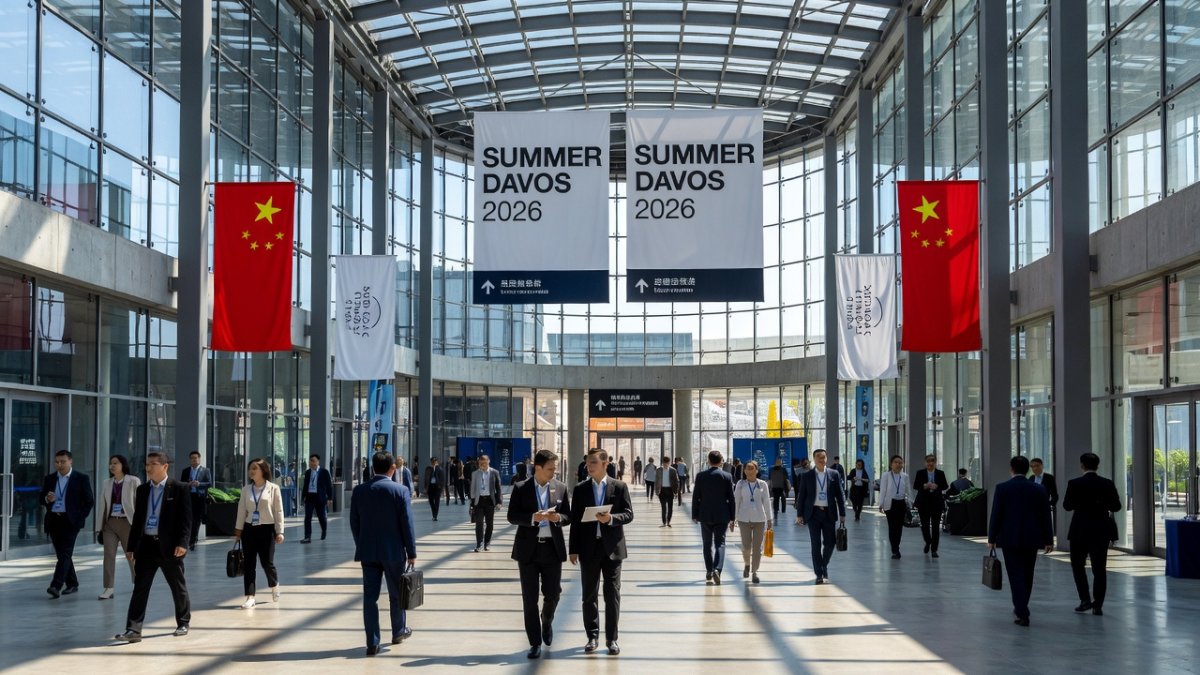
Summer Davos 2026: Can Innovation Drive Global Growth? The World Economic Forum's Annual Meeting of the New Champions convenes in Dalian from June 23 to 25 amid persistent questions over whether technological advances can sustain global expansion. With growth forecasts tempered by supply-chain realignments and uneven productivity gains, participants confront the practical limit
(Global 1 News)
Innovation at a Crossroads
The global innovation landscape remains uneven, with leading economies concentrating resources in artificial intelligence, advanced materials, and biotechnology while emerging markets struggle to close capability gaps. Patent filings and venture deployment continue to cluster in a handful of jurisdictions, limiting diffusion of productivity-enhancing technologies. This concentration raises doubts about the capacity of current trajectories to deliver broad-based growth.
The meeting theme "Innovation at Scale" directs attention to the translation of pilot projects into economy-wide applications. Discussions emphasize infrastructure requirements, talent pipelines, and regulatory predictability needed to move beyond demonstration phases. Without these enablers, incremental laboratory gains risk remaining isolated rather than transformative.
Geopolitical fragmentation compounds these challenges by segmenting research networks and restricting cross-border data flows. Export controls and investment screening mechanisms have already altered collaboration patterns among research institutions and firms. Such divisions threaten to slow the cumulative progress that historically underpinned successive waves of productivity growth.
Against this backdrop, the Dalian forum provides a structured venue for assessing whether targeted policy interventions can mitigate fragmentation effects. Participants weigh options for preserving open channels in foundational science while managing security concerns, recognizing that sustained global growth hinges on maintaining sufficient interoperability across innovation systems.
China's 15th Five-Year Plan and the 'AI+' Model
China's 15th Five-Year Plan, coordinated by the National Development and Reform Commission, assigns explicit priority to integrating artificial intelligence across strategic sectors. The plan sets quantitative targets for AI adoption in manufacturing, energy systems, and medical services, linking these objectives to broader productivity and carbon-reduction goals. Implementation responsibilities fall to multiple agencies, including the Ministry of Commerce for technology trade facilitation.
Under the rubric "China Opportunity 2.0," officials present an updated framework for foreign participation in high-technology domains. The approach seeks to balance domestic capability building with selective openness, offering joint-venture structures and data-sharing protocols calibrated to attract targeted investment while retaining regulatory oversight.
WEF President Zwinggi has publicly noted advances under the AI+ initiative in new energy storage and precision healthcare diagnostics. These applications illustrate how algorithmic optimization can accelerate deployment timelines and improve resource efficiency, outcomes that align with both national planning targets and international sustainability benchmarks.
Strategic implications extend to supply-chain resilience and standards development. By embedding AI standards within the 15th Five-Year Plan architecture, Chinese ministries aim to shape global technical norms in emerging fields, influencing everything from battery management systems to clinical data protocols and thereby affecting the terms on which international firms engage with Chinese markets.
The Geopolitics of Technological Competition
US-China technology decoupling has progressed through successive rounds of entity-list designations and investment reviews, producing parallel ecosystems in critical components. Semiconductor design and fabrication pathways have diverged most sharply, with each side investing heavily in indigenous capacity to reduce dependence on the other.
Semiconductor export controls imposed by the United States and aligned partners have curtailed access to advanced lithography equipment and high-bandwidth memory for Chinese firms. These measures have accelerated domestic substitution programs while prompting third countries to recalibrate their own technology sourcing strategies to avoid secondary sanctions exposure.
The European Union's AI Act introduces a risk-based regulatory regime that differentiates obligations according to application criticality. Its extraterritorial reach affects Chinese and American developers alike, compelling adjustments in model training, transparency documentation, and conformity assessment procedures that reshape market-entry calculations.
Collectively, these regulatory and export regimes are reconfiguring alliance structures around technology standards and supply-chain security. Middle powers increasingly pursue hedging strategies, negotiating parallel agreements that preserve access to multiple innovation poles rather than exclusive alignment with any single regulatory or investment framework.
Global South and the Digital Divide
Discussions at the 2026 Summer Davos in Dalian highlighted how rapid innovation at scale reshapes developing economies through accelerated digital adoption and new competitive pressures. Large-scale deployment of artificial intelligence and advanced connectivity tools allows select emerging markets to leapfrog traditional infrastructure stages, yet many nations lack the domestic capacity to integrate these technologies effectively into local industries.
China’s Belt and Road digital infrastructure projects featured prominently, with participants noting expanded fiber-optic networks and data centers across Southeast Asia and Africa. These initiatives, coordinated through established policy frameworks, aim to extend high-speed connectivity while fostering technology transfer agreements that align recipient countries with Chinese equipment standards and financing mechanisms.
The risk of a two-speed tech world emerged as a central concern, where advanced economies and a handful of middle-income partners capture most productivity gains while lower-income states remain dependent on imported platforms. This divergence threatens to widen existing gaps in research output, skilled labor, and regulatory influence over global data flows.
Representatives from the Global South emphasized that forums like Summer Davos must deliver concrete mechanisms for inclusive standard-setting, affordable technology access, and capacity-building programs. They called for structured dialogues that prioritize development financing and joint research initiatives rather than prescriptive regulatory models imposed by dominant innovation poles.
Multilateral Governance in an Age of Fragmentation
Global tech governance challenges dominated the second day of sessions, as delegates examined how divergent national approaches complicate cross-border data management and artificial intelligence deployment. Fragmented rule-making increases compliance costs for firms and creates uncertainty for smaller economies seeking predictable investment environments.
The EU AI Act framework was presented as one influential model emphasizing risk-based classification and transparency obligations. Participants assessed its extraterritorial reach and potential to shape corporate practices worldwide, while noting tensions with jurisdictions favoring lighter-touch or state-directed regulatory philosophies.
China’s role in AI standards-setting at the ITU and UNESCO received detailed attention, with analysts observing active engagement through technical contributions and leadership in working groups. These efforts seek to embed principles of sovereignty and development priorities into emerging international norms alongside established Western positions.
The UN Global Digital Compact process was reviewed as an ongoing attempt to reconcile competing governance models. Delegates stressed the need for balanced representation that accommodates differing views on data localization, platform accountability, and ethical guidelines, warning that unresolved divergences could stall progress on shared digital public goods.
The Road Ahead
Looking toward the remainder of 2026, analysts at the Dalian forum identified sustained competition over semiconductor supply chains and advanced computing standards as the most consequential trend. Policy shifts by major economies will likely accelerate efforts to diversify production locations and secure critical mineral access.
Climate-technology linkages are expected to intensify, with increased focus on how digital tools can support emissions monitoring and green transition planning. Forums will need to address financing gaps that currently limit deployment of these solutions in emerging markets.
Geopolitical hedging by middle powers will continue, producing overlapping trade and technology agreements that avoid exclusive alignment. This pattern may stabilize certain supply routes while complicating unified approaches to global standards.
Finally, institutional adaptation at multilateral bodies will determine whether inclusive governance mechanisms can keep pace with technological change. Success will hinge on whether platforms such as Summer Davos translate dialogue into actionable coordination across divergent regulatory traditions.
By Prof. Marcus Chen, Staff WriterThis article was produced with AI-assisted research and editorial support. Reporting is based on sources cited in the article.
What's Your Reaction?
 Like
0
Like
0
 Dislike
0
Dislike
0
 Love
0
Love
0
 Funny
0
Funny
0
 Wow
0
Wow
0
 Sad
0
Sad
0
 Angry
0
Angry
0
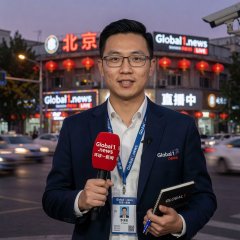
World Politics Analyst at Global1.News. Based in Beijing, covering US-China relations, global trade, and geopolitical strategy. Brings deep analytical perspective to the power dynamics shaping international affairs.













Comments (0)