
Spectacular archaeological finds in Turkey shed new light on origins of Christianity
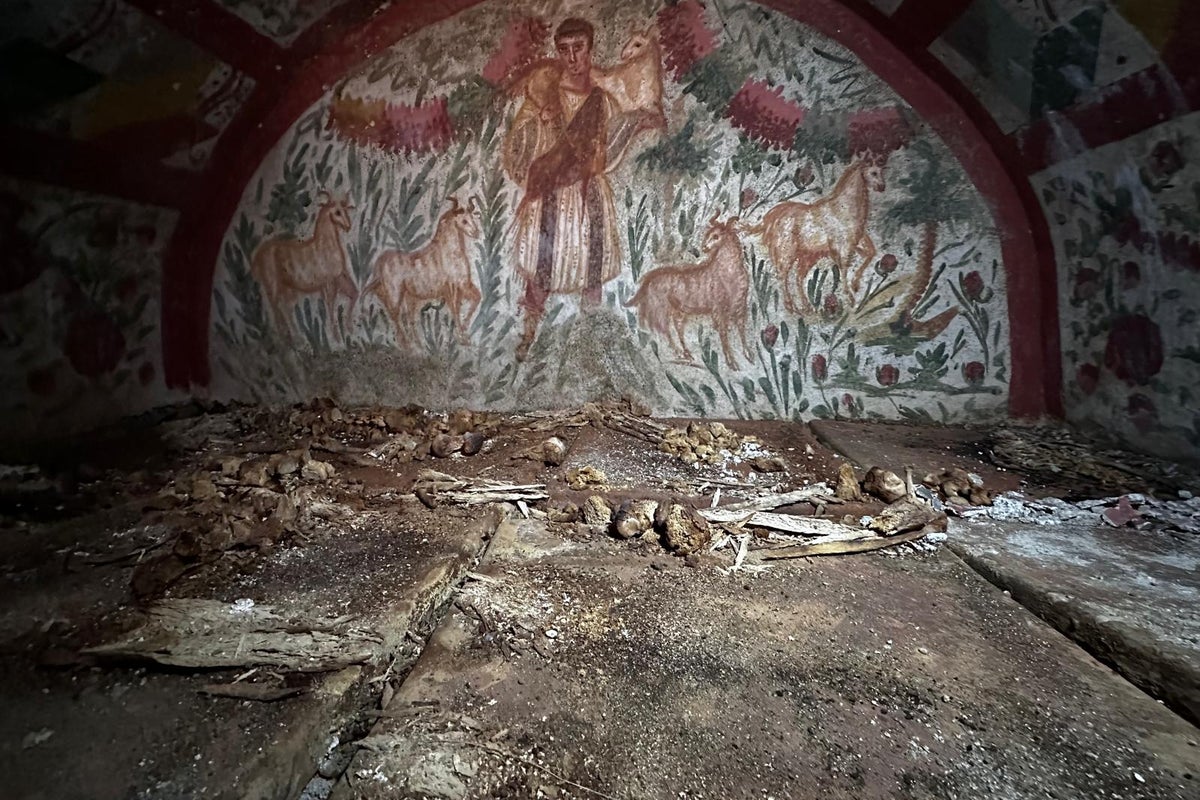
Ancient Fresco Unearthed Near Iznik Rewrites Early Chapters of Christian Iconography
The Find That Stopped Excavators in Their Tracks
Archaeologists working in a long-forgotten basilica complex five kilometres south of Iznik have uncovered what experts are calling the most intact early depiction of Jesus yet found. The fresco, dated by carbon analysis to the mid-third century, shows a youthful figure with short curly hair and a simple tunic, raising one hand in a gesture of blessing. Unlike the stern, bearded images that dominate later Byzantine art, this portrait is gentle, almost conversational. Turkish authorities announced the discovery yesterday, describing it as a once-in-a-generation find that could reshape understandings of how the first Christian communities chose to represent their central figure.
The site itself lies on the southern shore of Lake Iznik, once the Roman city of Nicaea. Teams led by Dr Ahmet Yılmaz of the Turkish Ministry of Culture had been investigating a collapsed apse when a section of plaster detached cleanly from the wall, revealing the fresco beneath layers of soot and rubble. Initial multispectral imaging shows no evidence of later overpainting, a rarity for works of this age. Pigments include Egyptian blue and a rare cinnabar red that would have been imported at considerable expense, suggesting the community possessed both resources and determination.
Nicaea’s Enduring Place in Christian Memory
Every schoolchild learns that the Council of Nicaea met here in 325 AD to settle disputes over Christ’s nature. Yet the city’s Christian story stretches back further. St Paul travelled nearby routes, and Pliny the Younger’s famous letter to Trajan, written from Bithynia around 112 AD, already describes Christians meeting before dawn to sing hymns to Christ “as to a god.” The newly discovered fresco predates the council by roughly seventy-five years and offers visual evidence that devotional imagery existed well before imperial patronage transformed Christian art.
Local records indicate the basilica was abandoned after a seventh-century earthquake and never rebuilt. This accidental preservation sealed the fresco in darkness for more than thirteen centuries. Soil samples taken from the nave floor contain charred grain and olive stones, hinting at a community that maintained agricultural rituals alongside worship. Radiocarbon dates cluster between 240 and 260 AD, placing the artwork squarely in the turbulent decades before the Great Persecution of Diocletian.
Expert Voices Weigh the Evidence
Professor Eleanor Graves, chair of early Christian studies at Cambridge, flew to Iznik within forty-eight hours of the announcement. “We have fragments from Dura-Europos and hints in catacomb paintings, but nothing approaches this level of completeness,” she told Global1 News. “The iconography is transitional. The figure lacks the halo that becomes standard after Constantine, yet the gesture and gaze already anticipate later Pantocrator types. It forces us to ask when the shift from symbolic to representational art occurred.”
Dr Yılmaz, speaking at the site under a hastily erected canopy, emphasised the fresco’s technical sophistication. “The artist used a double-layer intonaco and polished the surface before painting. That is not the work of an amateur. We are looking at a professional workshop operating in a provincial city, not in Rome or Alexandria.” Conservation specialists have applied a temporary cyclododecane coating to stabilise flaking edges while permanent climate-controlled housing is prepared.
Islamic art historian Dr Leyla Demirci of Koç University noted the find’s wider regional significance. “We tend to think of Anatolia as a bridge between east and west, but this image shows Christianity developing its own visual language here, independent of imperial centres. The colour palette mixes local ochres with imported minerals, a microcosm of the empire’s trade networks.”
What the Image Tells Us About Third-Century Belief
The absence of a beard is perhaps the most striking feature. Early written sources occasionally describe Jesus as youthful; the fresco gives that description material form. Scholars have long debated whether such portrayals reflected theological ideas about eternal youth or simply followed contemporary fashion for philosophers. The Iznik figure tilts the evidence toward the former. His eyes are large and direct, meeting the viewer rather than gazing heavenward, suggesting an emphasis on immanence over transcendence.
Surrounding the central figure are fragmentary Greek inscriptions. One legible phrase reads “the true light,” a phrase appearing in both the Gospel of John and contemporary philosophical texts. Another fragment mentions “the fisherman,” possibly alluding to the apostolic calling. These textual clues, combined with the visual style, indicate a community comfortable blending scriptural language with local artistic conventions.
Statistical analysis of pigment layers shows the fresco was repainted at least once within its first fifty years of existence, a sign of ongoing care rather than neglect. Such maintenance implies regular liturgical use and perhaps a growing congregation able to fund upkeep. Coin finds from the same stratigraphic level include issues of Gordian III and Philip the Arab, anchoring the chronology in the 240s and 250s.
Political and Religious Ripples
Turkish Culture Minister Mehmet Öztürk has already signalled that the fresco will remain in Iznik rather than travel to Ankara or Istanbul. A new purpose-built museum wing is planned, with construction slated to begin next spring. International conservation funding has been pledged by the British Museum and the Getty Foundation, reflecting the find’s global resonance.
Religious reactions have been measured but engaged. The Ecumenical Patriarchate in Istanbul issued a statement welcoming “any discovery that illuminates the lived faith of our ancestors.” Evangelical groups in Britain and the United States have circulated images online, some interpreting the youthful face as evidence for a pre-existing “authentic” portrait tradition. Historians caution against such literal readings, noting that third-century Christians used art didactically rather than as photographic records.
The discovery also arrives at a delicate moment for Turkish archaeology. Recent legislative changes have eased restrictions on foreign teams while tightening export controls. Dr Yılmaz acknowledged the tension: “We welcome collaboration, but the heritage stays here. This fresco belongs to the people of Iznik and to the wider story of Anatolian Christianity.”
Looking Ahead
Further excavation is scheduled for spring 2025 once winter rains subside. Ground-penetrating radar has already identified adjacent rooms that may contain additional fresco cycles or mosaic floors. Preliminary readings suggest a baptistery to the north, which could yield further iconographic surprises. Meanwhile, digital modelling teams at Istanbul Technical University are creating a virtual reconstruction allowing scholars worldwide to examine brushstrokes at microscopic resolution.
For now, the image stands as a quiet rebuke to assumptions that early Christian art was crude or purely symbolic. Its sophistication and preservation remind us that faith communities in provincial cities were already investing in durable, expensive decoration centuries before cathedrals rose across Europe. The best-preserved early Jesus yet discovered has emerged not from a grand basilica in Rome, but from a modest lakeside ruin in western Turkey. That fact alone may prove as significant as the artwork itself.
This is Erica Thornton for Global1 News, reporting from London. 🇬🇧
This article was produced with AI-assisted research and editorial support. Reporting is based on sources cited in the article.
What's Your Reaction?
 Like
0
Like
0
 Dislike
0
Dislike
0
 Love
0
Love
0
 Funny
0
Funny
0
 Wow
0
Wow
0
 Sad
0
Sad
0
 Angry
0
Angry
0

US Politics and Policy Correspondent at Global1.News. Based in Washington DC, covering American politics, policy, elections, and the courts. Knows how the system works and tells you what it actually means.













Comments (0)