
Ex-Head Monk of China's Shaolin Temple Sentenced to 24 Years for Embezzlement
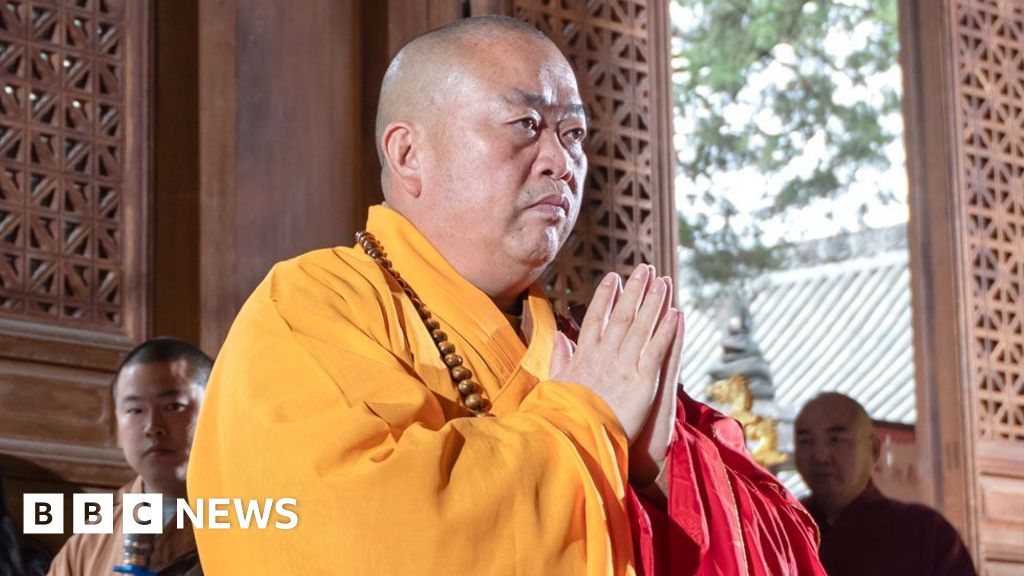
The Sentencing and Its Legal Foundations The Zhengzhou Intermediate People's Court in Henan province delivered a 24-year prison term to Shi Yongxin, former abbot of the Shaolin Temple, after convicting him on charges of embezzlement and bribery. Court records detail the misappropriation of temple assets valued at more than 282 million yuan between 2003 and the time of investiga
The Sentencing and Its Legal Foundations
The Zhengzhou Intermediate People's Court in Henan province delivered a 24-year prison term to Shi Yongxin, former abbot of the Shaolin Temple, after convicting him on charges of embezzlement and bribery. Court records detail the misappropriation of temple assets valued at more than 282 million yuan between 2003 and the time of investigation, alongside the receipt of illicit payments connected to construction contracts. Shi, whose birth name is Liu Yingcheng, entered a guilty plea and declined to appeal, closing the judicial process under China's standard criminal procedures.
Anti-Corruption Campaign and Institutional Reach
This verdict aligns with the ongoing disciplinary efforts directed by the Central Commission for Discipline Inspection, which have extended scrutiny to religious organizations previously viewed as peripheral to state enterprises. The Shaolin Temple case demonstrates that Buddhist institutions managing substantial commercial revenues now fall within the same accountability framework applied to state-linked entities. Such enforcement underscores the campaign's emphasis on recovering diverted public or quasi-public resources, regardless of an organization's cultural prestige.
Buddhist Institutions and State Authority
Shi Yongxin's removal from office by the Buddhist Association of China prior to the trial illustrates the supervisory role assigned to official religious bodies under the State Administration for Religious Affairs. The temple's transformation into a global commercial brand, including overseas schools and touring performance troupes, created revenue streams that invited regulatory oversight. This episode reveals the expectation that abbots function simultaneously as spiritual leaders and accountable administrators within a system that prioritizes alignment with national governance priorities.
Social Dimensions and Public Perception
Public reaction in China has centered on the contrast between the temple's historic image as a center of martial-arts discipline and the scale of financial misconduct attributed to its former leader. The earlier 2015 investigation into similar allegations, which ended without charges, followed by renewed scrutiny, has prompted discussion about the consistency of oversight mechanisms applied to prominent religious figures. These developments affect how lay practitioners and the wider public view the integrity of Buddhist leadership structures.
Implications for Religious Governance
The outcome signals tighter integration of religious organizations into China's broader regulatory architecture, particularly those generating significant economic activity. Future abbots and temple administrators will likely face enhanced financial reporting requirements and closer coordination with provincial authorities in Henan and elsewhere. This case contributes to an evolving model in which religious institutions must demonstrate both doctrinal fidelity and administrative transparency to maintain operational autonomy.
Broader Context of State-Religion Relations
China's approach to managing influential Buddhist sites continues to balance cultural heritage preservation with centralized control over organizational leadership. The Shaolin Temple proceedings illustrate how commercial expansion by religious bodies can trigger the same legal standards applied across other sectors. Observers note that such cases reinforce the principle that no institution operates beyond the reach of anti-corruption statutes when substantial assets are involved.
By Prof. Marcus Chen, Staff WriterThis article was produced with AI-assisted research and editorial support. Reporting is based on sources cited in the article.
What's Your Reaction?
 Like
0
Like
0
 Dislike
0
Dislike
0
 Love
0
Love
0
 Funny
0
Funny
0
 Wow
0
Wow
0
 Sad
0
Sad
0
 Angry
0
Angry
0

World Politics Analyst at Global1.News. Based in Beijing, covering US-China relations, global trade, and geopolitical strategy. Brings deep analytical perspective to the power dynamics shaping international affairs.













Comments (0)