
SFU Physicists Join CERN's ATLAS Detector Upgrade for 2030
Canadian physicists at Simon Fraser University in Burnaby, B.C., are preparing to play a central role in the next chapter of one of the world's most ambitious scientific endeavours. As the Large Hadron Collider at CERN prepares for a major upgrade, components assembled in British Columbia will form part of the ATLAS detector when operations resume in 2030. This work builds dire
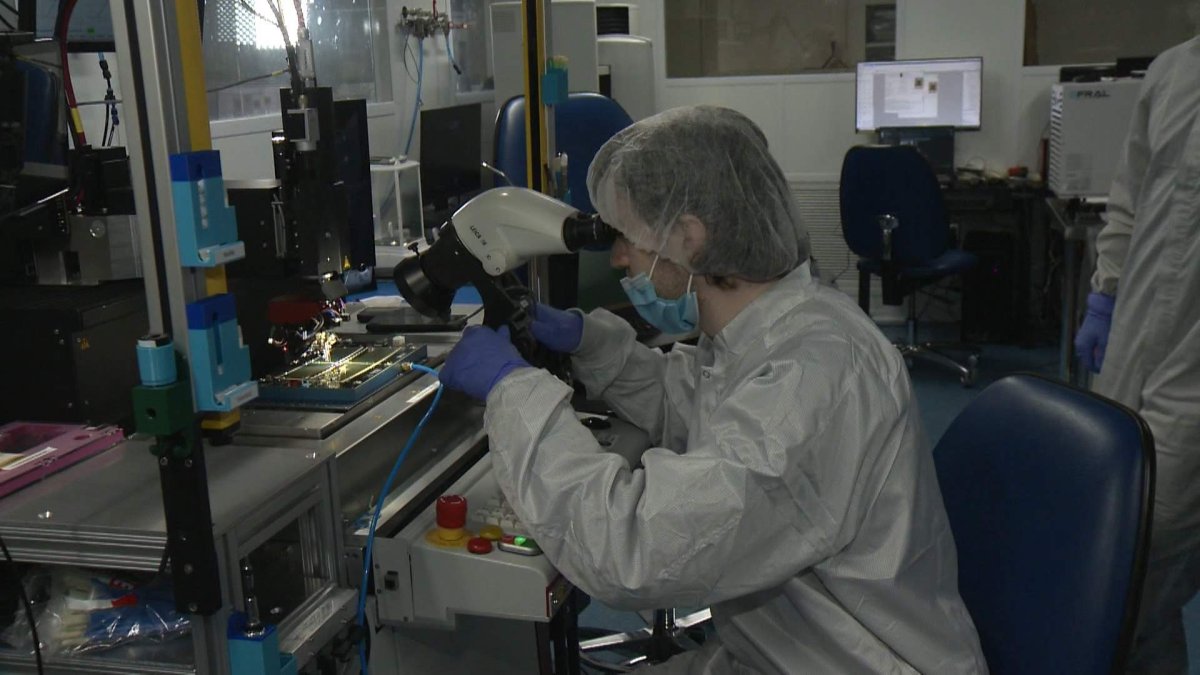
Canadian physicists at Simon Fraser University in Burnaby, B.C., are preparing to play a central role in the next chapter of one of the world's most ambitious scientific endeavours. As the Large Hadron Collider at CERN prepares for a major upgrade, components assembled in British Columbia will form part of the ATLAS detector when operations resume in 2030. This work builds directly on the 2012 discovery of the Higgs boson and positions Canadian researchers at the forefront of efforts to uncover new fundamental particles.
The Global Stage of Particle Physics and Canada's Place
The Large Hadron Collider, located underground along the France-Switzerland border, remains the energy frontier for exploring the universe's basic building blocks. Canada participates as one of dozens of nations in this international collaboration, yet researchers at Simon Fraser University are assuming a leading role in detector development. This involvement reflects Canada's longstanding commitment to global scientific projects through federal support for facilities such as TRIUMF, the country's particle accelerator centre.
Particle physics research of this scale requires sustained investment in STEM education and infrastructure. Canadian universities like SFU contribute expertise that strengthens the nation's reputation in fundamental science. The upcoming High Luminosity Large Hadron Collider project will intensify these efforts, allowing scientists to probe phenomena that current technology cannot fully resolve.
ATLAS and the Higgs Legacy
The ATLAS experiment at CERN gained worldwide attention with the 2012 discovery of the Higgs boson. That breakthrough confirmed a key element of the Standard Model of particle physics. Now, the detector is undergoing significant enhancements to handle increased collision rates when the collider returns to operation in 2030.
Bernd Stelzer, a professor in SFU's department of physics, noted that scientists aim to discover new fundamental particles and interactions capable of unlocking further secrets of the universe. He described the challenge as searching for needles in a universe-sized haystack, underscoring the precision required for future discoveries.
Building the New Detector Petals in Burnaby
A total of 400 new petals are being produced worldwide to record the billions of particles created in each collision. The SFU team will assemble approximately 100 of these petals over the next three years. These components are designed to improve the detector's ability to capture data at higher luminosities.
Luise Poley, adjunct professor in SFU's department of physics and project scientist at TRIUMF, highlighted the achievement of building the first production petals. The upgraded collider will collide ten times as many particles as in its initial runs, resulting in ten times as many particles emerging from each event. Greater precision in the petals directly increases the likelihood of identifying previously unseen phenomena.
TRIUMF's Supporting Role in Canadian Research
TRIUMF serves as Canada's particle accelerator centre and provides essential infrastructure for projects connected to CERN. Researchers affiliated with TRIUMF, including those from SFU, benefit from this national facility when contributing to international experiments. The collaboration demonstrates how Canadian institutions coordinate expertise across universities and national laboratories.
Federal funding for research infrastructure enables Canadian teams to participate meaningfully in large-scale projects. Without such support, opportunities to influence detector design and data analysis at facilities like the Large Hadron Collider would be limited. This model of shared resources strengthens Canada's overall capacity in physics and related fields.
Potential Discoveries and the Search for Dark Matter
The enhanced ATLAS detector offers improved prospects for identifying new particles. Poley observed that there is a good chance one of the particles detected could relate to dark matter. Such a finding would represent a major advance in understanding the composition of the universe.
While answers may remain years away, the components produced in B.C. could contribute to discoveries with wide-ranging implications. The work connects directly to questions about the fundamental workings of nature at the highest energies, areas where the Large Hadron Collider holds unique capabilities.
Looking Ahead to 2030 and Beyond
The shutdown that began on June 29 marks the start of an extensive upgrade period. When the collider resumes in 2030, the new petals from SFU and other partners will be integrated into ATLAS. This timeline allows Canadian researchers to refine assembly techniques and test components thoroughly before installation.
Continued Canadian participation in such projects supports the training of the next generation of physicists. Students and postdoctoral researchers gain hands-on experience with cutting-edge detector technology, skills that transfer to other scientific and technological domains. The effort also reinforces the value of international cooperation in addressing complex research questions.
By Alex Thompson, Staff Writer
Tags: particle physics, CERN, ATLAS, SFU, TRIUMF, Higgs boson, Burnaby, dark matter, High Luminosity LHC
This article was produced with AI-assisted research and editorial support. Reporting is based on sources cited in the article.
What's Your Reaction?
 Like
0
Like
0
 Dislike
0
Dislike
0
 Love
0
Love
0
 Funny
0
Funny
0
 Wow
0
Wow
0
 Sad
0
Sad
0
 Angry
0
Angry
0

Canada Correspondent at Global1.News. Based in Toronto, covering Canadian politics, energy, trade, and US-Canada relations. Provides the Canadian perspective on North American and global affairs.














Comments (0)