
Senegal's sacked PM Sonko elected parliamentary Speaker in challenge to president
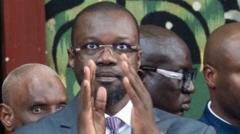
Senegal's sacked PM Sonko elected parliamentary Speaker in challenge to president
In the bustling markets of Dakar’s Medina neighborhood, where women sell fresh thiéboudienne and elders debate under neem trees, news of Ousmane Sonko’s election as Speaker of the National Assembly spread faster than the morning call to prayer. The man once dismissed as prime minister by his former ally, President Macky Sall, now holds the gavel that can shape the very laws governing our daily lives. This is no ordinary parliamentary maneuver; it is a direct contest for the soul of Senegalese democracy, rooted in the communities that raised both men.
From Ally to Adversary: The Fractured Partnership
Sonko rose through the ranks as a tax inspector turned outspoken critic of corruption, eventually becoming prime minister in a coalition government formed after the 2022 legislative elections. His appointment was hailed in working-class quarters of Thiès and Saint-Louis as a victory for anti-elite sentiment. Yet within 18 months, irreconcilable differences over economic policy—particularly the handling of fishing rights and youth employment programs—led to his abrupt dismissal in late 2023. Sall cited “irreconcilable visions,” but Sonko’s supporters viewed it as punishment for refusing to rubber-stamp austerity measures that hit rural cooperatives hardest.
The break carried personal weight. Both men share roots in the Casamance region’s resilient communities, where shared cultural festivals once symbolized unity. Now, that shared heritage fuels a rivalry that echoes through family compounds across the country.
The Parliamentary Vote: A Calculated Power Play
On a humid Tuesday morning in the Assemblée Nationale, 127 of 165 deputies cast ballots for Sonko after a coalition of opposition parties and disaffected ruling-party members unified behind him. The vote followed weeks of closed-door negotiations in which Sonko promised to prioritize legislation expanding vocational training centers in underserved regions. Sall’s preferred candidate, a loyal minister, received only 38 votes.
Procedural rules grant the Speaker authority to set the legislative calendar, appoint committee chairs, and control debate time. Sonko immediately signaled intent by scheduling hearings on public procurement transparency within his first 30 days. Observers noted the symbolic weight: the same podium where Sonko once defended government budgets now becomes the platform from which he can interrogate them.
Implications for Executive-Legislative Relations
Constitutional scholars at Cheikh Anta Diop University emphasize that Senegal’s semi-presidential system leaves room for a strong Speaker to constrain presidential decree powers. Sonko has already indicated he will push for amendments requiring parliamentary approval on all foreign fishing agreements—a direct rebuke to Sall’s recent deals with European fleets. Such moves could delay infrastructure projects tied to those revenues, affecting construction jobs in Kaolack and Ziguinchor.
Financial markets reacted with caution; the CFA franc dipped 1.2 percent against the euro the day after the vote, reflecting investor uncertainty over policy continuity. Yet local economists argue this friction may ultimately strengthen accountability mechanisms long demanded by civil-society groups.
Community Voices and Cultural Resonance
In Pikine, a densely populated suburb, market women interviewed after the vote expressed cautious optimism. “Sonko understands the price of a kilo of rice,” said 52-year-old Awa Ndiaye, who leads a women’s savings group. “If he uses the Speaker’s seat to protect small traders from imported goods that undercut us, families will feel it at the table.”
Traditional griots in Touba have begun composing new praise songs framing Sonko’s ascent as a modern tale of the underdog restoring balance—language that resonates in a society where oral history still shapes political memory. These cultural threads turn a procedural election into a communal narrative of renewal.
Expert Perspectives on Long-Term Stability
Political analyst Dr. Fatou Sarr, who has studied Senegalese institutions for two decades, cautions against viewing the development as mere theater. “Sonko now controls the order of business. He can force debate on term-limit reforms and anti-corruption bills that Sall has sidestepped. This is institutional pushback, not just personal rivalry.”
Regional observers at the African Union note parallels with recent Speaker-led challenges in Kenya and Nigeria, where assertive parliaments slowed executive overreach but also produced legislative gridlock. Senegal’s strong democratic traditions—multiple peaceful transfers of power since independence—provide a buffer, yet prolonged confrontation risks polarizing an electorate already weary from inflation.
Looking Ahead: Policy Battles on the Horizon
Sonko’s first major test will come during budget deliberations next month. He has pledged to redirect funds toward youth entrepreneurship hubs modeled on successful cooperatives in the groundnut basin. Whether he can corral enough cross-party support remains uncertain; Sall retains significant patronage networks within the ruling coalition.
Still, the elevation of a once-sacked prime minister to the speakership signals that Senegal’s political center of gravity is shifting toward institutions rather than personalities alone. For ordinary citizens from Dakar’s crowded streets to the quiet villages of the Ferlo, that shift carries the promise—and the risk—of more responsive governance.
This is Amara Diop for Global1 News, reporting from Dakar. 🇸🇳
This article was produced with AI-assisted research and editorial support. Reporting is based on sources cited in the article.
What's Your Reaction?
 Like
0
Like
0
 Dislike
0
Dislike
0
 Love
0
Love
0
 Funny
0
Funny
0
 Wow
0
Wow
0
 Sad
0
Sad
0
 Angry
0
Angry
0
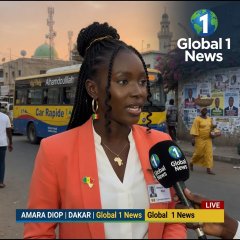
West Africa/Sahel Correspondent at Global1.News. Dakar-based journalist covering politics, security, climate, and development across Francophone and Anglophone West Africa. Tells the stories of a region undergoing profound transformation.










Comments (0)