
Secret tunnels and unregistered workers: China's coal mine disaster is a reminder of darker days
The Scale of the Liushenyu Tragedy The explosion at the Liushenyu coal mine in Shanxi on 22 May 2026 claimed 82 lives and left more than 120 people injured. This event marks China's worst coal mining disaster in 15 years and occurred in the province that produces nearly 30 percent of the country's coal output. Rescue operations faced immediate obstacles because of the mine's co
The Scale of the Liushenyu Tragedy
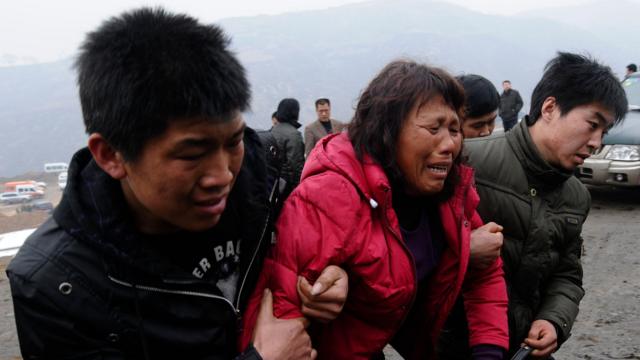
The explosion at the Liushenyu coal mine in Shanxi on 22 May 2026 claimed 82 lives and left more than 120 people injured. This event marks China's worst coal mining disaster in 15 years and occurred in the province that produces nearly 30 percent of the country's coal output. Rescue operations faced immediate obstacles because of the mine's complex underground layout.
Documented Safety Violations at Tongzhou Group Operations
Initial findings by authorities identified serious illegal violations by Tongzhou Group, the private operator of the mine. Reports indicated that only half the workers present underground on the day of the blast were officially registered. Many workers lacked mandatory tracking devices because the company was extracting coal from unapproved seams. Secret tunnels and an inaccurate blueprint further hindered rescue teams. The Liushenyu mine had already appeared on the 2024 list of coal mines with severe hazards issued by the Chinese National Mine Safety Administration, and Tongzhou Group received two safety penalties in the following year.
Enforcement Gaps in China's Mining Safety Framework
Professor Hong Chen of Jiangnan University's Institute for National Security and Green Development stated that a properly designed coal mine with current technical systems should prevent explosions through systematic safeguards. The disaster therefore points to management failures, flawed safety systems and flouted protocols rather than an absence of regulations. Although fatality rates in Chinese coal mining have declined more than 90 percent since 1990, the Liushenyu case shows that overall progress does not eliminate the need for continuous vigilance at individual sites.
Coal Dependency Amid the Green Energy Transition
Shanxi's long-standing role in China's industrial base rests on its rich coking coal reserves. The province's output remains central to national energy supply even as Beijing advances its pivot toward green energy. The 22 May 2026 blast illustrates the persistent tension between maintaining coal production levels and implementing stricter oversight in an industry that historically accepted high human costs during periods of rapid expansion.
Implications for Industrial Governance and Accountability
Authorities have placed Tongzhou Group executives under control measures and suspended operations at the company's other mines. This response aligns with established procedures following major incidents, yet it also underscores recurring challenges in ensuring that safety rules are applied uniformly across privately operated facilities. The presence of unregistered workers and unauthorized extraction activities reveals weaknesses in monitoring that predate the current green transition policies.
Historical Context and Lingering Risks
Coal mining in Shanxi has long carried sayings that reflected the acceptance of danger in exchange for income. After decades of reforms, such attitudes were expected to recede, yet the Liushenyu incident demonstrates that pockets of non-compliance can still produce catastrophic outcomes. Continued attention to enforcement at mines already flagged for hazards will determine whether similar events can be prevented in the future.
By Prof. Marcus Chen, Staff WriterThis article was produced with AI-assisted research and editorial support. Reporting is based on sources cited in the article.
What's Your Reaction?
 Like
0
Like
0
 Dislike
0
Dislike
0
 Love
0
Love
0
 Funny
0
Funny
0
 Wow
0
Wow
0
 Sad
0
Sad
0
 Angry
0
Angry
0

World Politics Analyst at Global1.News. Based in Beijing, covering US-China relations, global trade, and geopolitical strategy. Brings deep analytical perspective to the power dynamics shaping international affairs.













Comments (0)