
Cubans grapple with fuel shortages and blackouts as US steps up pressure
The Human Cost of Blackouts in Havana Cuba's energy shortages have turned routine daily tasks into life-threatening challenges for residents across Havana. With fuel supplies severely restricted, power outages lasting up to 20 hours have left many without reliable electricity or water. This situation hits elderly citizens particularly hard in high-rise buildings where elevators
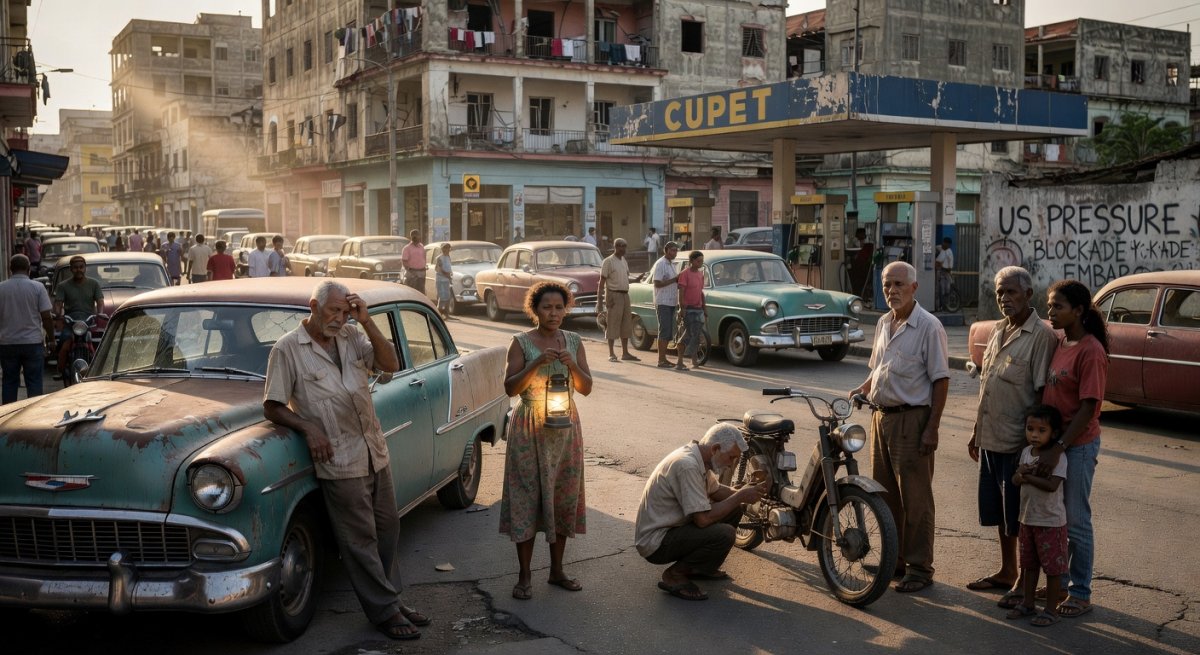
The Human Cost of Blackouts in Havana
Cuba's energy shortages have turned routine daily tasks into life-threatening challenges for residents across Havana. With fuel supplies severely restricted, power outages lasting up to 20 hours have left many without reliable electricity or water. This situation hits elderly citizens particularly hard in high-rise buildings where elevators fail and medical devices lose power.
Stories from the Granma Dos Building
Seventy-year-old widow Ana Rosa Romero lives on the 11th floor of the Granma Dos building. She described sitting with her husband during his final hours without electricity, as help could not reach them promptly. Building superintendent Juana Garcia noted that nine residents rely on pacemakers and cannot risk stair climbs during outages. Some bedridden elderly receive water only when neighbors carry it up multiple flights in darkness.
Container Housing as an Emergency Measure
In Barrio Toledo, workers convert shipping containers into two-bedroom homes complete with kitchens and bathrooms. Foreman Orlando Diaz oversees the project and views it as a practical response to the housing shortage. He points to similar approaches used elsewhere and stresses the need for ventilation to manage Cuba's heat. The effort proceeds despite ongoing fuel constraints that slow construction and supply deliveries.
US Pressure and Charges Against Raul Castro
The United States has brought murder charges against former Cuban leader Raul Castro related to the 1996 downing of two civilian planes operated by Brothers to the Rescue. US Secretary of State Marco Rubio described Cuba as a national security threat and stated that prospects for peaceful resolution remain low. Cuba's Foreign Minister Bruno Rodriguez labeled the case fraudulent and aimed at justifying intervention. These developments coincide with continued fuel restrictions affecting the island.
Energy Justice Across Latin America
Cuba's crisis reflects wider patterns in Latin American energy politics where external sanctions limit access to fuel and technology. Communities face repeated blackouts while seeking alternatives such as solar panels. The situation underscores the need for equitable energy policies that prioritize vulnerable populations and reduce dependence on imported fossil fuels amid climate pressures affecting the region.
Local Resilience and Future Paths
Residents and workers continue adapting through community efforts and state initiatives. Calls for renewable solutions emerge directly from those managing daily hardships without reliable power. These experiences connect Havana's struggles to broader regional demands for energy systems that support both human needs and environmental stability.
By Elena Vasquez, Staff WriterThis article was produced with AI-assisted research and editorial support. Reporting is based on sources cited in the article.
What's Your Reaction?
 Like
0
Like
0
 Dislike
0
Dislike
0
 Love
0
Love
0
 Funny
0
Funny
0
 Wow
0
Wow
0
 Sad
0
Sad
0
 Angry
0
Angry
0
Latin America Correspondent at Global1.News. Based in Mexico City, covering politics, economics, energy, and culture across the region. Brings an on-the-ground perspective to stories spanning from the Rio Grande to Patagonia.










Comments (0)