
Riyadh Air Takes Flight: Saudi Arabia Second National Carrier Targets Global Connectivity Under Vision 2030
Riyadh Air entry into commercial service marks a calculated Saudi move to challenge established Gulf carriers while advancing Vision 2030 economic diversification. Backed by the Public Investment Fund roughly US$925 billion in assets, the new airline aims to position Riyadh as a major international aviation node rather than merely another point on existing networks. Riyadh Air
Riyadh Air entry into commercial service marks a calculated Saudi move to challenge established Gulf carriers while advancing Vision 2030 economic diversification. Backed by the Public Investment Fund roughly US$925 billion in assets, the new airline aims to position Riyadh as a major international aviation node rather than merely another point on existing networks.
Riyadh Air Takes Flight: Saudi Arabia Second National Carrier Targets Global Connectivity
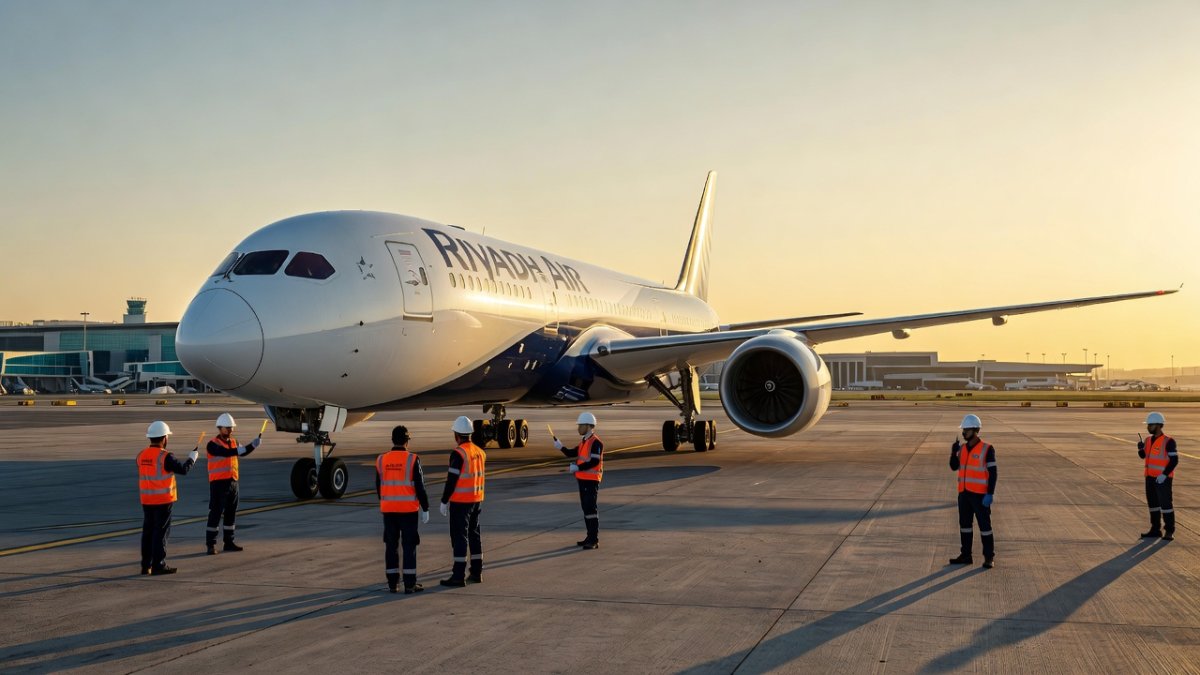
Riyadh, Saudi Arabia - June 11, 2026 - Riyadh Air completed its first commercial flight from Riyadh to London Heathrow on June 10, 2026, inaugurating operations with three Boeing 787-9 Dreamliners that arrived in the Saudi capital on June 5. Six additional Dreamliners are scheduled for delivery by the end of June, supporting an aggressive rollout that targets 22 cities by March 2027. The carrier, wholly owned by the Public Investment Fund, forms a central pillar of Saudi Arabia plan to attract 150 million annual visitors by 2030 and generate more than US$50 billion in annual aviation-related GDP contribution.
Fleet Expansion and Launch Timeline
The initial nine Boeing 787-9 aircraft will form the backbone of Riyadh Air early network. CEO Tony Douglas, speaking aboard one of the new jets in an Al Arabiya English interview, emphasized the range and fuel efficiency as decisive factors in the selection. London Heathrow became the launch destination, followed immediately by services to Cairo, Dubai, Jeddah, Madrid, and Manchester. These routes reflect both leisure demand and the need to establish operational credibility quickly.
Further deliveries will accelerate through 2026 and 2027. The airline plans to grow the fleet steadily while maintaining the 787-9 as its core wide-body type, avoiding the complexity of multiple aircraft families during the critical start-up phase.
Vision 2030 and the Aviation Growth Target
Saudi planners view aviation as a multiplier for tourism, logistics, and foreign direct investment. The goal of 150 million annual visitors by 2030 requires vastly expanded airlift capacity. Riyadh Air mandate is to deliver a portion of that capacity while anchoring a new international hub in the capital, complementing the established roles of Jeddah and Dammam. PIF financial backing removes the usual capital constraints that limit most start-up carriers, allowing the airline to order aircraft and open routes at a pace few competitors can match.
Strategic Calculus Behind the London Launch
Choosing Heathrow as the first destination signals Riyadh Air intent to compete directly on high-yield long-haul routes rather than limiting itself to regional feeders. London offers strong corporate traffic, significant Saudi diaspora connections, and onward connectivity through one of Europe busiest airports. Douglas, who previously led Etihad Airways, brings experience in building partnerships and managing premium cabins - assets the new carrier will need when facing Emirates, Qatar Airways, and Turkish Airlines on overlapping corridors.

Regional Competition and Second-Order Effects
The addition of a well-funded Saudi carrier intensifies the long-running contest among Gulf states for aviation market share. Dubai and Doha have spent two decades consolidating their positions; Riyadh now seeks to capture a larger slice of connecting traffic between Asia, Europe, and Africa. Neighboring carriers will likely respond with capacity increases or pricing pressure on overlapping routes. For Saudi Arabia, success would translate into higher hotel occupancy, retail spending, and logistics revenues inside the Kingdom - precisely the non-oil economic activity Vision 2030 seeks to cultivate.
Regional Implications
If Riyadh Air meets its March 2027 target of 22 destinations, the Kingdom will have added meaningful new connectivity at a moment when global aviation is still recovering unevenly from earlier disruptions. The airline ability to sustain load factors and yields will determine whether this investment accelerates tourism inflows or simply redistributes existing traffic among Gulf hubs. Douglas operational track record and PIF balance sheet give Riyadh Air structural advantages, yet execution risk remains high in an industry where margins are thin and competition relentless. The coming twelve months will reveal whether the new carrier can translate financial muscle into durable network strength.
By Malik Hassan, Staff Writer
This article was produced with AI-assisted research and editorial support. Reporting is based on sources cited in the article.
What's Your Reaction?
 Like
0
Like
0
 Dislike
0
Dislike
0
 Love
0
Love
0
 Funny
0
Funny
0
 Wow
0
Wow
0
 Sad
0
Sad
0
 Angry
0
Angry
0

Middle East Correspondent at Global1.News. Based in Beirut, covering politics, conflict, energy, and society across the Middle East. Brings context and depth to a region often reduced to headlines.














Comments (0)