
PM Modi Addresses the Nation in Latest Mann Ki Baat Episode
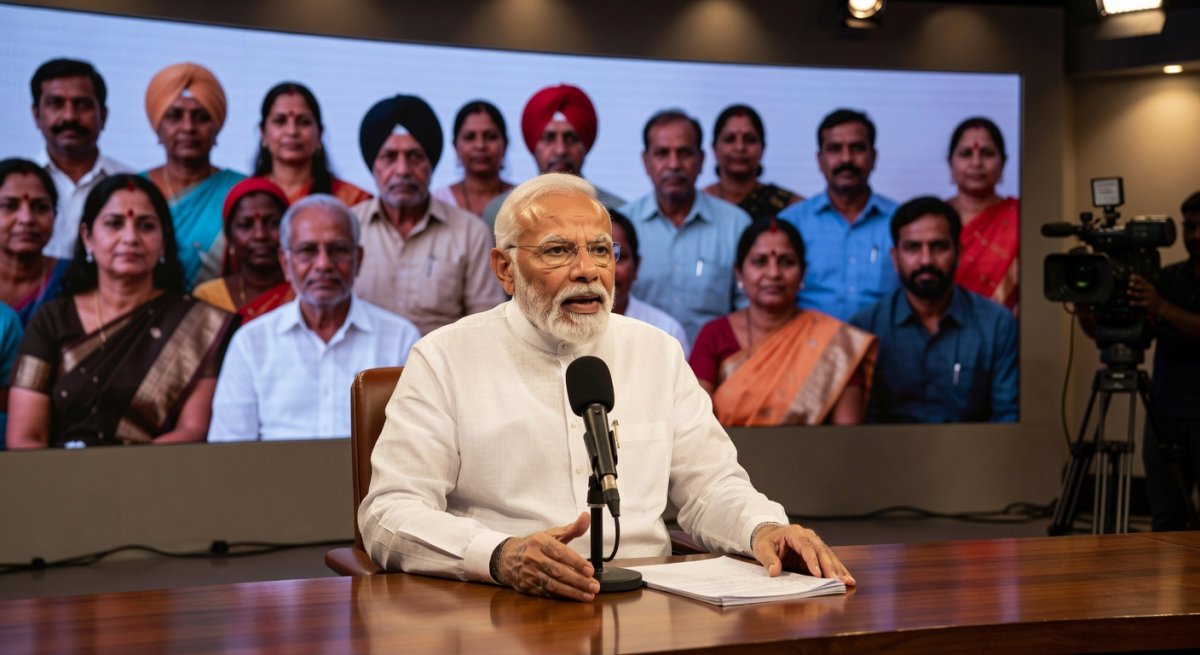
PM Modi Addresses the Nation in Latest Mann Ki Baat Episode Prime Minister Narendra Modi delivered his monthly Mann Ki Baat radio address today, speaking directly to citizens across India on a range of national issues, government initiatives, and social themes. The programme, which airs on the last Sunday of every month on All India Radio and Doordarshan, remains one of the mos
PM Modi Addresses the Nation in Latest Mann Ki Baat Episode
Prime Minister Narendra Modi delivered his monthly Mann Ki Baat radio address today, speaking directly to citizens across India on a range of national issues, government initiatives, and social themes. The programme, which airs on the last Sunday of every month on All India Radio and Doordarshan, remains one of the most-watched public broadcasts in the country, reaching millions of listeners in urban centres and rural villages alike.
According to reports from NDTV and the Press Trust of India, the Prime Minister used today's episode to highlight citizen-led governance, social reforms, and grassroots development programmes. Mann Ki Baat, now in its eleventh year, has become a key instrument of direct communication between the Prime Minister's Office and the Indian public, bypassing traditional media filters.
Key Themes Covered in Today's Address
In today's broadcast, PM Modi focused on multiple themes including water conservation, digital governance, and women-led development initiatives, sources familiar with the broadcast told Indian media. The Prime Minister traditionally uses the platform to recognise individual citizens and community groups who have made significant contributions to social causes.
The programme also featured mentions of India's growing startup ecosystem and the government's push for self-reliance in manufacturing, according to Times of India reports. Modi called upon young entrepreneurs to leverage government schemes aimed at boosting innovation in Tier-2 and Tier-3 cities.
Mann Ki Baat's Enduring Reach and Relevance
Since its launch in October 2014, Mann Ki Baat has completed over 120 episodes. The programme has evolved from a simple radio broadcast to a multimedia event streamed on YouTube, the Narendra Modi mobile app, and social media platforms. According to audience data cited by All India Radio, the programme consistently draws tens of millions of listeners across linguistic and regional divides.
Political analysts quoted by The Hindu note that Mann Ki Baat serves as both a governance tool and a political instrument, allowing the Prime Minister to set the national conversation agenda without the filter of press conferences or parliamentary debates. The format has been praised for its focus on positive storytelling and citizen achievement, though critics have argued it functions primarily as a public relations exercise.
Citizen Engagement and Grassroots Recognition
A hallmark of Mann Ki Baat is the Prime Minister's practice of highlighting ordinary Indians doing extraordinary work. Today's episode was expected to feature stories from multiple states, including achievements in sanitation, tree planting drives, and digital literacy campaigns. The Prime Minister regularly invites listeners to write in with suggestions and success stories, many of which are featured in subsequent broadcasts.
The programme has inspired similar initiatives in other countries, with leaders in Sri Lanka, Bangladesh, and Nepal reportedly studying the format as a template for direct citizen engagement. India's Ministry of External Affairs has also promoted Mann Ki Baat as a cultural diplomacy tool, with translated versions shared through Indian embassies worldwide.
Opposition and Criticism
While Mann Ki Baat enjoys broad listenership, it has also drawn criticism from opposition parties who argue that it functions as an unchecked platform for government messaging. Leaders from the Indian National Congress and regional parties have periodically called for equal airtime, pointing out that state-run broadcasters provide the Prime Minister with unfiltered access that opposition leaders do not receive.
Press freedom organisations have also raised concerns about the programme's dominance of public discourse, with some arguing that it crowds out independent journalism and reduces the space for critical reporting. The government has defended the programme as a legitimate exercise in direct democracy, pointing to comparable formats used by leaders in other democracies.
What This Means for Indian Governance
The sustained popularity of Mann Ki Baat reflects a broader shift in Indian political communication toward direct, unmediated engagement between the executive and the electorate. As India approaches state assembly elections in several key states, the programme's influence on public opinion and issue salience is expected to remain significant.
For voters, today's address offered a window into the government's priorities for the coming months, with an emphasis on climate action, digital inclusion, and social welfare. Whether the programme translates into measurable policy outcomes remains a subject of debate among political observers, but its role as a fixture of Indian political life is undeniable.
By Dr. Raj Patel, Staff Writer
This article was produced with AI-assisted research and editorial support. Reporting is based on sources cited in the article.
What's Your Reaction?
 Like
0
Like
0
 Dislike
0
Dislike
0
 Love
0
Love
0
 Funny
0
Funny
0
 Wow
0
Wow
0
 Sad
0
Sad
0
 Angry
0
Angry
0

India/South Asia Correspondent at Global1.News. Analytical voice with a background in science and health journalism. Based in New Delhi, covering Indian politics, education, healthcare, technology, and policy. Breaks down complex data into clear, actionable reporting.














Comments (0)