
Ottawa extends amnesty for banned firearms amid Supreme Court challenge
Ottawa extends amnesty for banned firearms amid Supreme Court challenge **Meta Title:** Ottawa extends amnesty for banned firearms amid Supreme Court battle **Meta Description:** The federal government extends amnesty for owners of prohibited firearms until 90 days after the Supreme Court rules on the constitutionality of the 2020 prohibitions. **Keywords:** firearms ban, Supre
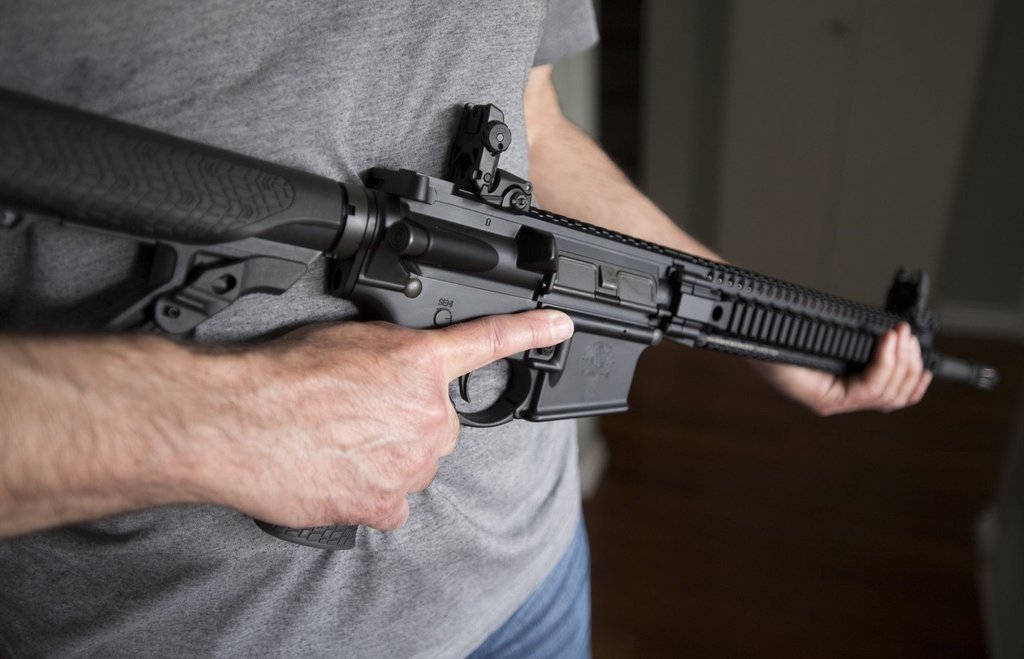
Ottawa extends amnesty for banned firearms amid Supreme Court challenge
**Meta Title:** Ottawa extends amnesty for banned firearms amid Supreme Court battle **Meta Description:** The federal government extends amnesty for owners of prohibited firearms until 90 days after the Supreme Court rules on the constitutionality of the 2020 prohibitions. **Keywords:** firearms ban, Supreme Court of Canada, amnesty extension, gun control Canada, prohibited firearms, AR-15 ban, buyback program, Public Safety Canada, firearm regulation, Canadian gun policy
Ottawa, Ontario – June 9, 2026 — The federal government has extended its amnesty period for owners of prohibited firearms, tying the new deadline to the outcome of a Supreme Court of Canada hearing that will not conclude until next year. The move keeps roughly 2,500 models of firearms, including the AR-15 and Ruger Mini-14, in legal limbo while the court weighs the constitutionality of the original May 2020 prohibitions.
Tags: firearms ban, Supreme Court of Canada, amnesty extension, gun control Canada, prohibited firearms, AR-15 ban, buyback program, Public Safety Canada, firearm regulation, Canadian gun policy
The Evolution of Firearm Prohibitions Since May 2020
Canada's modern era of firearm restrictions began on May 1, 2020, when the Liberal government used an order-in-council to prohibit approximately 1,500 makes and models of assault-style weapons. The list included the AR-15 platform, the Ruger Mini-14, and several variants of the FN FAL and CZ-858. Officials argued these firearms were designed for military use and had no place in civilian hands.
Subsequent regulatory packages expanded the prohibited roster. In 2021 and 2022, Ottawa added hundreds of additional variants through technical descriptions rather than named models, pushing the total past 2,000. By early 2024 the count stood at approximately 2,500 distinct firearms or variants. Each expansion was accompanied by statements from Public Safety Canada emphasising that the weapons "belong only on the battlefield."
The prohibitions were layered on top of existing licensing requirements under the Firearms Act. Owners who held valid possession and acquisition licences suddenly found themselves in possession of newly illegal property. The government initially set an amnesty deadline of October 30, 2024, later extended once before the latest announcement.
The Supreme Court Appeal Process
Legal challenges began almost immediately after the 2020 order. Several provincial governments, firearms advocacy groups, and individual licence holders argued that the prohibitions exceeded federal authority and infringed on property rights without adequate compensation or due process. Lower courts produced conflicting rulings, prompting the Supreme Court of Canada to grant leave to appeal in March 2026.
The court is expected to hear oral arguments in the fall of 2026, with a decision likely in the first half of 2027. Because the case involves both division-of-powers questions and Charter considerations, observers anticipate a lengthy period of deliberation. The government's decision to peg the new amnesty expiry to "90 days after the Supreme Court delivers its decision" effectively freezes enforcement until well into 2027.
What the Extended Amnesty Means for Gun Owners
Under the revised timeline, individuals who lawfully owned prohibited firearms before the 2020 order may continue to possess them without fear of criminal prosecution until 90 days after the court's ruling. The extension does not authorise new purchases or transfers; it merely preserves the status quo for existing owners.
Gun owners must still comply with safe-storage rules and may not use the firearms for any purpose, including target shooting. Any attempt to sell, barter, or gift a prohibited firearm remains illegal. Police services have been instructed to treat the extended amnesty as a period of education and voluntary compliance rather than active enforcement.
Rural and Indigenous communities have welcomed the breathing room, noting that many families have inherited firearms now classified as prohibited. Urban gun-control advocates, however, have criticised the extension as an unnecessary delay in removing military-style weapons from circulation.
The Federal Compensation Program Explained
Ottawa has repeatedly stated that the amnesty extension will not alter the federal buyback program. That program, administered by Public Safety Canada, offers compensation to owners who surrender prohibited firearms. Valuations are based on pre-prohibition market prices, with an upper limit for each model. The government expects the program to conclude by October 2026, regardless of the Supreme Court timeline.
Owners who choose to participate must first obtain a reference number through an online portal and then arrange surrender at designated locations, often local police detachments or licensed businesses. Those who decline compensation may still deactivate their firearms to render them permanently inoperable, a process that must be verified by a qualified individual.
Critics of the compensation scheme argue that the offered amounts fall short of replacement costs for collectible or historically significant firearms. The government maintains that the program represents a fair balance between public safety and respect for lawful owners.
Broader Canadian Context Around Gun Policy Debates
Firearm regulation has long divided Canadians along regional and cultural lines. Urban centres, particularly Toronto, Montreal, and Vancouver, have pressed for stricter controls following high-profile incidents of gun violence. Rural and western provinces have countered that law-abiding hunters and sport shooters are being penalised for the actions of criminals who obtain firearms illegally.
The 2020 prohibitions marked a departure from Canada's traditional emphasis on licensing and registration toward outright prohibition of certain classes of firearm. Supporters point to Australia's 1996 buyback as evidence that removing assault-style weapons reduces mass-casualty events. Opponents cite studies suggesting that criminals rarely use the prohibited models and that overall homicide rates are more closely tied to socioeconomic factors.
Indigenous communities have raised additional concerns about the impact on traditional harvesting rights and the logistical challenges of travelling long distances to surrender firearms. Some First Nations leaders have called for exemptions or co-management arrangements rather than a one-size-fits-all federal approach.
Looking Ahead: Potential Outcomes and Stakeholder Reactions
Whatever the Supreme Court decides, the ruling will shape Canadian firearm policy for a generation. A decision upholding the prohibitions would likely accelerate the buyback and could prompt further regulatory tightening. A ruling striking down the order would force Ottawa to reconsider its strategy, possibly shifting focus toward enhanced background checks or red-flag laws.
Firearms organisations have already begun preparing parallel campaigns, while municipal police boards are modelling both enforcement scenarios. For the roughly 100,000 Canadians estimated to own at least one prohibited firearm, the coming months will be defined by uncertainty, legal costs, and difficult personal decisions about whether to retain, deactivate, or surrender their property.
The extended amnesty provides temporary clarity, yet the underlying debate over the proper balance between public safety and individual rights shows no sign of abating.
By Alex Thompson, Staff Writer
This article was produced with AI-assisted research and editorial support. Reporting is based on sources cited in the article.
What's Your Reaction?
 Like
0
Like
0
 Dislike
0
Dislike
0
 Love
0
Love
0
 Funny
0
Funny
0
 Wow
0
Wow
0
 Sad
0
Sad
0
 Angry
0
Angry
0

Canada Correspondent at Global1.News. Based in Toronto, covering Canadian politics, energy, trade, and US-Canada relations. Provides the Canadian perspective on North American and global affairs.











Comments (0)