
Oh Se-hoon's Fifth Term as Seoul Mayor Reflects Evolving Conservative Resilience
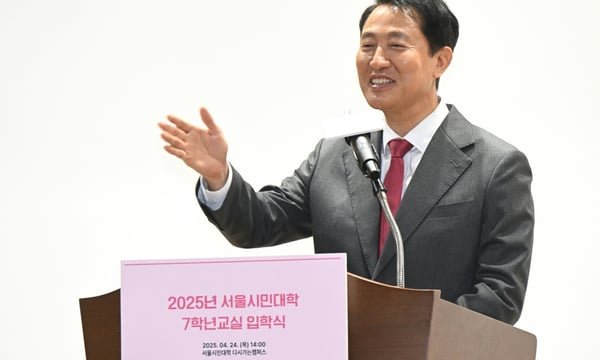
The Unexpected Outcome of the June 2026 Local Elections The June 3, 2026, mayoral contest in Seoul delivered a narrow victory for incumbent Oh Se-hoon, marking his fifth term in the post despite nonconsecutive service. All available polling and exit surveys had projected his defeat to the Democratic Party candidate, with Oh trailing until the early hours of June 4. Only after 9
The Unexpected Outcome of the June 2026 Local Elections
The June 3, 2026, mayoral contest in Seoul delivered a narrow victory for incumbent Oh Se-hoon, marking his fifth term in the post despite nonconsecutive service. All available polling and exit surveys had projected his defeat to the Democratic Party candidate, with Oh trailing until the early hours of June 4. Only after 9 a.m. did official tallies confirm his win by roughly one percent, equivalent to about 60,000 votes.
This result underscores Seoul's status as South Korea's premier political arena, where national trends often collide with local dynamics. The capital's electorate has historically served as a bellwether for broader ideological contests between the conservative People Power Party and the center-left Democratic Party, influencing everything from legislative majorities to presidential prospects.
Oh Se-hoon's Formative Years and Entry into Mayoral Politics
Oh Se-hoon transitioned from environmental law practice in the 1990s into legislative service in 2000 under what became the People Power Party. His early appeal stemmed from a reformist stance on domestic political structures, positioning him as a younger alternative within conservative ranks. Election as Seoul mayor in 2006 at age 45 established him as the youngest individual to hold the office.
During his initial term, Oh prioritized urban aesthetics and infrastructure upgrades, efforts that contributed to Seoul's 2010 designation by UNESCO as a Creative City of Design. These initiatives reflected a broader Korean policy emphasis on enhancing global city branding amid rapid post-industrial development.
The 2011 Referendum Episode and Questions of Political Independence
Oh's second term encountered turbulence when the Seoul Council approved an ordinance for universal free lunches in elementary schools. He framed the measure as unsustainable universal welfare and initiated a referendum, pledging resignation if voters rejected his position. The August 2011 press conference, during which he became visibly emotional and performed a kowtow, remains a defining public moment.
Although the referendum failed to meet turnout thresholds, Oh honored his commitment and stepped down. The episode illustrated his willingness to challenge both party orthodoxy and prevailing welfare trends, echoing his earlier 2004 refusal to contest general elections over insufficient internal reforms within conservative structures. Such actions highlight tensions between individual agency and collective party discipline in Korean politics.
Political Hiatus, International Engagements, and Difficult Reentry
Following resignation, Oh withdrew from electoral politics between 2012 and 2016. He focused on academic lectures in public policy and advisory roles in urban and environmental administration in Peru and Rwanda. Attempts to regain parliamentary seats in 2016 and 2020 proved unsuccessful, as did his 2019 bid for People Power Party leadership.
These setbacks occurred against the backdrop of Democratic Party dominance in national institutions. Oh's eventual return via the 2021 by-election capitalized on the preceding year's scandals surrounding his predecessor, Park Won-soon, and pandemic-related disruptions that shifted voter sentiment.
Policy Record, the Itaewon Tragedy, and Fourth-Term Challenges
Re-elected in 2022 to complete the original term, Oh advanced routine measures in transportation and social welfare alongside costly environmental projects. His absence from Seoul during the October 2022 Itaewon crowd incident, while on a European trip, drew widespread criticism given the event's scale as an annual gathering.
These developments occurred while the Democratic Party maintained a commanding National Assembly majority under the Lee Jae-myung administration. Oh's record thus unfolded within a polarized institutional environment where local executives often navigate constraints imposed by central government priorities.
Campaign Strategy and Rhetoric as the Conservative Bastion
Oh's 2026 re-election campaign centered on appeals to preserve Seoul as the final conservative stronghold against unified Democratic Party control of the executive and legislature. He positioned himself as a rational conservative, initially threatening to run independently and calling for the People Power Party to distance itself from former President Yoon Suk-yeol's legacy.
Party critics questioned his contributions across four prior terms, yet the distancing tactic allowed Oh to claim autonomy in rebuilding conservative appeal. This approach resonated in a city where voters weigh national ideological battles against practical governance concerns.
Implications for Korean Conservative Politics and Inter-Party Dynamics
Oh's victory signals potential pathways for conservative renewal by emphasizing localized independence from national party controversies. In a system where Seoul mayors frequently ascend to higher office, sustained control of the capital offers conservatives a platform to contest Democratic Party narratives on governance and reform.
The outcome also accentuates Seoul's role as a microcosm of Korean democracy's competitive tensions, where even modest margins can recalibrate strategies ahead of future national contests. For inter-Korean policy and chaebol regulation debates, a continued conservative presence in the capital may moderate executive initiatives originating from the ruling party.
By Prof. David Park, Staff WriterThis article was produced with AI-assisted research and editorial support. Reporting is based on sources cited in the article.
What's Your Reaction?
 Like
0
Like
0
 Dislike
0
Dislike
0
 Love
0
Love
0
 Funny
0
Funny
0
 Wow
0
Wow
0
 Sad
0
Sad
0
 Angry
0
Angry
0

East Asia/Technology Correspondent at Global1.News. Seoul-based voice covering Korean politics, technology, business, and culture. Analyzes how technology and geopolitics intersect across East Asia.












Comments (0)