
Ockenden Report Exposes 520 Avoidable Deaths at Nottingham Maternity Units
**Meta Title:** Ockenden Report Exposes Nottingham Maternity Scandal **Meta Description:** The Ockenden Report reveals 520 avoidable harms at Nottingham NHS Trust — 94 stillbirths, 62 neonatal deaths. A toxic culture spanning a decade of ignored warnings. **Keywords:** Ockenden Report, Nottingham maternity scandal, Donna Ockenden, NUH Trust, stillbirths, neonatal deaths, NHS go
The Ockenden Report, published today, stands as the largest maternity review in NHS history and lays bare systemic failures at Nottingham University Hospitals NHS Trust. Over 2,500 cases spanning 2012 to 2025 were examined, uncovering 520 instances of potentially avoidable harm or death to mothers and babies. The findings paint a picture of a service that repeatedly ignored families, dismissed concerns and failed to act on clear clinical warning signs.
Ockenden Report: 520 Families Failed by Nottingham's Toxic Maternity Services Nottingham, UK – 24 June 2026 — The independent review led by Donna Ockenden has delivered a damning verdict on maternity care at the Queen's Medical Centre and Nottingham City Hospital. It details how a toxic workplace culture, unstable leadership and woeful governance allowed 94 stillbirths, 62 neonatal deaths, 120 brain injuries, nine cases of cerebral palsy and six maternal deaths to occur when better care could have prevented them. Families who lost children or suffered life-changing injuries have described years of being gaslit by staff who refused to acknowledge substandard practice.
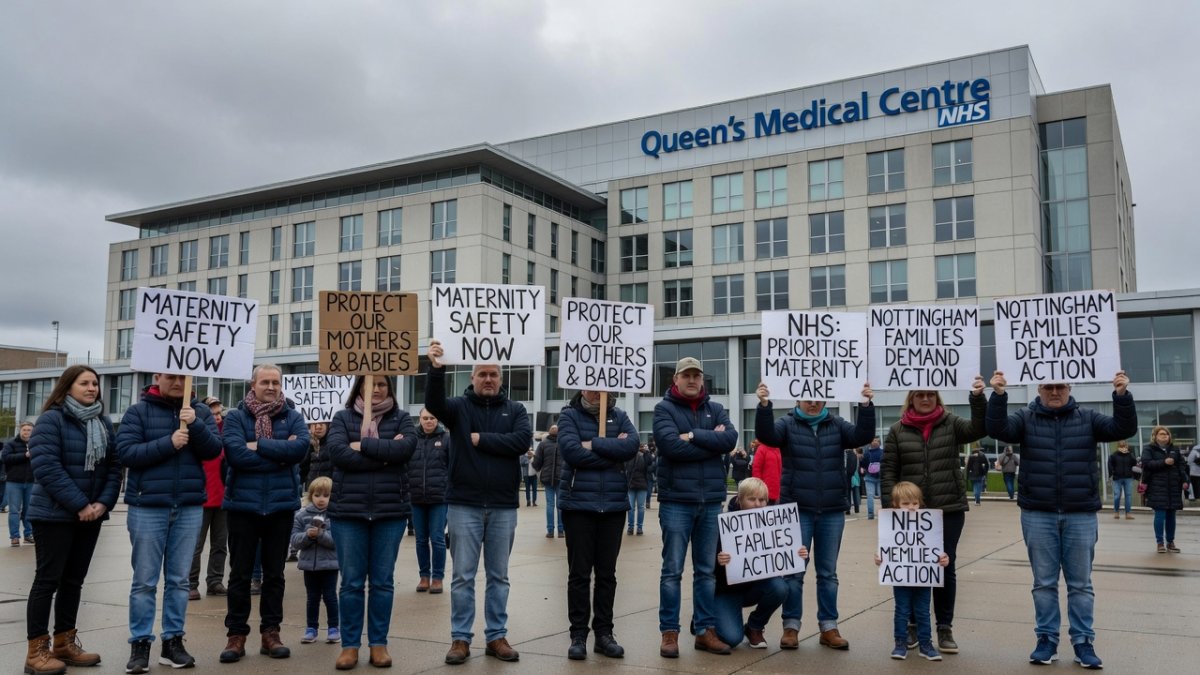
The Scale of Avoidable Harm
The raw numbers contained in the report make for grim reading. Between 2012 and 2025, 520 mothers and babies suffered outcomes that independent experts judged potentially preventable. The breakdown includes 94 stillbirths, 62 neonatal deaths, 120 babies left with brain injuries, nine diagnoses of cerebral palsy and six maternal deaths. These figures represent not statistics but individual tragedies that devastated families across Nottingham and beyond.
Each case was subjected to rigorous scrutiny by the review team. Many involved failures in basic monitoring, such as poor interpretation of CTG traces or delayed clinical examinations when labour stalled. Telephone risk assessments were frequently inadequate, leaving women at home when they required urgent hospital assessment. The cumulative effect was a pattern of missed opportunities that cost lives and caused permanent harm.
The review makes clear that these were not isolated incidents. They formed part of a sustained failure to learn from previous incidents. Serious incidents were often poorly investigated or not investigated at all, allowing the same mistakes to recur year after year.
A Culture of Intimidation and Dismissal
Donna Ockenden’s team found a deeply dysfunctional working environment at both hospital sites. Staff described cliques that operated through intimidation and nepotism. Aggressive behaviour went unchallenged, while those who raised concerns were marginalised or bullied. The report characterises the prevailing atmosphere as “toxic”, “bullying”, “cruel” and “dismissive”.
This culture directly affected patient care. Families repeatedly reported that their worries were not listened to or believed. Some were told their babies had died of natural causes when evidence showed substandard care had played a decisive role. The review notes that this refusal to engage with parental concerns compounded the original clinical failures and left families without answers for years.
Midwives and doctors who attempted to speak up about poor practice often faced hostility. The review highlights how this environment discouraged escalation and prevented timely intervention when complications arose.
Years of Ignored Warnings
Concerns about maternity services at Nottingham University Hospitals NHS Trust date back to 2007. By 2015, explicit warnings had been issued by external bodies, yet meaningful change never materialised. Between 2015 and 2022, six separate external reviews examined aspects of the service. None produced lasting improvement.
The CQC and NHS England both raised issues during this period, yet the trust’s leadership failed to implement recommendations. The Department of Health and Social Care was also briefed on emerging problems. Despite this sustained external scrutiny, governance systems remained weak and serious incidents continued to be mishandled.
The review concludes that the absence of accountability allowed dangerous practices to persist. Lessons were not learned because the trust lacked the structures to ensure they were acted upon.
Leadership Instability and Governance Collapse
A major contributing factor identified by the report was the sustained turnover of senior leaders between 2017 and 2021. This instability created a vacuum in which poor practice could flourish unchecked. Successive chief executives and medical directors arrived and departed without establishing consistent oversight.
Governance arrangements had been inadequate since at least 2012. Serious incidents were not properly investigated, root-cause analyses were superficial, and action plans were rarely followed through. The NUH Trust’s board received incomplete or misleading information, preventing effective challenge.
The report is clear that these structural weaknesses were not accidental. They reflected a deeper unwillingness to confront uncomfortable truths about the quality of care being delivered.
Journalism That Forced Accountability
The problems at Nottingham might have remained hidden for longer had it not been for the work of investigative journalists. Victoria Macdonald, Channel 4 News Health & Social Care Editor, was the first to reveal the scale of concerns in a series of reports that prompted wider scrutiny. Her coverage gave voice to families who had been silenced for years.
The Ockenden team acknowledges that media attention played a critical role in securing the independent review. Without sustained public pressure, the trust’s internal processes would likely have continued to obscure the true extent of the harm.
This case underscores the importance of independent journalism in holding powerful institutions to account when official channels fail.

Political Response and Family Demands
Health Secretary Sajid Javid has accepted the report’s findings in full and announced that Martha’s Rule will be rolled out across all maternity services in England. The measure aims to give families a formal route to escalate concerns when they feel their worries are being ignored. The government has also instructed the CQC to conduct urgent inspections of other trusts with similar governance red flags.
The NUH Trust has issued an unreserved apology to all affected families. However, many relatives remain unconvinced that internal reforms will be sufficient. They are calling for a statutory public inquiry with powers to compel evidence and examine the role of regulators and government departments.
Donna Ockenden has supported these calls, stating that only a full statutory process can deliver the transparency families deserve.
The Bottom Line — What Comes Next
The Ockenden Report leaves no doubt that Nottingham’s maternity services operated in a state of chronic failure for more than a decade. The human cost—94 stillbirths, 62 neonatal deaths, 120 brain injuries, nine cases of cerebral palsy and six maternal deaths—demands more than apologies and internal action plans. Families have waited too long for genuine accountability.
Implementation of the report’s 92 recommendations will now be monitored by NHS England and the CQC. Yet the trust’s history of ignoring external advice suggests that robust external oversight will be essential. Without it, the risk remains that lessons will again be filed away rather than acted upon.
The wider NHS must now examine whether similar patterns of poor culture, weak governance and dismissed families exist elsewhere. The Nottingham scandal is not an outlier; it is a warning. By Erica Thornton, Staff Writer
This article was produced with AI-assisted research and editorial support. Reporting is based on sources cited in the article.
What's Your Reaction?
 Like
0
Like
0
 Dislike
0
Dislike
0
 Love
0
Love
0
 Funny
0
Funny
0
 Wow
0
Wow
0
 Sad
0
Sad
0
 Angry
0
Angry
0

US Politics and Policy Correspondent at Global1.News. Based in Washington DC, covering American politics, policy, elections, and the courts. Knows how the system works and tells you what it actually means.














Comments (0)