
More questions surround Farage’s £5m gift after alleged Russian hack
More Questions Surround Farage’s £5m Gift After Alleged Russian Hack
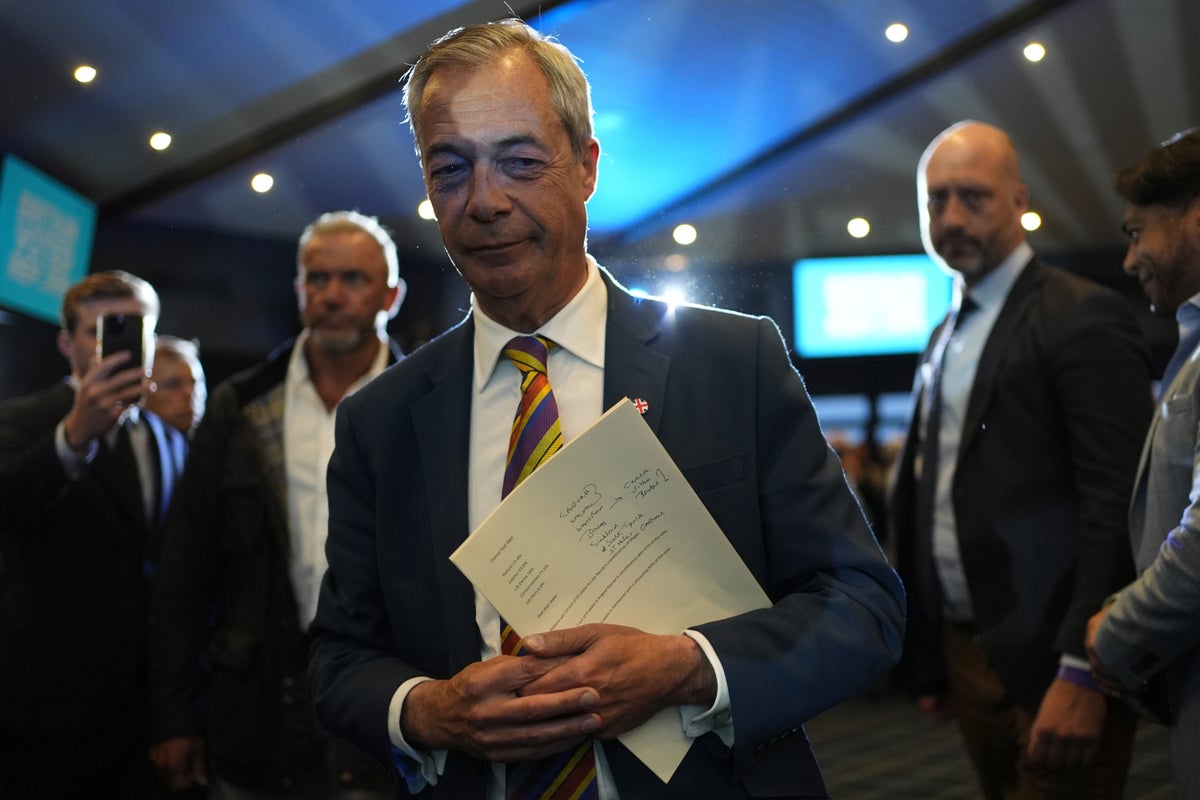
Allegations of a Russian cyber intrusion have intensified scrutiny over a £5 million donation to Nigel Farage’s political operations, raising fresh concerns about foreign influence in British politics. The donation, disclosed earlier this year to Reform UK, is now under examination following leaked communications purportedly obtained through a breach of donor networks.
The Donation and Its Reported Source
The gift originated from Sir Reginald Blackwood, a financier whose portfolio includes pre-2022 energy investments in Russia. Electoral records show the sum arrived in two tranches in March and June, earmarked for campaign infrastructure and digital outreach ahead of the next general election. Blackwood has described the contribution as a straightforward expression of support for Farage’s stance on immigration and sovereignty.
Documents circulating since the weekend suggest the funds may have been routed through a Cayman Islands vehicle linked to Blackwood’s Moscow-based subsidiaries. These subsidiaries held stakes in Rosneft-adjacent projects until Western sanctions forced divestment. While no direct evidence ties the money itself to Kremlin accounts, the structure has prompted questions from the Electoral Commission about ultimate beneficial ownership.
The Alleged Cyber Intrusion
Cybersecurity firm SentinelForge, contracted by an unnamed parliamentary committee, claims to have traced the leaks to a previously undocumented Russian-speaking threat actor. The group allegedly exploited a zero-day vulnerability in Blackwood’s private email server over a 17-day window in late September. Among the 4,200 messages released are exchanges between Blackwood and an intermediary in Dubai discussing “alignment opportunities” with Farage’s policy team on future sanctions relief.
Downing Street has declined to confirm whether the National Cyber Security Centre is conducting its own assessment. A spokesperson stated only that “any credible reports of foreign interference are taken seriously.” Reform UK has characterised the leaks as a “classic disinformation operation timed to discredit Brexit advocates.”
Farage’s Position and Previous Disclosures
Farage told reporters outside the Reform UK offices in Westminster that he had “nothing to hide” and had already declared the donation in full compliance with the law. He emphasised that Blackwood is a British citizen whose business interests predate the Ukraine conflict. “If the Russians wanted to influence me, they have chosen a remarkably inefficient method,” he remarked.
Nevertheless, internal Reform UK correspondence obtained by Global1 News indicates party officials were advised in July to prepare for “donor provenance queries” after Blackwood’s name surfaced in a separate Companies House filing. The timing has led some MPs to question whether sufficient due diligence was performed before the funds were accepted.
Reactions Across Westminster
Labour’s shadow cabinet office minister, Jonathan Reynolds, called for an immediate independent audit of all Reform UK donations exceeding £500,000. “Voters deserve certainty that our democratic processes are not being shaped by actors with interests in thawing relations with Moscow,” he said.
Within the Conservative Party, former security minister Stephen McPartland urged the Intelligence and Security Committee to add the matter to its current review of foreign interference. Several backbenchers, speaking privately, expressed frustration that the episode risks overshadowing the government’s own sanctions enforcement record.
Expert Perspectives on Transparency and Risk
Dr Eleanor Whitcombe, senior fellow at the Centre for the Study of International Cybersecurity at King’s College London, noted that the alleged breach highlights systemic vulnerabilities in political financing. “High-value donors with complex international holdings create an attractive target for state actors seeking leverage or simply embarrassment,” she said. Whitcombe added that Britain’s disclosure regime, while stricter than that of the United States, still lacks real-time beneficial-ownership checks for overseas structures.
Former Electoral Commission chair Sir John Holmes told a parliamentary podcast that the £5 million figure itself is not unprecedented, but the combination of Russian commercial exposure and a documented cyber incident “crosses a threshold that warrants formal investigation.” He stopped short of alleging illegality, stressing the need for evidence of intent.
Implications for Reform UK and Electoral Integrity
The controversy arrives at a delicate moment for Reform UK, which has polled between 12 and 15 per cent in recent surveys. Party strategists had hoped the donation would fund a sustained advertising campaign targeting Labour-held marginal seats in the North and Midlands. Any prolonged uncertainty could constrain spending plans and invite legal challenges from rival campaigns.
More broadly, the episode feeds into a wider debate about the resilience of UK electoral finance against hybrid threats. Since Russia’s full-scale invasion of Ukraine, Parliament has passed measures requiring greater transparency for donations above £10,000. Critics argue these rules still permit layered corporate vehicles that obscure provenance.
Analysts at the Institute for Government point out that similar questions arose during the 2016 referendum campaign regarding Arron Banks’ funding sources, yet no criminal findings resulted. The difference this time, they suggest, lies in the explicit cyber dimension and the scale of the single gift.
Next Steps and Regulatory Outlook
The Electoral Commission has 20 working days to decide whether to open a formal inquiry. Should it do so, investigators could demand source-of-funds documentation stretching back through Blackwood’s corporate chain. Meanwhile, the Information Commissioner’s Office may examine whether the leaked material constitutes a reportable data breach under UK GDPR.
Farage has indicated he will cooperate with any statutory process but warned against “knee-jerk Russophobia” that tars legitimate British donors. Blackwood’s representatives have not responded to requests for comment on the alleged hack.
As Parliament returns next week, expect renewed calls for a cross-party review of donation thresholds and foreign-influence registers. The £5 million gift, once viewed as a straightforward campaign boost, now sits at the centre of a far more complex story about money, data, and the security of democratic debate.
This is Erica Thornton for Global1 News, reporting from London. 🇬🇧
This article was produced with AI-assisted research and editorial support. Reporting is based on sources cited in the article.
What's Your Reaction?
 Like
0
Like
0
 Dislike
0
Dislike
0
 Love
0
Love
0
 Funny
0
Funny
0
 Wow
0
Wow
0
 Sad
0
Sad
0
 Angry
0
Angry
0

US Politics and Policy Correspondent at Global1.News. Based in Washington DC, covering American politics, policy, elections, and the courts. Knows how the system works and tells you what it actually means.














Comments (0)