
Montreux Jazz Festival Makes Historic African Debut in South Africa's Cape Winelands
The Montreux Jazz Festival, founded in 1967 by Claude Nobs in Switzerland, has expanded its reach with its first African edition this past March in South Africa's Cape Winelands. The three-day event established the Montreux Jazz Festival Franschhoek as a bridge between European jazz traditions and African musical expressions. This debut signals deeper cultural exchanges across
The Montreux Jazz Festival, founded in 1967 by Claude Nobs in Switzerland, has expanded its reach with its first African edition this past March in South Africa's Cape Winelands. The three-day event established the Montreux Jazz Festival Franschhoek as a bridge between European jazz traditions and African musical expressions. This debut signals deeper cultural exchanges across continents.
Montreux Jazz Festival Makes Historic African Debut in South Africa's Cape Winelands
Dakar, Senegal — The Montreux Jazz Festival Franschhoek brought the Swiss institution's programming model to the Franschhoek Valley this past March, featuring performances by Mandisi Dyantyis, Wet Wet Wet, Melorie Jane, and Luyanda Madope across three days from 27 to 29 March. Local coverage in Business Day, TimesLIVE, Sunday Times, and Financial Mail highlighted the event's integration of jazz sets with wine tastings and scenic valley views, drawing international visitors to the Cape Winelands. The official X account @mjffranschhoek documented daily highlights, while the podcast On the Corner Ep.5 hosted by Charles Leonard analyzed the cross-continental programming choices. Senegal's own Saint-Louis Jazz Festival, which has long featured artists such as Baaba Maal and Orchestra Baobab within the mbalax tradition, provides a comparable platform that now gains a new global counterpart through this expansion.
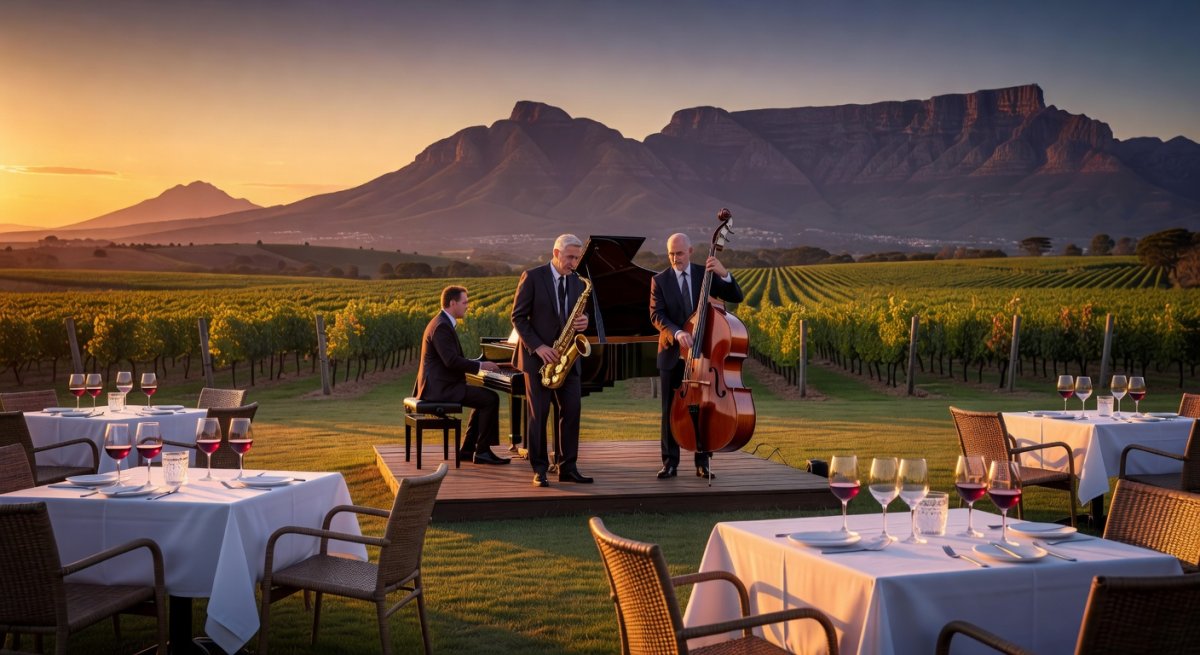
Historic Arrival: Montreux Comes to Africa
The Montreux Jazz Festival originated in 1967 when Claude Nobs launched the event in Switzerland, initially focusing on American jazz before broadening to international acts over subsequent decades. Its African debut this past March in the Franschhoek Valley marked the first time the festival operated under the official Montreux Jazz Festival Franschhoek banner outside Europe. Organizers selected South Africa after evaluating multiple sites, citing the region's established jazz infrastructure and tourism capacity as decisive factors. This move aligns with broader efforts to connect European festival models with African scenes, much like how Senegal's Saint-Louis Jazz Festival has sustained annual programming since the 1990s with performers rooted in local mbalax rhythms.
Claude Nobs's original vision emphasized intimate venues and artist interactions, principles carried forward to the Cape Winelands edition through curated stages amid vineyards. The three-day format from 27 to 29 March allowed for focused programming that avoided the scale of larger European iterations while introducing African audiences to the Montreux brand. Coverage from Financial Mail noted the logistical planning that involved partnerships with local wine estates, ensuring seamless transitions between sets and tastings. Such adaptations reflect the festival's evolution from its Swiss roots toward a more distributed global presence.
The arrival carries particular resonance for Senegalese cultural observers because it parallels the growth of events like the Dakar Biennale, which similarly positions African creativity on international stages. Montreux Jazz Festival Franschhoek organizers confirmed the 2027 edition immediately after the March close, signaling sustained commitment rather than a one-off experiment. Business Day reporting emphasized how the event's prestige elevated South African jazz visibility without overshadowing local traditions. This pattern mirrors the way MASA in Abidjan has developed into a recurring marketplace for African performing arts.
Early planning involved direct input from Swiss festival veterans who traveled to assess the Franschhoek Valley's acoustics and infrastructure. The decision to launch in South Africa rather than other African nations stemmed from existing flight connections and hospitality networks already familiar with large-scale events. TimesLIVE accounts described the opening night's atmosphere as a deliberate fusion of Swiss precision in scheduling and South African warmth in audience engagement. These elements together established a template that could extend to West African circuits in future years.
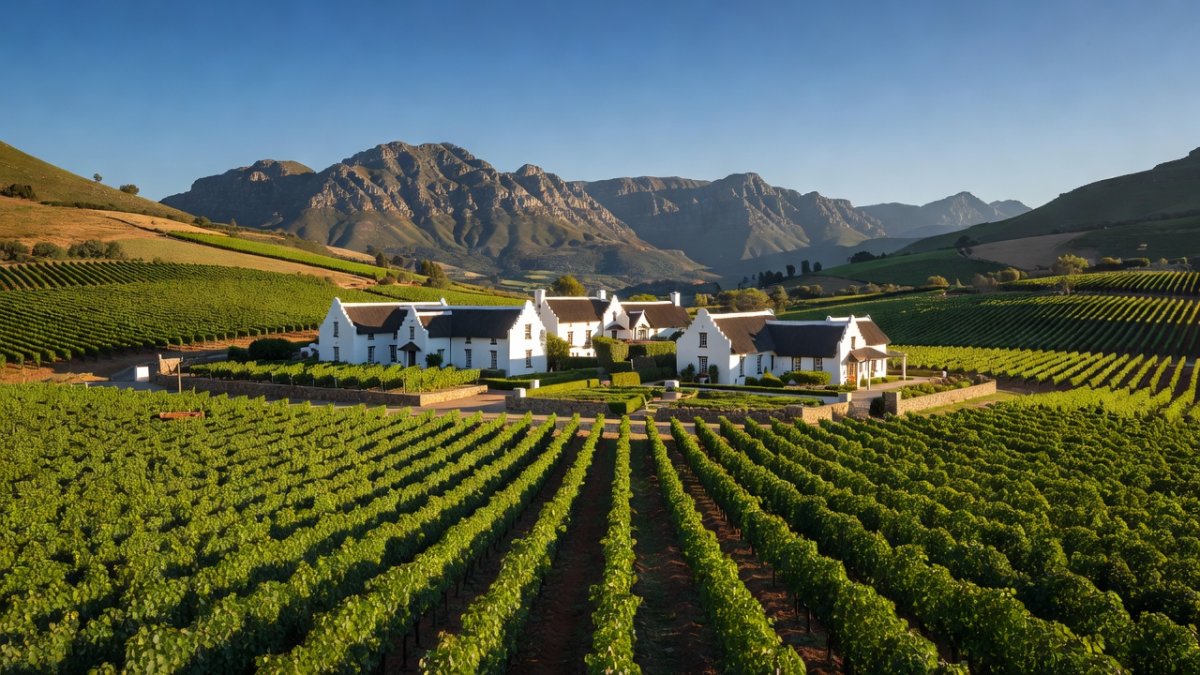
Franschhoek: The Perfect Stage for Jazz and Terroir
The Franschhoek Valley's combination of historic wine estates and mountain backdrops provided an ideal setting for the Montreux Jazz Festival Franschhoek, allowing performances to unfold against landscapes that complement the music's improvisational flow. Local businesses reported increased bookings at guesthouses and restaurants during the 27 to 29 March dates, with wine tours integrated directly into festival packages. This approach mirrors how Senegal's Saint-Louis Jazz Festival leverages the city's colonial architecture and riverfront locations to enhance visitor experiences alongside sets by Baaba Maal and Orchestra Baobab. The valley's established gourmet dining scene further supported extended stays by international attendees.
Organizers chose Franschhoek specifically for its microclimate and existing infrastructure that supports outdoor stages without compromising sound quality. Sunday Times coverage detailed how estate owners collaborated on venue layouts that preserved vineyard operations while hosting evening concerts. The resulting synergy boosted visibility for smaller producers who paired tastings with ticketed events, creating revenue streams beyond standard tourism. Such integration echoes the economic model seen at the Dakar Biennale, where cultural programming stimulates surrounding commercial activity.
Attendees moved between performances and wine cellars within walking distance, a layout that reduced transportation needs and encouraged deeper engagement with the terroir. Financial Mail analysis showed measurable upticks in local employment for event staff and hospitality workers during the three-day period. The scenic setting also attracted photographers and filmmakers whose documentation amplified the festival's reach through @mjffranschhoek posts. This place-based strategy strengthens the case for similar pairings in other African wine or agricultural regions.
Community feedback highlighted how the event respected agricultural cycles by scheduling around harvest periods, a consideration that maintained goodwill with residents. Partnerships with Franschhoek tourism boards ensured marketing materials emphasized both the jazz lineup and the valley's heritage routes. The result positioned the Montreux Jazz Festival Franschhoek as more than imported entertainment, embedding it within the Cape Winelands economy in ways that parallel cultural tourism successes at FESPACO in Ouagadougou.
A Lineup Bridging Continents and Generations
Mandisi Dyantyis opened the Montreux Jazz Festival Franschhoek with a politically charged set that combined his vocal and trumpet work, drawing on South African protest traditions while engaging contemporary audiences across the 27 to 29 March dates. Wet Wet Wet followed with their Scottish pop-jazz fusion, creating contrast that highlighted the festival's commitment to generational and stylistic range. Melorie Jane delivered contemporary jazz interpretations that incorporated local rhythms, earning praise in TimesLIVE for her command of both ballad and up-tempo material. Luyanda Madope closed one evening with solo piano explorations that showcased technical precision rooted in South African jazz vocabulary.
The programming deliberately mixed international acts like Wet Wet Wet with South African artists to foster dialogue between established and emerging voices. Business Day noted how Dyantyis's set referenced historical struggles in ways that resonated with listeners familiar with Hugh Masekela's legacy. Melorie Jane's performances incorporated electronic elements alongside acoustic jazz, reflecting current trends while honoring earlier forms. This balance ensured the event appealed to both longtime Montreux followers and first-time African attendees.
Luyanda Madope's piano work stood out for its harmonic complexity, drawing comparisons in Sunday Times reviews to Abdullah Ibrahim's compositional approach. Wet Wet Wet's inclusion introduced European pop sensibilities that broadened the festival's demographic reach beyond dedicated jazz listeners. The overall curation avoided overcrowding the three-day schedule, allowing each artist extended sets that encouraged improvisation. Podcast On the Corner Ep.5 by Charles Leonard later dissected these choices as models for future cross-continental bookings.
Audience interactions during the sets revealed shared appreciation for the music's emotional depth, with encores extending late into the evenings. The lineup's diversity also created opportunities for informal collaborations among performers backstage at the Franschhoek venues. Such moments reinforced the festival's role in building networks that could support touring exchanges with West African festivals like Saint-Louis Jazz Festival.
South Africa's Jazz Legacy Meets Global Prestige
South Africa's jazz history includes foundational figures such as Hugh Masekela, Abdullah Ibrahim, and Miriam Makeba, whose international careers established pathways now extended by the Montreux Jazz Festival Franschhoek. Contemporary artists like Nduduzo Makhathini and Bokani Dyer continue this lineage through recordings and performances that blend traditional elements with modern improvisation. The March event positioned these legacies alongside the Swiss festival's prestige, creating a platform that validates ongoing African contributions to the genre. This connection resonates in Senegal, where similar legacies inform the programming at Saint-Louis Jazz Festival featuring Baaba Maal and Orchestra Baobab.
Nduduzo Makhathini's recent work draws explicitly from spiritual jazz traditions that echo Miriam Makeba's global advocacy, a thread the Franschhoek stages made visible to new listeners. Bokani Dyer's compositions incorporate Cape Town's rhythmic influences, providing continuity with earlier generations while attracting younger crowds. The Montreux branding lent additional weight to these performances, as noted in Financial Mail coverage that traced direct lines from Makeba's exile-era recordings to current festival circuits.
Hugh Masekela's trumpet innovations and Abdullah Ibrahim's piano explorations remain reference points for artists performing at the event, with several sets including explicit homages. The presence of international media amplified these connections, positioning South African jazz within a wider African narrative that includes developments at the Dakar Biennale. Such framing encourages cross-border collaborations that could involve Senegalese mbalax ensembles in future editions.
The festival's structure allowed emerging players to share bills with established names, fostering mentorship dynamics familiar from South African jazz clubs. This approach mirrors the intergenerational programming at MASA in Abidjan, where legacy artists guide newer talents. The resulting visibility strengthens arguments for sustained investment in African jazz infrastructure across multiple countries.
Implications for Africa's Cultural Tourism Economy
The Montreux Jazz Festival Franschhoek generated direct economic benefits for the Cape Winelands through increased hotel occupancy and restaurant revenue during the 27 to 29 March period, according to local business reports. Comparisons with Senegal's Saint-Louis Jazz Festival illustrate how recurring cultural events can stabilize seasonal tourism flows and support year-round employment. The confirmed 2027 edition promises continued returns that could model similar expansions elsewhere on the continent. Coverage in Business Day quantified visitor spending patterns that exceeded initial projections.
Integration of wine tourism with performances created bundled experiences that extended visitor stays beyond single evenings, a tactic also employed at the Dakar Biennale to maximize cultural spending. Local suppliers benefited from procurement contracts for staging and catering, distributing gains more widely than standard concert models. This economic layering aligns with strategies at FESPACO in Ouagadougou, where film screenings drive ancillary commerce in surrounding markets.
The event's success prompted discussions among tourism boards about replicating the format in other regions with strong musical traditions. Saint-Louis Jazz Festival organizers have already referenced the Montreux model when planning expansions that incorporate additional international partners. Such exchanges could lead to circuit-style touring that reduces costs for artists while increasing regional exposure.
Financial Mail analysis projected that sustained editions would contribute measurable growth to South Africa's creative economy, particularly through skills transfer in event management. The festival's emphasis on scenic and culinary assets differentiates it from purely music-focused gatherings, offering a template adaptable to West African contexts rich in both heritage sites and performing arts.
What to Watch For
Future editions of Montreux Jazz Festival Franschhoek are expected to expand artist invitations to include more West African performers, building on the Senegal connection already established through shared programming philosophies with the Saint-Louis Jazz Festival. The 2027 dates will likely incorporate additional stages to accommodate growing demand while maintaining the intimate scale that defined the March debut. Podcast On the Corner Ep.5 by Charles Leonard set a precedent for in-depth coverage that could become a regular feature alongside @mjffranschhoek updates.
Potential development of a broader African circuit would link Franschhoek with events in Dakar, Abidjan, and Ouagadougou, allowing artists such as Nduduzo Makhathini and Bokani Dyer to tour more efficiently. This network could mirror successful European festival routes while centering African venues and audiences. Local promoters are already studying logistics from the first edition to refine ticketing and transportation systems.
Expanded media partnerships may bring live broadcasts to Senegalese listeners, strengthening cultural ties between Southern and West African jazz communities. The inclusion of gourmet and landscape elements will likely remain central, differentiating the event from urban festivals and supporting rural economies. These choices position the Montreux Jazz Festival Franschhoek as a catalyst for diversified tourism products across the continent.
Observers anticipate announcements regarding educational components such as masterclasses that could involve visiting Swiss technicians alongside South African mentors. Such additions would deepen the festival's legacy impact beyond ticket sales. The confirmed continuation through 2027 provides a stable foundation for these developments to unfold methodically.
The Montreux Jazz Festival Franschhoek has established a durable foothold that invites ongoing collaboration between African and European cultural institutions, with Senegal's vibrant festival ecosystem standing ready to participate in the next phase of growth. This debut reframes jazz not as an imported form but as a living dialogue across the continent and beyond.
By Amara Diop, Staff Writer
This article was produced with AI-assisted research and editorial support. Reporting is based on sources cited in the article.
What's Your Reaction?
 Like
0
Like
0
 Dislike
0
Dislike
0
 Love
0
Love
0
 Funny
0
Funny
0
 Wow
0
Wow
0
 Sad
0
Sad
0
 Angry
0
Angry
0

West Africa/Sahel Correspondent at Global1.News. Dakar-based journalist covering politics, security, climate, and development across Francophone and Anglophone West Africa. Tells the stories of a region undergoing profound transformation.










Comments (0)