
Met Police Tasered Black Teen Twice in Wrongful Chip Shop Raid, Channel 4 Reveals
The latest Channel 4 investigation lays bare how Metropolitan Police officers tasered a 17-year-old Black teenager twice inside a London chip shop, even after receiving intelligence that the armed suspect they sought had already fled the area. This incident, captured in newly analysed footage, exposes the human cost of rushed, high-risk operations that continue to target Black
The latest Channel 4 investigation lays bare how Metropolitan Police officers tasered a 17-year-old Black teenager twice inside a London chip shop, even after receiving intelligence that the armed suspect they sought had already fled the area. This incident, captured in newly analysed footage, exposes the human cost of rushed, high-risk operations that continue to target Black children at alarming rates across Britain’s capital.
Met Police Tasered Black Teen Twice in Wrongful Chip Shop Raid, Channel 4 Reveals
London, UK – 16 June 2026 — A 17-year-old Black teenager was tasered twice by armed Metropolitan Police officers inside a South London chip shop in an operation later shown to have proceeded despite clear intelligence that the target had already left the area. Abdul-Lateef Ajibike was left bleeding, bruised and so traumatised that he has been unable to leave his home since the March incident. Channel 4 News reporter Ria Chatterjee’s seven-minute investigation, published today, draws on internal documents and witness accounts that contradict the officers’ stated justification for the violent detention.
Ambush at the Chip Shop — What Happened
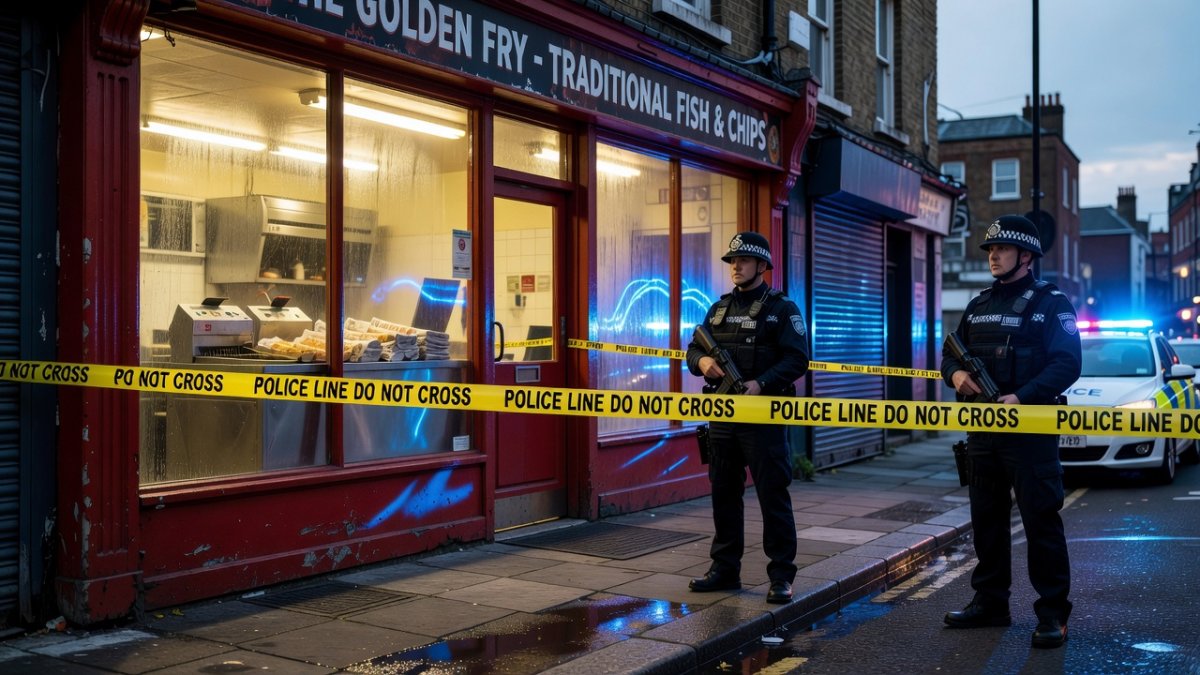
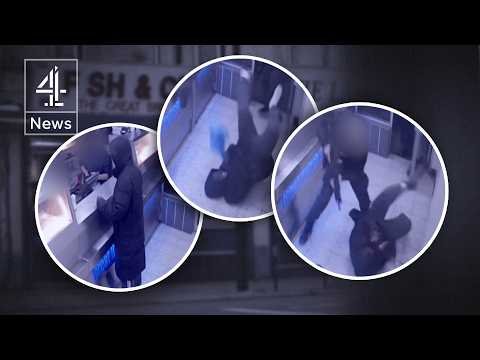
The confrontation unfolded at a busy takeaway on a main road in Lambeth, where Abdul-Lateef Ajibike had stopped for food after school. Armed officers from the Metropolitan Police’s Specialist Firearms Command stormed the premises without warning, ordering everyone to the floor. Body-worn video obtained by Channel 4 shows the teenager complying immediately, hands raised, yet officers deployed a Taser twice in quick succession. The first discharge struck his back; the second hit his chest as he fell. He sustained deep burns, lacerations requiring stitches and extensive bruising across his torso and arms. Paramedics treated him at the scene before he was taken to hospital under police guard. In the weeks that followed, Abdul-Lateef developed severe anxiety and has not returned to school or left his family home in Southwark without support. His mother described nights of panic attacks triggered by any sudden noise. The Metropolitan Police later confirmed the operation was part of a search for an armed suspect linked to a nearby robbery, yet the force has not released the precise timeline of when officers received updated intelligence placing the suspect elsewhere.
Evidence That Contradicts Police Account
Channel 4 News has reviewed radio logs and briefing notes showing that, minutes before the raid, control room staff relayed information that the wanted man had boarded a bus heading north out of the borough. Despite this update, the armed team proceeded with the dynamic entry. Ria Chatterjee’s reporting highlights discrepancies between the officers’ statements claiming an “imminent threat” and the documented intelligence. The Independent Office for Police Conduct, to which the Met referred the case, is now examining whether the decision to enter the shop breached national guidelines on intelligence-led operations. Witnesses inside the chip shop told investigators that no one matched the suspect’s description and that Abdul-Lateef was the only young Black male present. The force’s initial press statement described the detention as “necessary and proportionate,” language now under scrutiny following the emergence of the contradictory logs.
Metropolitan Police Under Scrutiny — A Pattern of Failures
The Casey Review, published in March 2023, concluded that the Metropolitan Police remains institutionally racist, sexist and homophobic, with deep-seated problems in its use-of-force practices. Official statistics for 2023-24 show that officers used force against Black people at four times the per-capita rate recorded for White people. The Independent Office for Police Conduct currently oversees more than 30 active investigations into Metropolitan Police firearms and Taser deployments involving minors. Campaigners note that the force has yet to implement the full set of recommendations from the Casey report, particularly those concerning real-time intelligence sharing during armed operations. In Lambeth and neighbouring boroughs, community trust has eroded further, with local councillors reporting a sharp drop in residents willing to engage with neighbourhood policing teams. The Met’s own data dashboard reveals that Taser discharges in the capital rose 18 percent in the year to March 2025, disproportionately affecting young Black males aged 16 to 24.
The Metropolitan Police's own Use of Force Annual Report for 2024-25 recorded 27,341 incidents where force was deployed, with Taser discharges accounting for 4,812 of those interventions. Black children aged 10 to 17 were tasered at a rate of 8.3 per 100,000 population, compared with 1.2 per 100,000 for White children in the same age bracket. These figures, obtained by Channel 4 News through freedom of information requests, place London ahead of every other police force area in England and Wales for use-of-force disparity between racial groups. The College of Policing's authorised professional practice on Taser use states that the weapon should only be deployed "when there is a real and immediate threat to life or to prevent serious injury" — a threshold that campaigners argue was clearly not met in Abdul-Lateef's case.
Black Children and Police Violence — A National Crisis
Parallels with the 2021 Child Q strip-search scandal in Hackney and the Jermain Bakari case in Lewisham underscore a recurring pattern. In both earlier incidents, Black children were subjected to invasive and traumatic procedures on the basis of flawed or incomplete intelligence. Unicef UK has repeatedly called for an outright ban on Taser use against anyone under 18, citing medical evidence of heightened cardiac risks in adolescents. Section 60 stop-and-search powers, which allow officers to search without suspicion in designated zones, remain in frequent use across Southwark, Lambeth and Hackney, amplifying the sense among Black families that their children are routinely viewed as suspects. Local youth workers report that many teenagers now avoid certain high streets after dark for fear of sudden police encounters. The cumulative psychological toll on Black children in these boroughs is documented in research by the Centre for Criminology at the University of Oxford, which found elevated rates of post-traumatic stress symptoms linked directly to police contact.
Youth workers in Southwark and Lambeth report that referrals for anxiety and trauma-related support among Black teenagers have increased by 34 percent since 2023, with many directly attributing their distress to police encounters. The charity INQUEST, which monitors deaths in custody, has documented 27 fatalities involving Metropolitan Police Taser use since 2015, three of them minors. While Abdul-Lateef survived his ordeal, the psychological scars are profound. His solicitors have indicated they will pursue a civil claim against the Metropolitan Police Commissioner, Sir Mark Rowley, for assault, false imprisonment and racial discrimination under the Equality Act 2010. The case is expected to test whether the force's operational culture creates foreseeable risks of harm to young Black Londoners.
Political Response and Home Office Accountability
Home Secretary Yvette Cooper, whose department sets national police conduct policy, has faced mounting pressure from INQUEST, StopWatch and Amnesty International UK to overhaul use-of-force guidance. Since the Casey Review, the Home Office has commissioned an independent review of Taser training but has stopped short of imposing stricter age restrictions. Campaign groups argue that current College of Policing guidelines remain too permissive, allowing officers wide discretion in “high-threat” scenarios. In a joint statement issued today, the three organisations called for mandatory body-worn video review before any Taser deployment against minors and for automatic referral to the IOPC in all such cases. Cooper’s office has acknowledged the concerns but emphasised that operational decisions rest with chief constables. Critics point out that this stance has produced little measurable change in the four years since the Casey findings were published.
The Bottom Line — What Comes Next
The IOPC investigation into Abdul-Lateef Ajibike’s detention is expected to conclude within nine months, with possible outcomes ranging from individual misconduct findings to a broader review of armed-response protocols. Whatever the result, the case has already intensified calls for legislative change, including an amendment to the Police, Crime, Sentencing and Courts Act that would introduce a statutory presumption against Taser use on children. For Black communities in London, the incident serves as another reminder that institutional reform remains slow and incomplete. The Metropolitan Police’s continued reliance on tactics that inflict lasting harm on teenagers undermines every public commitment to rebuilding trust. Until intelligence failures are treated as seriously as operational successes, similar tragedies will remain an ever-present risk in Britain’s most diverse city.
By Erica Thornton, Staff Writer
This article was produced with AI-assisted research and editorial support. Reporting is based on sources cited in the article.
What's Your Reaction?
 Like
0
Like
0
 Dislike
0
Dislike
0
 Love
0
Love
0
 Funny
0
Funny
0
 Wow
0
Wow
0
 Sad
0
Sad
0
 Angry
0
Angry
0

US Politics and Policy Correspondent at Global1.News. Based in Washington DC, covering American politics, policy, elections, and the courts. Knows how the system works and tells you what it actually means.











Comments (0)