
Leni Robredo closes in on Sara Duterte in hypothetical 2028 race — poll
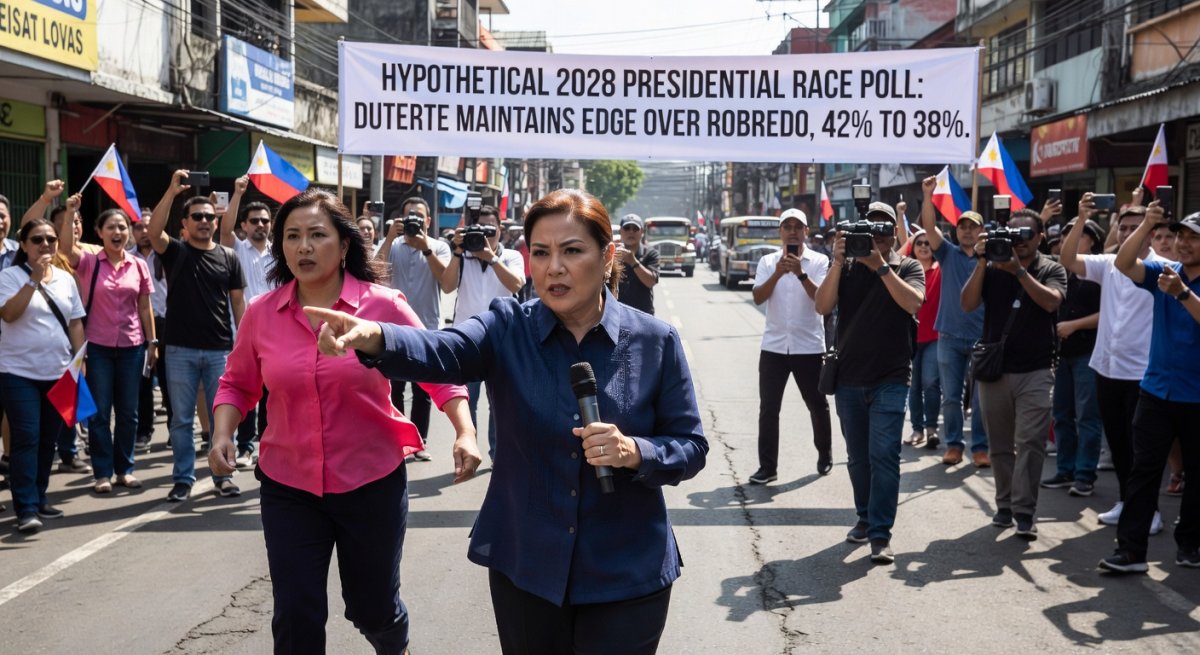
In the Philippine political landscape, where public opinion surveys often serve as early indicators of voter priorities ahead of national contests, a fresh poll on a hypothetical 2028 presidential race shows Vice President Sara Duterte maintaining an edge over former Vice President Leni Robredo even as the Naga City mayor narrows the distance and stays competitive in several key areas.
The survey, released on May 30, 2026, underscores how preferences can evolve between election cycles. It places the current vice president in the lead while documenting Robredo’s improved standing, a development that illustrates the fluid nature of voter alignments more than two years before the next presidential vote.
This tightening reflects ongoing interest in how candidates from different political backgrounds might perform in a direct contest, particularly as the country continues to navigate issues of governance and public trust.
The Latest Survey Snapshot
The poll examines a head-to-head scenario for 2028 without introducing new variables or operational details beyond the reported standings. Sara Duterte continues to lead, yet Robredo has closed the gap in meaningful ways. The former vice president’s improved position keeps her within striking distance in multiple regions, preventing any assumption of a settled outcome at this early stage. Such results highlight the value of tracking changes over time rather than relying on a single snapshot. They also remind observers that hypothetical matchups serve mainly as reference points, not predictions, because actual campaigns involve platforms, alliances, and turnout factors that remain unknown.Regional Patterns and Competitiveness
Robredo’s strengthened showing is most evident in key regions where she maintains or expands support. These areas have historically played decisive roles in national outcomes, and her ability to remain competitive there signals that any future race could hinge on localized mobilization rather than uniform national trends. The survey does not detail specific margins or breakdowns beyond noting sustained competitiveness in these zones. This measured progress for the Naga City mayor suggests that ground-level organizing and visibility continue to influence perceptions, especially among voters who weigh records on local governance and national issues. Sara Duterte’s overall lead persists across broader measurements, consistent with her position as the sitting vice president. The combination of her lead and Robredo’s regional resilience creates a picture of a contest that could remain closely watched as 2028 approaches.Context Within Philippine Electoral Dynamics
Hypothetical polls like this one appear periodically between elections and often capture reactions to recent events or sustained public profiles. In the Philippines, where democracy relies on regular peaceful transfers of power, these surveys contribute to public discourse by showing how support can shift without formal declarations of candidacy. Robredo’s transition from the vice presidency to the mayoralty of Naga City places her in a different governing role, one centered on city-level administration. Sara Duterte, meanwhile, continues to hold the second-highest national office. The poll captures perceptions of both figures at this moment, illustrating how voters may evaluate experience at varying levels of government. Background on these two leaders shows distinct paths: one with prior national executive experience now focused on local leadership, the other currently serving at the national level. Their hypothetical matchup draws attention because it pits different tenures and geographic bases against each other, a common feature of Philippine presidential contests.Implications for Public Discourse and Accountability
When surveys register movement in support, they can prompt discussion about what voters prioritize, whether continuity in national leadership or alternative approaches rooted in local governance. The narrowing gap documented here may encourage both camps to refine messaging around issues that resonate in competitive regions. For citizens and institutions invested in democratic participation, such data underscore the importance of sustained engagement rather than complacency. They also illustrate how media reporting on polls can shape awareness without determining results, leaving room for actual voter decisions closer to election day. The findings further emphasize that no lead is permanent in a system where economic conditions, policy performance, and candidate visibility can alter trajectories. Analysts often note that early surveys serve best as conversation starters rather than forecasts.Looking Toward 2028
With more than two years remaining before the next presidential election, the poll serves as one data point among many that will likely emerge. Future surveys may test the durability of these trends or introduce additional names as potential contenders clarify their intentions. Observers will watch whether Robredo’s regional competitiveness translates into broader gains or whether Sara Duterte’s current advantage holds under evolving circumstances. Both outcomes remain possible because voter preferences can respond to new developments in governance and public life. The survey’s release adds to the ongoing record of how Philippine voters view prominent figures at this stage. It leaves open the question of how campaigns, once formally underway, might reshape these numbers through direct engagement with the electorate.By Bella Reyes, Staff Writer
This article was produced with AI-assisted research and editorial support. Reporting is based on sources cited in the article.
What's Your Reaction?
 Like
0
Like
0
 Dislike
0
Dislike
0
 Love
0
Love
0
 Funny
0
Funny
0
 Wow
0
Wow
0
 Sad
0
Sad
0
 Angry
0
Angry
0

Isabella "Bella" Reyes
Philippines/Southeast Asia Correspondent at Global1.News. Manila-based journalist covering Philippine politics, environment, maritime security, and social issues. Passionate about marine conservation and the communities protecting the Philippines' natural heritage.










Comments (0)