
Lee Jae-myung Meets Pope Leo XIV: Peace and WYD 2027
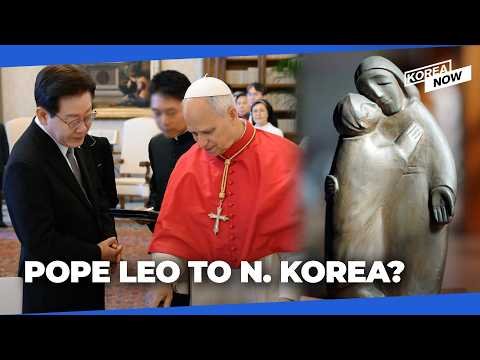
President Lee Jae-myung's private audience with Pope Leo XIV at the Apostolic Palace on June 15, 2026, represents a significant milestone in South Korea's evolving approach to multi-track diplomacy. The thirty-minute meeting, occurring during the president's inaugural European tour since assuming office in June 2025, brought together a leader navigating complex inter-Korean dyn
President Lee Jae-myung's private audience with Pope Leo XIV at the Apostolic Palace on June 15, 2026, represents a significant milestone in South Korea's evolving approach to multi-track diplomacy. The thirty-minute meeting, occurring during the president's inaugural European tour since assuming office in June 2025, brought together a leader navigating complex inter-Korean dynamics and the first American pope in Catholic history, elected on May 8, 2025. Beyond the immediate diplomatic courtesies, the encounter opened channels for discussing World Youth Day 2027 in Seoul, inter-Korean reconciliation, and the potential role of faith-based mediation in Northeast Asian security architecture.
Diplomatic Setting and Historical Foundations of the Audience
The meeting unfolded in the Apostolic Palace with a structured thirty-minute private audience between President Lee Jae-myung and Pope Leo XIV. President Lee also held separate discussions with Cardinal Pietro Parolin, the Vatican Secretary of State. Diplomatic relations between South Korea and the Holy See date back to 1963, providing an established framework that has supported consistent engagement over decades. The last papal visit to South Korea occurred when Pope Francis traveled there in August 2014, setting a precedent for high-level exchanges focused on peace and reconciliation themes. This 2026 audience built directly on that history while introducing new elements tied to the current pontiff's background as the first American pope.
Participants included key diplomatic staff from both sides, ensuring that discussions remained focused and substantive within the allocated time. The Apostolic Palace setting underscored the formal nature of the encounter, reflecting standard Vatican protocol for heads of state. South Korea's Ministry of Foreign Affairs had prepared extensively for the session, aligning it with broader European tour objectives. Historical continuity from the 1963 establishment of ties allowed both parties to reference prior cooperation without needing extensive background explanations. The presence of Cardinal Parolin added a layer of institutional depth, given his role in coordinating Vatican foreign policy across multiple regions.
Analysts note that the thirty-minute duration was typical for such audiences yet sufficient for covering priority topics. The 2014 precedent of Pope Francis's visit had already demonstrated the value of papal engagement with Korean issues, particularly around inter-Korean dialogue. President Lee's team leveraged this continuity to advance fresh proposals. The combination of established relations since 1963 and recent leadership transitions on both sides created a timely opportunity for renewed momentum. Overall, the setting reinforced South Korea's strategy of utilizing long-standing channels for contemporary security and cultural objectives.
World Youth Day 2027 Invitation and Soft Power Dimensions
During the audience, President Lee formally invited Pope Leo XIV to attend World Youth Day 2027, scheduled to take place in Seoul from August 3 to 8. This event marks the first time World Youth Day will be hosted in East Asia since the 2008 gathering in Sydney. The Catholic Bishops' Conference of Korea played a central role in coordinating the invitation and subsequent planning efforts. Pope Leo XIV had previously confirmed Seoul as the host city during the Jubilee of Young People Mass, providing official Vatican endorsement ahead of the bilateral meeting. The invitation positioned the 2027 event as a platform for youth engagement across the region while highlighting South Korea's organizational capacity.
Cooperation agreements between South Korean authorities and Vatican organizers focused on logistical and programmatic alignment for the August 2027 dates. These arrangements emphasized themes of peace, reconciliation, and global solidarity that resonate with both Catholic teachings and Korean diplomatic priorities. The selection of Seoul underscores the growing visibility of East Asian Catholicism within the universal Church. Soft power implications include enhanced international perception of South Korea as a capable host for major global religious events. The Catholic Bishops' Conference of Korea continues to work closely with government ministries to ensure cultural and spiritual elements are integrated effectively.
Hosting World Youth Day in 2027 offers South Korea an opportunity to project a narrative of stability and openness amid regional tensions. The eight-year gap since the Sydney event highlights the significance of returning the gathering to the Asia-Pacific region. Preparatory work already underway involves coordination with local dioceses and international youth representatives. This initiative complements traditional diplomatic efforts by adding a cultural and generational dimension. The Vatican's confirmation of the Seoul venue prior to the June 2026 audience facilitated focused discussions on implementation details during the papal meeting.
Peace Diplomacy and Inter-Korean Reconciliation Efforts
President Lee used the audience to brief Pope Leo XIV on ongoing Korean Peninsula peace efforts, emphasizing incremental steps despite persistent challenges. He described the current situation as an "ember of hope" even in the face of North Korean hostility. The president also raised the possibility of a future papal visit to North Korea as a potential confidence-building measure. A joint Seoul-EU statement issued around the same period condemned North Korea-Russia military cooperation, reflecting aligned international concerns. Korea Institute for National Unification studies on multi-track diplomacy provided analytical support for the approaches discussed with Vatican officials.
Faith-based mediation emerged as a topic of interest given the Holy See's historical role in various global conflicts. President Lee's suggestion of a papal visit to North Korea was framed as an exploratory idea rather than a formal request. The "ember of hope" characterization acknowledged limited but existing openings for dialogue. Coordination with European partners on the North Korea-Russia issue demonstrated South Korea's effort to link its security concerns with broader international frameworks. KINU research continues to examine how religious and cultural channels can supplement official negotiations.
The thirty-minute format allowed for a concise yet substantive exchange on these sensitive matters. Vatican responses focused on principles of dialogue and humanitarian concern rather than specific commitments. South Korea's approach integrates traditional state-to-state diplomacy with engagement involving international institutions such as the Holy See. The timing of the audience, shortly after the EU joint statement, reinforced consistency in messaging. Multi-track elements studied by KINU include the potential contributions of non-governmental and faith-based actors to long-term reconciliation processes.
Symbolic Gifts and Their Diplomatic Significance
President Lee presented Pope Leo XIV with a sculpture representing compassion, forgiveness, and reconciliation, alongside a white porcelain vessel. These items carried deliberate cultural symbolism tied to Korean artistic traditions and themes central to the meeting's peace agenda. The white porcelain vessel evoked historical Korean craftsmanship and values of harmony. The sculpture directly aligned with messages of inter-Korean understanding that President Lee conveyed during the discussions. Gift exchanges of this nature follow established diplomatic practice while conveying specific policy emphases.
Pope Leo XIV's May 2026 apology regarding historical slavery provided additional context for interpreting the reconciliation-themed gifts. The timing allowed the presents to resonate with the pontiff's recent public statements on justice and healing. Diplomatic gift theory suggests that carefully chosen items can reinforce verbal messages and create lasting symbolic associations. South Korean officials selected the sculpture and vessel to reflect both national heritage and the substantive topics raised in the audience. The white porcelain piece, in particular, drew on Korea's long ceramic tradition to symbolize enduring commitments.
These gifts were presented at the conclusion of the private audience, adhering to Vatican protocol. Their themes complemented the invitation to World Youth Day 2027 and the briefing on peninsula peace efforts. Analysts view such exchanges as mechanisms for building personal rapport between leaders while advancing institutional objectives. The combination of artistic and thematic elements ensured the gifts would be remembered in connection with the meeting's core messages. Overall, the presentation reinforced South Korea's image as a thoughtful diplomatic actor attentive to cultural nuance.
Broader European Tour Context and Strategic Alignments
The Vatican audience formed part of President Lee's wider European tour that included stops in Belgium for EU summits and bilateral meetings in Italy. The itinerary culminated with attendance at the G7 summit in Evian-les-Bains, France. Discussions across these venues addressed supply chain resilience and alignment with European security concerns. The China factor featured in several exchanges as South Korea sought to balance economic interests with strategic partnerships. These elements collectively shaped the framework within which the papal meeting occurred.
EU-level engagements allowed President Lee to coordinate positions on North Korea-Russia cooperation ahead of and following the Vatican visit. Supply chain issues gained prominence given global disruptions and the need for diversified sourcing strategies. Alignment with European security perspectives provided South Korea additional leverage in its own regional posture. The G7 setting in Evian-les-Bains offered further opportunities to advance these themes among major economies. Italy bilateral talks complemented the Vatican segment by covering economic and cultural cooperation.
The tour's sequencing demonstrated a deliberate effort to integrate religious diplomacy with traditional multilateral forums. European partners expressed interest in South Korea's multi-track approaches, including those involving the Holy See. Supply chain resilience discussions highlighted practical areas of mutual benefit beyond security topics. The China factor required careful navigation to avoid unnecessary friction while maintaining core alliances. President Lee's inaugural European tour thus served as a comprehensive platform for advancing diversified diplomatic objectives.
Expert Perspectives on Middle-Power Diplomacy
Analysts at the Korea Institute for National Unification have examined how the Vatican engagement fits within South Korea's broader multi-track diplomacy framework. Ministry of Foreign Affairs assessments highlight the value of maintaining diverse channels, including those with the Holy See. Academic commentary emphasizes the moral and cultural dimensions that religious diplomacy can add to traditional statecraft. These perspectives collectively portray the June 2026 audience as a measured yet meaningful step in expanding South Korea's diplomatic portfolio. KINU research continues to track the effectiveness of such approaches over time.
MOFA evaluations note that engagement with the Vatican complements existing relationships with major powers and regional organizations. The moral dimension introduced through papal audiences can lend additional legitimacy to peace initiatives. Cultural aspects, such as the gifts exchanged, further enrich the diplomatic narrative. Middle-power diplomacy theory suggests that countries like South Korea benefit from cultivating multiple institutional partnerships. Expert analysis indicates that sustained attention to these channels may yield incremental gains in international support for Korean Peninsula objectives.
Academic studies also consider how the first American pope's background might influence future Vatican-Korea interactions. The combination of historical ties since 1963 and contemporary leadership transitions creates opportunities for refreshed dialogue. KINU reports stress the importance of integrating faith-based elements with official negotiations. Overall, expert perspectives frame the audience as consistent with South Korea's established pattern of pragmatic and values-oriented foreign policy. Continued monitoring by research institutions will assess longer-term outcomes.
Looking Ahead
Preparations for World Youth Day 2027 in Seoul are advancing through coordinated efforts between the Catholic Bishops' Conference of Korea and government agencies. The August 3-8 dates provide a clear timeline for logistical and programmatic development. Organizers anticipate significant international participation given the event's East Asian location. The invitation extended during the June 2026 audience has already generated momentum for detailed planning. South Korea views the gathering as both a religious celebration and a platform for broader diplomatic messaging.
Prospects for a papal visit to North Korea remain exploratory following President Lee's suggestion during the audience. Any such development would require extensive preparatory work and favorable conditions on the peninsula. The "ember of hope" characterization continues to guide South Korean assessments of dialogue possibilities. Diversified diplomatic efforts, including those involving the Holy See, form part of an incremental approach to reconciliation. Officials emphasize patience and consistency in pursuing these channels.
South Korea's diplomatic portfolio is expected to incorporate additional multi-track elements in the coming years. The Vatican audience established a reference point for future engagement on peace and youth issues. Continued monitoring by institutions such as KINU will inform adjustments to strategy. The combination of World Youth Day preparations and ongoing security coordination reflects a balanced approach. Analysts anticipate further refinement of these initiatives based on regional developments.
By Prof. David Park, Staff Writer
This article was produced with AI-assisted research and editorial support. Reporting is based on sources cited in the article.
What's Your Reaction?
 Like
0
Like
0
 Dislike
0
Dislike
0
 Love
0
Love
0
 Funny
0
Funny
0
 Wow
0
Wow
0
 Sad
0
Sad
0
 Angry
0
Angry
0

East Asia/Technology Correspondent at Global1.News. Seoul-based voice covering Korean politics, technology, business, and culture. Analyzes how technology and geopolitics intersect across East Asia.










Comments (0)