
Gazans Left Out: US-Iran Peace Deal Omits Gaza and Palestinian Rights
In a recent Middle East Eye report examining the US-Iran peace deal, the complete absence of any reference to Gaza or Palestinian rights stands out as a central concern amid the announcement of an agreement that ends months of direct conflict between the United States, Israel, and Iran. Background: The February 2026 War The US-Israeli war on Iran began on February 28, 2026, whe
In a recent Middle East Eye report examining the US-Iran peace deal, the complete absence of any reference to Gaza or Palestinian rights stands out as a central concern amid the announcement of an agreement that ends months of direct conflict between the United States, Israel, and Iran.
Background: The February 2026 War
The US-Israeli war on Iran began on February 28, 2026, when President Trump announced a "massive and ongoing operation" to end what he described as the Iranian threat from across the Middle East. In an eight-minute video statement posted to social media in the early hours of the campaign, Trump explicitly called for regime change in Tehran, telling Iranians: "When we are finished, take over your government. It will be yours to take." Iranian officials responded with ballistic missile strikes across the Middle East at Gulf nations and US military bases in the region.
The conflict drew in Iranian-aligned groups across Lebanon, Syria, Yemen, and Iraq, escalating into the most significant regional war in decades. Thirteen IDF soldiers and 23 Israeli civilians were killed in Iranian missile attacks, along with 13 US soldiers. The war also disrupted global energy markets, with the Strait of Hormuz — through which roughly 20 percent of the world's oil passes — effectively closed by the US naval blockade in the early weeks of the conflict.
The human cost across the region has been devastating. Beyond Gaza's toll, the war has displaced hundreds of thousands in Lebanon and caused widespread destruction of civilian infrastructure in both countries. The Pakistani-mediated negotiations that produced the June 15 deal represented the first significant diplomatic breakthrough after months of backchannel talks.
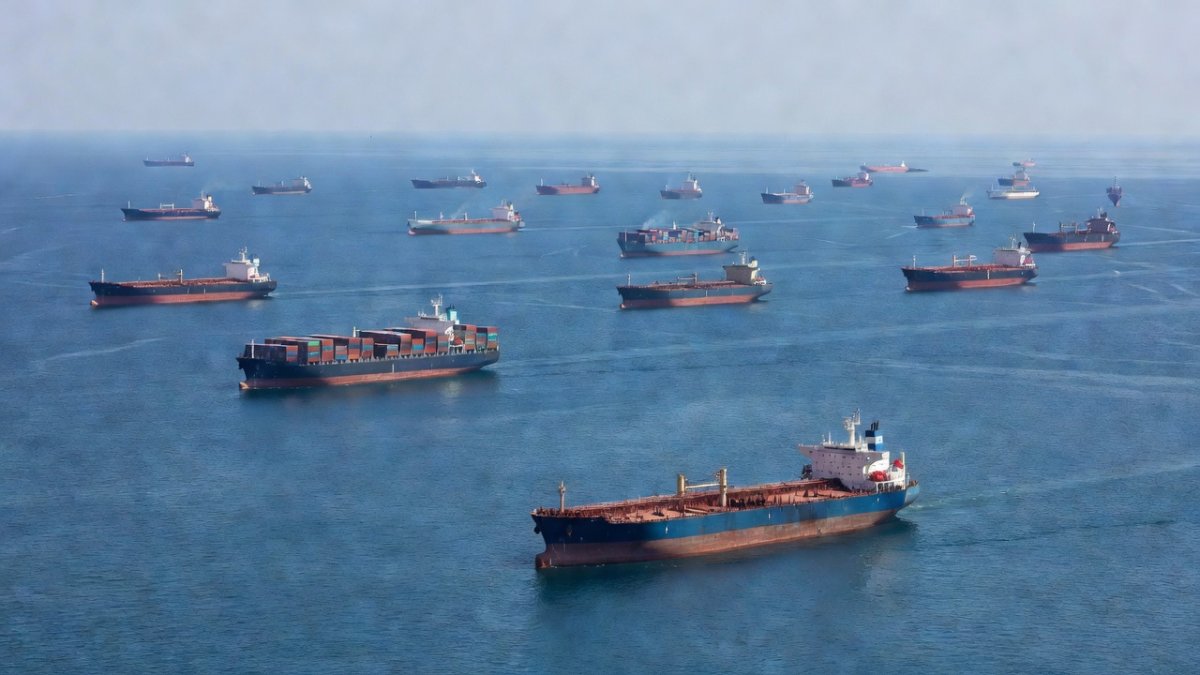
Ships at anchor in the Strait of Hormuz, a key maritime chokepoint for global oil shipments. (Global 1 News)
The US-Iran Deal: Terms and Context
On June 15, 2026, US President Donald Trump announced a peace deal with Iran that formally ends the war which began in February 2026 following US-Israeli strikes on Iranian targets. The agreement includes provisions for reopening the Strait of Hormuz, ending the US naval blockade, and requiring Iran to cap its enriched uranium stockpile. Formal signing is scheduled for June 19 in Geneva, with both sides describing the framework as a step toward de-escalation across multiple fronts.
President Trump stated during the announcement that he "never cared about regime change" in Iran, a position that reverses earlier statements in which he had emphasized the need for fundamental political shifts inside the country. This shift in rhetoric has been noted by observers tracking the rapid evolution of US policy from military confrontation to negotiated limits on Iranian nuclear activities and maritime access.
Iranian officials have indicated that the deal encompasses an end to the war on all fronts, explicitly including Lebanon. This broader interpretation suggests that the agreement aims to reduce hostilities involving Iranian-aligned groups in the region, though the precise mechanisms for enforcement remain under discussion ahead of the Geneva signing.
The timeline from initial strikes in February 2026 to the June announcement reflects a compressed period of intense military activity followed by diplomatic engagement. The deal focuses narrowly on nuclear caps, maritime routes, and blockade relief without extending to other longstanding regional conflicts.
Gaza's Exclusion: A Deliberate Silence
The US-Iran peace deal contains no mention of Gaza or Palestinian rights, leaving the territory outside the scope of the negotiated terms. This omission occurs despite the ongoing presence of Israeli forces and the humanitarian conditions that have persisted since the October 2023 escalation. Analysts note that the agreement prioritizes US-Iranian and maritime issues while bypassing Palestinian statehood or ceasefire demands.
Israeli Prime Minister Benjamin Netanyahu stated that the Israeli army will remain in Gaza, Lebanon, and Syria "as long as necessary." This position directly contrasts with the de-escalation language in the US-Iran framework and signals continued military operations independent of the Geneva process.
The exclusion has drawn attention to the selective nature of the agreement, which addresses Iranian nuclear and shipping concerns but offers no parallel commitments regarding Palestinian displacement or territorial control. Israeli officials have not linked their Gaza operations to the Iran deal, maintaining separate strategic objectives.
Without references to Gaza in the text, the deal effectively isolates Palestinian issues from the broader regional settlement. This separation allows the US and Iran to claim progress on specific fronts while the situation in Gaza continues without new international constraints or protections.
The silence on Gaza in the US-Iran framework echoes the broader marginalization of Palestinian issues in regional diplomacy since the Abraham Accords and subsequent normalization efforts. This pattern, critics say, has enabled continuing military operations in Gaza without the constraints of international agreements that apply to other conflict zones in the region.
Palestinian officials in Ramallah have condemned the omission, describing it as a betrayal of the principle that Middle East peace must be comprehensive. The Palestinian Authority has called on Arab League states to insist on a parallel track addressing Gaza before finalizing any regional security architecture.
'We Are Not Included': Displaced Palestinian Voices
Displaced Palestinians in Gaza have expressed immediate dismay at their absence from the agreement. Samir Ayad, speaking from a displacement site, stated: "We are not included in the agreement... So where are we?" His words capture the sense of abandonment felt by families who have lost homes and livelihoods over multiple rounds of conflict.
The Gaza death toll has exceeded 73,000 since October 2023, with more than 950 people killed since the collapse of the October 2025 truce. These figures underscore the scale of loss that remains unaddressed by the US-Iran framework, as reconstruction and protection mechanisms receive no mention in the announced terms.
Many displaced residents describe daily struggles for shelter, medical care, and basic supplies while Israeli operations continue. The lack of any clause addressing their status in the peace deal reinforces perceptions that Palestinian suffering is treated as secondary to nuclear and maritime negotiations.
Community leaders in Gaza have called for inclusion of Palestinian rights in future talks, arguing that sustainable regional stability cannot be achieved without addressing the root causes of displacement and casualties. Their testimonies highlight the human cost of agreements that prioritize state-to-state issues over civilian protection.
A mother displaced from Gaza City, identified only as Umm Jamal, told Middle East Eye: "We were hoping that after the Iran-US deal we would return to our homes and places, but we found the opposite." Her words reflect a broader pattern of dashed expectations among families who have survived multiple rounds of displacement since October 2023 and had pinned hopes on the regional ceasefire as a pathway home.
The health system in Gaza continues to function at a fraction of its capacity, with hospitals damaged by previous strikes operating without adequate supplies. Medical workers report treating patients in corridors and tents as facilities remain overwhelmed by the scale of casualties from ongoing Israeli operations.
Children constitute a disproportionate share of the dead and injured in Gaza, with the UN documenting thousands of cases of war-related trauma, malnutrition, and preventable disease. The exclusion of any humanitarian provisions from the US-Iran deal means these conditions will persist without new international intervention or funding pledges.
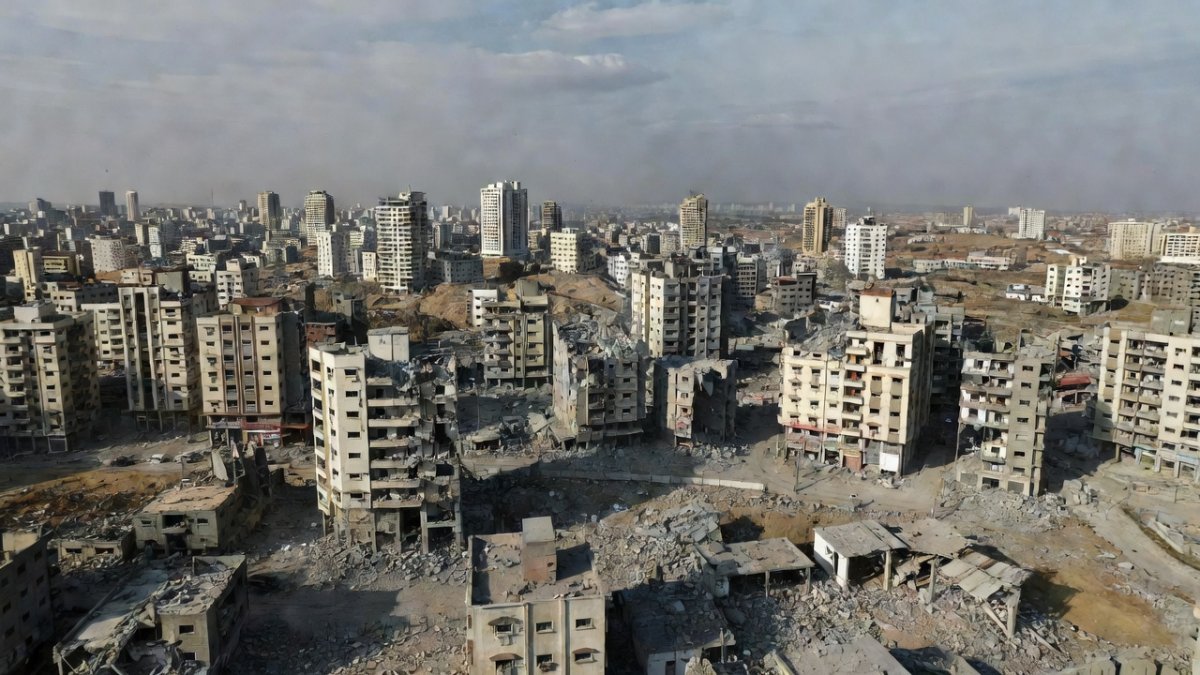
Gaza City skyline showing damage from ongoing Israeli military operations. (Global 1 News)
Israel's Expanding Grip on Gaza
Israeli Defence Minister Israel Katz confirmed plans for "large-scale migration" of Palestinians from Gaza, a policy that aligns with ongoing territorial expansion. Israel now controls 60 percent of Gaza territory, a figure that reflects incremental advances since the truce breakdown in October 2025.
Ministers Itamar Ben Gvir and Bezalel Smotrich have called for continued destruction of southern Lebanon, extending the logic of military pressure beyond Gaza. These statements indicate that Israeli policy envisions prolonged operations across multiple borders rather than withdrawal tied to the US-Iran agreement.
The Waqf at Al-Aqsa has been increasingly sidelined by Israeli authorities, limiting traditional Palestinian religious administration of the site. This development adds to concerns about cultural and religious erasure alongside physical displacement in Gaza and the West Bank.
Settlement activity and buffer zone creation inside Gaza have accelerated under the current military posture. These measures, combined with migration proposals, point to a long-term strategy of demographic change that operates outside the parameters of the June 2026 deal.
The Israeli military's stated goal of controlling 60 percent of Gaza territory represents the highest level of territorial acquisition since the start of the ground operations. The creation of a buffer zone stretching deep into Gaza has been accompanied by a strict no-go policy — Gazans entering the zone are shot on sight, according to Israeli directives. This effectively reduces Gaza's already limited land area and restricts movement for the civilian population.
The plans for "large-scale migration," confirmed by Defence Minister Katz in May 2026, have drawn comparisons to ethnic cleansing by human rights organizations, including Amnesty International and Human Rights Watch. Under international law, the forced transfer of populations in occupied territory constitutes a war crime under the Fourth Geneva Convention.
In the occupied West Bank, settler violence against Palestinian communities has surged concurrently with the military operations in Gaza. A recent attack on the village of Khalail al-Luz destroyed homes and agricultural land, reflecting a coordinated campaign to expand Israeli control beyond the Gaza front.
Regional Fallout and International Response
Arab states have issued measured statements urging that Palestinian rights not be overlooked in regional diplomacy. Several governments have noted that excluding Gaza from major agreements risks prolonging instability across the Levant and complicating normalization efforts.
United Nations officials have reiterated calls for humanitarian access and protection of civilians in Gaza, emphasizing that any durable peace must incorporate mechanisms for accountability and reconstruction. Human rights groups have documented the territorial and demographic shifts occurring on the ground.
European and Asian diplomatic channels have expressed interest in whether the Geneva signing will create openings for parallel talks on Gaza. Early reactions suggest that the narrow focus of the US-Iran deal may prompt separate initiatives to address the Palestinian file.
Regional analysts observe that the deal's silence on Gaza could embolden further unilateral actions by Israel while reducing immediate international pressure for a ceasefire. This dynamic leaves Palestinian communities navigating an environment where their concerns remain unintegrated into high-level negotiations.
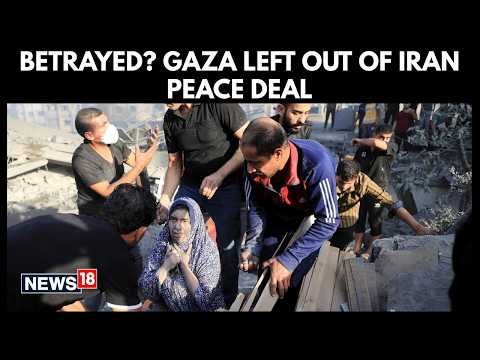
Displaced Palestinians in Gaza. (Middle East Eye)
Analysis: What Gaza's Exclusion Means for the Future
The exclusion of Gaza from the US-Iran peace deal establishes a precedent in which nuclear and maritime issues can be resolved without reference to Palestinian self-determination. This separation may allow short-term diplomatic wins while deferring the harder questions of occupation, displacement, and accountability.
Palestinian civil society organizations argue that sustainable security for the wider region requires addressing the conditions that have produced repeated cycles of violence in Gaza. Without such integration, agreements risk creating pockets of unresolved conflict that could reignite broader tensions.
Looking ahead, the scheduled Geneva signing on June 19 offers limited scope for last-minute additions on Palestinian rights. The current framework instead channels attention toward implementation of uranium caps and Strait of Hormuz access, leaving Gaza's territorial and humanitarian realities to evolve independently.
Over time, the absence of Gaza from the deal may strengthen calls for independent Palestinian-led initiatives and renewed international advocacy. Communities in displacement continue to document their experiences, underscoring that any future regional architecture will eventually confront the consequences of this omission.
By Fatima Al-Rashid, Staff WriterThis article was produced with AI-assisted research and editorial support. Reporting is based on sources cited in the article.
What's Your Reaction?
 Like
0
Like
0
 Dislike
0
Dislike
0
 Love
0
Love
0
 Funny
0
Funny
0
 Wow
0
Wow
0
 Sad
0
Sad
0
 Angry
0
Angry
0
Gulf/MENA Correspondent at Global1.News. Based in Doha, covering Gulf politics, energy markets, diplomacy, and development across the Middle East and North Africa. Tracks the economic transformation of the Gulf states.











Comments (0)