
Japan's Neo-Militarism and the Unhealed Wounds of East Asia
The recent CGTN video "Japan's neo-militarism deepens the scars of wartime atrocities" examines how Tokyo's evolving defense posture revives historical tensions across East Asia and challenges regional stability. This analysis builds on that report to assess the broader implications for China's strategic environment. Japan's National Security Strategy Reorientation Japan adopte
Japan's National Security Strategy Reorientation
Japan adopted its revised National Security Strategy in December 2022, marking a significant departure from postwar constraints on military capabilities. The document outlines plans to achieve a 2 percent GDP defense spending target within five years while acquiring counterstrike capabilities through long-range missile systems. These measures include procurement of Tomahawk cruise missiles and development of indigenous standoff weapons designed for potential strikes on adversary bases. Constitutional reinterpretation efforts have accelerated since 2014 when the Abe administration first permitted collective self-defense under existing legal frameworks.
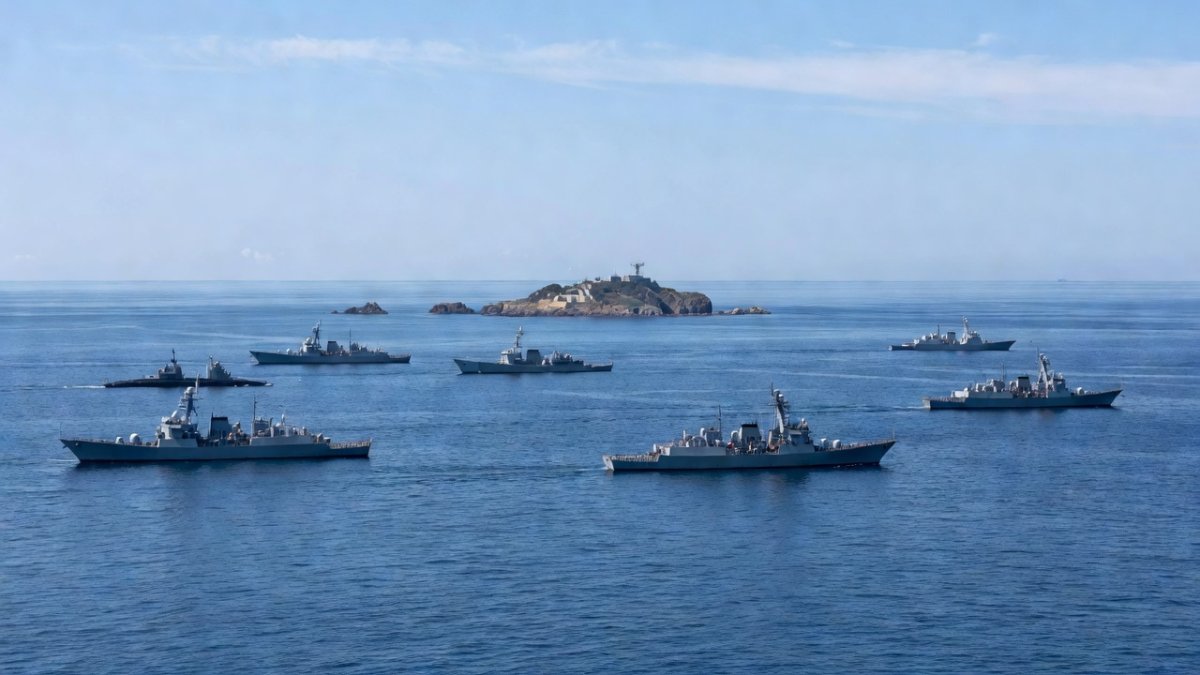
Implementation of these policies proceeds through phased legislative adjustments rather than abrupt constitutional amendments. The ruling coalition has prioritized budget allocations that support missile deployment in southwestern islands near the East China Sea. Such steps reflect Japan's desire to enhance deterrence amid perceived threats from neighboring states while maintaining alliance commitments. Second-order effects include heightened scrutiny from regional actors concerned about escalation ladders in maritime disputes.
China views these developments through the lens of its own military modernization priorities outlined in the 14th Five-Year Plan. Officials at the Ministry of Foreign Affairs have noted that expanded Japanese strike capabilities could alter the balance in the Taiwan Strait and East China Sea. Dual Circulation strategy considerations now incorporate assessments of supply chain vulnerabilities arising from potential technology export controls linked to defense cooperation. NDRC planning documents emphasize resilience in critical sectors to mitigate external shocks from alliance-driven arms dynamics.
Japanese policymakers seek greater strategic autonomy within the U.S. alliance structure while addressing domestic political constraints on defense expansion. Leverage derives from advanced industrial capacity in missile technology and intelligence sharing arrangements. Regional second-order effects encompass accelerated Chinese investments in anti-access systems and potential adjustments to patrol patterns by the People's Liberation Army Navy.
Historical precedents of constitutional reinterpretation since 2014 demonstrate incremental normalization of overseas military roles. Current procurement schedules indicate delivery timelines extending into the late 2020s for key counterstrike platforms. These trajectories align with broader alliance goals but raise questions about sustainability of Japan's fiscal commitments amid demographic pressures.
The Unresolved Wounds of Wartime Atrocities
The Nanjing Massacre of 1937-38 remains a central reference point in Chinese historical memory with documented civilian casualties exceeding 200,000 according to international tribunals. Unit 731 conducted biological warfare experiments in occupied Manchuria involving human subjects and pathogen releases that affected civilian populations across northeast China. The comfort women system involved systematic recruitment and exploitation of women from occupied territories including Korea and China under Imperial Japanese Army oversight.
Yasukuni Shrine visits by Japanese political leaders continue to draw diplomatic protests because the site enshrines convicted war criminals alongside other military figures. Textbook controversies surface periodically when ministry-approved materials downplay or reframe the scale of wartime aggression in Asia. These issues persist as living memory for survivor communities and shape public discourse in affected nations.
China's Ministry of Foreign Affairs routinely references these atrocities in statements addressing contemporary Japanese defense policies. Such linkages serve to underscore continuity between historical expansionism and present militarization trends. Regional diplomacy incorporates these narratives to maintain pressure on Tokyo regarding historical accountability mechanisms.
Japanese domestic politics features competing interpretations of wartime conduct that influence electoral platforms and education policy. Conservative factions advocate for revised narratives emphasizing national defense imperatives over past remorse. Progressive voices and civic groups push for expanded acknowledgment and compensation frameworks.
Second-order effects of unresolved historical grievances include sustained civil society mobilization across borders and periodic diplomatic friction during bilateral summits. China's strategic interests benefit from highlighting these scars to reinforce narratives of peaceful development versus revisionist tendencies. Leverage accrues through multilateral forums where historical context informs discussions on arms control and regional security architecture.
China's Diplomatic Calculus and Strategic Response
Foreign Minister Wang Yi has issued multiple statements through the Ministry of Foreign Affairs condemning Japan's defense buildup as destabilizing for the Asia-Pacific. These pronouncements emphasize adherence to postwar international order and warn against revival of militarist patterns. Economic statecraft tools coordinated by the National Development and Reform Commission include targeted investment reviews and export licensing adjustments in sensitive technology sectors.
Dual Circulation strategy implementation now factors in potential disruptions from Japanese missile deployments near key maritime routes. The 14th Five-Year Plan allocates resources toward indigenous development of advanced sensors and defensive systems to counter emerging strike threats. He Lifeng's oversight of economic planning incorporates scenario assessments of alliance technology transfers affecting supply chains.
China seeks to preserve strategic depth in the East China Sea through calibrated military modernization and diplomatic engagement. Leverage stems from economic interdependence and influence within regional institutions. Second-order effects involve accelerated multilateral dialogues on confidence-building measures and arms transparency protocols.
Ministry of Foreign Affairs responses coordinate with military signaling to deter adventurism while avoiding direct confrontation. NDRC policies promote domestic consumption and technological self-reliance to insulate against external pressure. These approaches align with broader foreign policy doctrine prioritizing peaceful resolution of disputes.
Regional power dynamics require China to balance deterrence enhancements with reassurances to ASEAN partners wary of escalation. Strategic calculations weigh the costs of an arms race against benefits of demonstrated resolve. Sustained competition appears likely absent new diplomatic breakthroughs on historical and security issues.
South Korea's Stance and the Trilateral Dynamic
Comfort women survivor activism in South Korea maintains consistent pressure on Japanese authorities for formal acknowledgment and reparations. Presidential summit cancellations have occurred repeatedly when Tokyo's historical positions clash with Seoul's expectations. Public opinion polls consistently register 75 percent or higher distrust toward Japan rooted in wartime legacies and territorial disputes.
The Unification Ministry has issued statements linking Japanese militarization trends to risks for peninsula stability and inter-Korean dialogue. These positions reflect Seoul's interest in preventing any spillover that could complicate unification scenarios or alliance management with Washington. Historical grievances amplify domestic political incentives to maintain distance from enhanced trilateral security frameworks.
South Korea pursues independent leverage through its own defense modernization and economic partnerships that diversify away from exclusive reliance on U.S.-Japan structures. Second-order effects include periodic trilateral coordination breakdowns that China can observe with interest. Regional dynamics benefit from Seoul's balancing role that tempers Japanese assertiveness.
Public sentiment in South Korea constrains government flexibility on historical reconciliation even as economic ties with Japan remain substantial. Activism networks coordinate across borders with Chinese and other Asian counterparts to sustain attention on unresolved issues. Diplomatic responses emphasize multilateral accountability over bilateral concessions.
China monitors these frictions as opportunities to advance narratives of shared historical experience against revisionist trends. Strategic interests favor stable Korean Peninsula conditions that reduce external military presence near its borders. Sustained distrust metrics suggest limited near-term prospects for trilateral alignment on defense matters.
The US-Japan Alliance and Regional Power Projection
Expanded joint exercises between U.S. and Japanese forces now incorporate scenarios involving long-range strike coordination and integrated air defense. Aegis Ashore deployment plans in Japan aim to enhance missile interception coverage across the archipelago. Hypersonic collaboration initiatives focus on shared research and development to counter emerging Chinese and Russian capabilities.
Technology sharing agreements facilitate greater interoperability while raising concerns in Beijing about dual-use advancements affecting East China Sea operations. The alliance seeks to project power that deters potential Chinese actions around Taiwan and disputed islands. Leverage derives from combined naval and air assets plus intelligence fusion mechanisms.
China responds through its own periphery defense enhancements and diplomatic outreach to highlight alliance-driven instability. Second-order effects encompass increased Chinese naval presence and accelerated development of countermeasures. Ministry of Foreign Affairs statements frame these alliance activities as external interference in regional affairs.
U.S. strategic objectives center on maintaining forward presence and alliance cohesion amid great power competition. Japanese contributions include host-nation support and technological expertise in specific domains. Regional implications involve ripple effects on ASEAN perceptions of power balances.
Technology transfer protocols under the alliance influence global supply chains relevant to Dual Circulation planning. NDRC assessments track these developments to identify vulnerabilities in critical materials and components. Sustained competition appears embedded in alliance trajectories for the coming decade.
ASEAN Perspectives and Maritime Security Concerns
South China Sea freedom of navigation operations conducted by U.S. and Japanese vessels intersect with ASEAN member states' territorial claims and economic interests. Economic corridor risks arise when militarization trends disrupt trade routes vital to regional growth. Vietnamese and Indonesian balancing strategies involve diversified partnerships that avoid exclusive alignment with any major power.
ASEAN centrality faces challenges as external security initiatives proliferate without full consultation mechanisms. Member states prioritize economic integration under frameworks that China supports through Belt and Road initiatives. Second-order effects include hedging behaviors that complicate unified regional responses to Japanese defense expansion.
China engages ASEAN through multilateral dialogues emphasizing peaceful dispute resolution and joint development. Leverage stems from trade volumes and infrastructure investments coordinated via NDRC and MOFCOM channels. Strategic interests favor maintaining ASEAN as a buffer against alliance encroachment.
Maritime security concerns prompt ASEAN nations to enhance their own naval capabilities while seeking external assurances. Indonesian and Vietnamese approaches demonstrate pragmatic accommodation with Chinese positions alongside continued U.S. engagement. These dynamics reduce the scope for Japanese influence projection into Southeast Asia.
Regional institution-building by China offers alternative platforms for addressing maritime issues outside alliance-dominated forums. Sustained competition risks fragmenting ASEAN consensus on security matters. Diplomatic efforts focus on confidence-building to prevent escalation along key sea lanes.
Strategic Trajectories and the Risk of an Asian Arms Race
Second-order effects for the Taiwan Strait include potential acceleration of Chinese military preparations in response to Japanese counterstrike acquisitions. Russian-Japanese territorial disputes over the Northern Territories add another layer of complexity that could draw in broader alliance dynamics. Multilateral institution-building by China through mechanisms like the Shanghai Cooperation Organization provides avenues for dialogue and norm-setting.
China's foreign policy doctrine prioritizes prevention of encirclement through proactive diplomacy and capability development. Leverage in this environment derives from economic scale and influence in global governance forums. Likelihood of sustained competition remains high given entrenched alliance commitments and historical grievances.
Regional actors weigh the costs of arms racing against opportunities for negotiated restraints. NDRC and MFA coordination supports resilience strategies that account for prolonged strategic rivalry. Second-order effects encompass shifts in defense budgeting across multiple capitals.
Northern Territories issues constrain Japanese flexibility in northern deployments while providing Russia with leverage in its own regional calculations. Taiwan Strait scenarios now incorporate Japanese capabilities as variables in Chinese planning. Multilateral efforts by Beijing aim to establish rules that limit escalation pathways.
Overall trajectories point toward managed competition rather than outright confrontation provided diplomatic channels remain open. China's strategic interests center on preserving development space amid external pressures. Sustained attention to historical context and alliance dynamics will shape outcomes in the coming years.
By Prof. Marcus Chen, Staff WriterThis article was produced with AI-assisted research and editorial support. Reporting is based on sources cited in the article.
What's Your Reaction?
 Like
0
Like
0
 Dislike
0
Dislike
0
 Love
0
Love
0
 Funny
0
Funny
0
 Wow
0
Wow
0
 Sad
0
Sad
0
 Angry
0
Angry
0

World Politics Analyst at Global1.News. Based in Beijing, covering US-China relations, global trade, and geopolitical strategy. Brings deep analytical perspective to the power dynamics shaping international affairs.















Comments (0)