
Jack Smith Subpoena Filings: Judge Unseals Records of 44 Lawmaker Text Sweep
The special counsel who built the case against Donald Trump secretly obtained text messages from 44 sitting members of Congress — and newly unsealed court filings are forcing the Justice Department to answer for it. This is the story that's shaking Washington to its core.
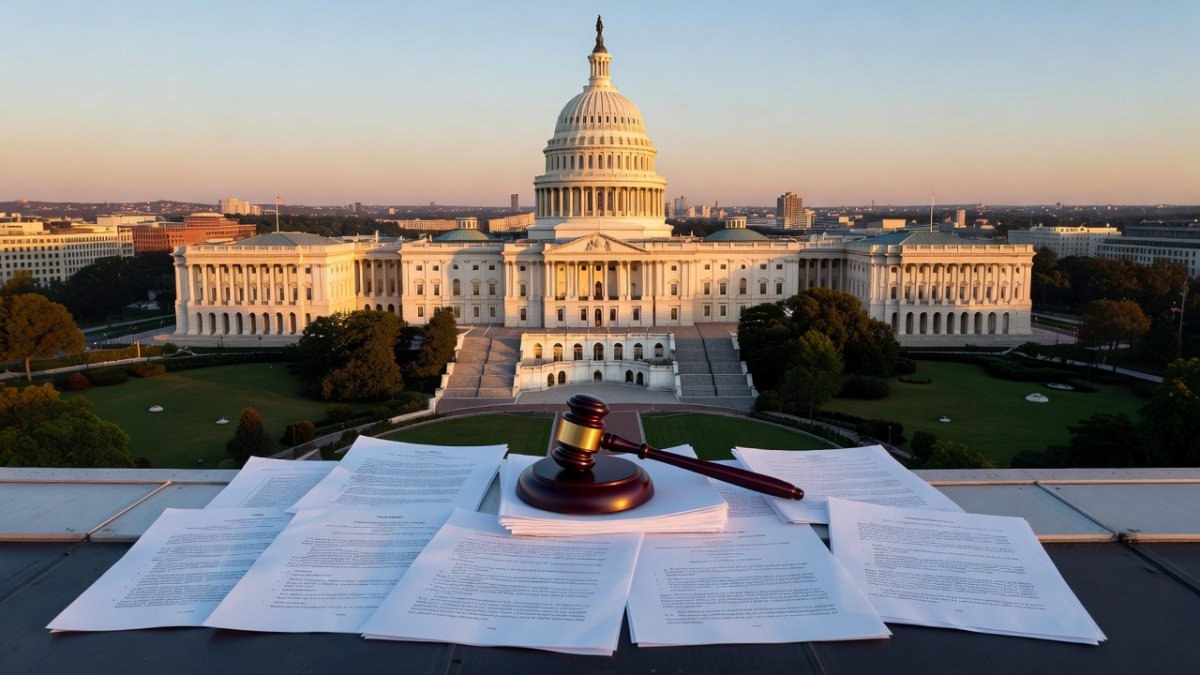
The special counsel who built the case against Donald Trump secretly obtained text messages from 44 sitting members of Congress — and newly unsealed court filings are forcing the Justice Department to answer for it. This is the story that's shaking Washington to its core.
Judge Unseals Jack Smith Subpoena Filings as 44 Lawmakers Demand Answers on Secret Text Message Sweep
Washington, D.C. – July 17, 2026 — A federal judge has ordered the unsealing of key documents related to former Special Counsel Jack Smith's sweeping subpoena of phone records belonging to 44 U.S. lawmakers, a revelation that has ignited a firestorm over executive overreach, congressional privilege, and the boundaries of prosecutorial power in the post-January 6 era.
The Unsealing That Shook the Capitol
On July 16, 2026, a judge ordered the release of previously sealed court filings detailing the scope and legal justification behind Smith's subpoenas — a move the Justice Department had aggressively fought to keep under wraps. The filings, first reported by The New York Times, reveal that Smith's team obtained text message records from 44 members of Congress spanning both parties during the sprawling investigation into efforts to overturn the 2020 election, known internally as "Operation Arctic Frost."
The Justice Department had argued that disclosure of the subpoenas would compromise grand jury secrecy and acknowledged that the government had not publicly confirmed the existence of the special counsel's subpoenas prior to the unsealing. But the court disagreed, opening a window into one of the most aggressive federal investigations of sitting lawmakers in American history.
44 Lawmakers: Both Sides of the Aisle
The scope of the surveillance is breathtaking. According to documents released by Senator Chuck Grassley (R-IA) and confirmed by Reuters reporting, Smith's team reviewed text messages from 44 Republican and Democratic members of Congress. These were not narrow, targeted subpoenas — they were a dragnet that swept up lawmakers on both sides of the political aisle, raising constitutional questions that legal scholars say cut to the heart of the separation of powers.
"Jack Smith's team secretly obtained text messages from 44 members of Congress amid the Trump probe," Grassley said in a statement. "Members on both sides of the aisle were swept up in the Special Counsel investigation as Smith's team broke investigative protocol, raising constitutional concerns." Newsweek reported that at least 14 Republican lawmakers were specifically named in the subpoena list, including some of the most prominent conservative voices in Congress.
Verizon Compiled. AT&T Refused.
New details from Fox News reveal a split among major telecom carriers in how they handled the Justice Department's demands. Verizon complied with the Smith subpoenas, turning over phone records for Republican senators. AT&T, however, refused — creating a legal and constitutional split that is now at the center of the unfolding controversy.
During a hearing on Capitol Hill, executives from Verizon, T-Mobile, and AT&T were grilled over their handling of the subpoenas. The hearings revealed that Verizon had contacted law enforcement officials to verify the legitimacy of the records requests — but only after the fact, raising questions about the carrier's internal safeguards. The telecom angle adds another dimension to the story, with privacy advocates warning that the case sets a dangerous precedent for government access to communications data.
Kash Patel and the GOP Lawmakers in the Crosshairs
Among the most prominent targets of the subpoenas was Kash Patel, the former Trump administration official and current FBI Director. RedState reported that Smith subpoenaed nearly two years of Patel's phone records, alongside records from multiple GOP lawmakers. The targeting of Patel — who now leads the very agency Smith was investigating — adds an extraordinary layer of political irony to an already explosive story.
"The subpoenas targeted GOP lawmakers, new records show," RedState's Ben Smith reported in March 2026, months before the unsealing. The documents now confirm that the investigation went far deeper than previously understood, encompassing communications that lawmakers believed were protected by the Constitution's Speech or Debate Clause.
Constitutional Crisis or Proper Investigation?
The legal question at the heart of the controversy is whether a special counsel can compel phone records from sitting members of Congress without running afoul of the separation of powers doctrine. The Constitution's Speech or Debate Clause (Article I, Section 6) provides that "for any Speech or Debate in either House, they shall not be questioned in any other Place" — a provision that courts have interpreted broadly to protect legislative communications.
But Smith's legal team argued that the subpoenas were necessary to investigate whether members of Congress had coordinated with outside actors to obstruct the January 6 certification of the Electoral College vote. The Justice Department maintained that the records were essential to the integrity of the investigation and that adequate safeguards were in place to protect privileged communications.
Legal experts are divided. "The Speech or Debate Clause is not an absolute shield," said former federal prosecutor Mitchell Epner. "If a member of Congress is engaged in criminal conduct, their phone records are not immune from a properly authorized subpoena." But others warn of a chilling effect. "This is a dangerous precedent," said constitutional law scholar Elizabeth Wydra. "If every member of Congress knows the Justice Department can access their private communications, it fundamentally alters the relationship between the legislative and executive branches."
Grassley Leads the Congressional Backlash
Senator Chuck Grassley, the ranking Republican on the Senate Judiciary Committee, has emerged as the leading voice demanding accountability. His office released a detailed breakdown of the scope of the surveillance, revealing that Smith's team had broken what Grassley called "investigative protocol" in obtaining the records. Grassley has demanded a full accounting from the Justice Department, including who authorized the subpoenas and what legal standards were applied.
The backlash is not confined to Republicans. Several Democratic lawmakers have also expressed concern, noting that the sweep included members of their own caucus. The bipartisan nature of the outrage has made the issue unusually volatile — a rare moment where oversight of executive power transcends party lines.
What This Means for the Future of Congressional Oversight
The unsealing of the Smith filings comes at a pivotal moment. The Justice Department is already facing scrutiny over its handling of politically sensitive investigations, and this latest revelation threatens to further erode public trust in the impartiality of federal law enforcement. If a special counsel can secretly obtain the phone records of 44 sitting members of Congress without their knowledge — including members of the opposition party — what safeguards exist for ordinary Americans?
Privacy advocates argue that the case exposes the weakness of current legal protections for electronic communications. The Stored Communications Act (SCA) allows prosecutors to obtain records with a subpoena rather than a warrant, meaning no probable cause showing is required. "The SCA is a relic of the dial-up era," said ACLU senior policy analyst Neema Singh Guliani. "It gives the government far too much access to our digital lives with far too little oversight."
The House Judiciary Committee has already scheduled hearings to examine the scope of Smith's subpoenas and the legal framework that permitted them. Representative Dan Goldman (D-NY) directly questioned Smith during one such hearing about the rationale for subpoenaing lawmakers' records — an exchange captured on video that has now gone viral as the unsealing brings new urgency to the oversight effort.
The Bottom Line
This is not a partisan story. This is a constitutional story. Whether you believe Jack Smith was conducting a legitimate investigation into election interference or overstepping the bounds of prosecutorial power, the facts are undisputed: 44 sitting members of Congress had their private communications swept up in a federal investigation, and the public is only now learning the full scope of what happened.
The unsealing of the court filings is just the beginning. In the coming weeks, we can expect more documents, more hearings, and more questions about how far a special counsel can go in investigating the legislative branch. For now, one thing is clear: the relationship between Congress and the Justice Department will never be the same.
By Jessica Ali, Staff Writer
This article was produced with AI-assisted research and editorial support. Reporting is based on sources cited in the article.
What's Your Reaction?
 Like
0
Like
0
 Dislike
0
Dislike
0
 Love
0
Love
0
 Funny
0
Funny
0
 Wow
0
Wow
0
 Sad
0
Sad
0
 Angry
0
Angry
0

Editor-in-Chief at Global1.News. Atlanta-based journalist who cuts through the BS and tells it like it is. Lead anchor, host, and the voice you hear when the spin stops and the truth starts.














Comments (0)