
Pentagon Mandates Testosterone Screening for Troops Over 30
Pentagon mandates annual testosterone screening for service members 30+. Defense Secretary Hegseth calls it a readiness move, sparking medical and political debate over the science and necessity of population-wide screening.
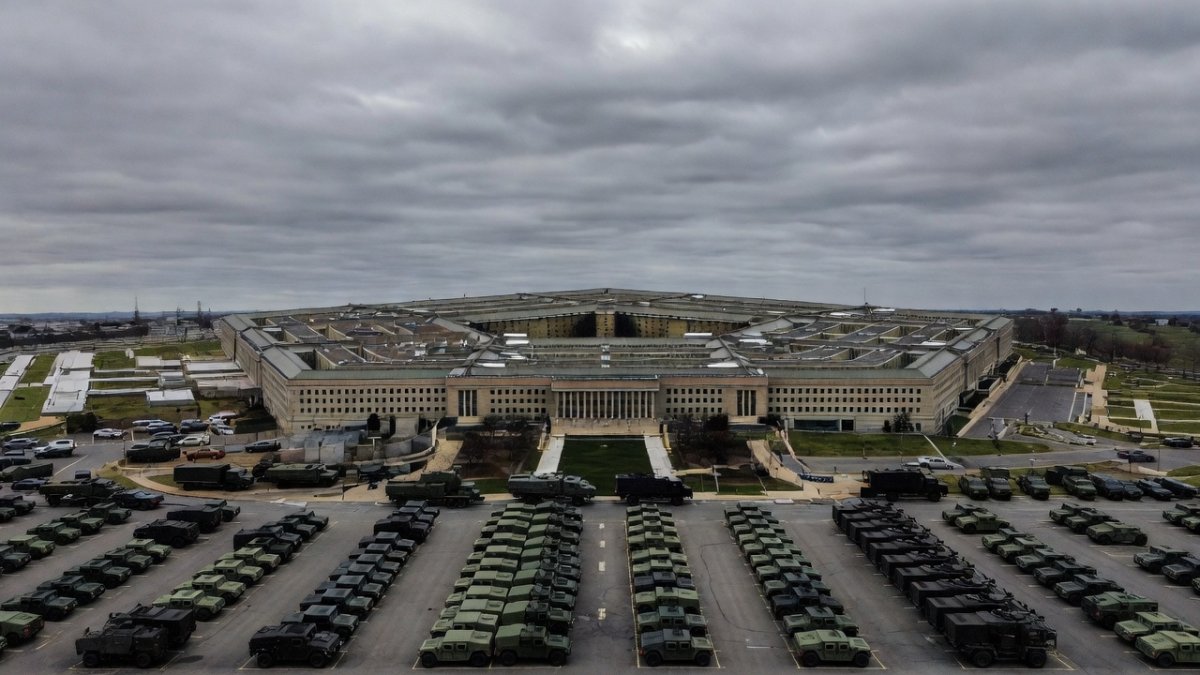
Pentagon Mandates Testosterone Screening for Troops Over 30
Washington, D.C. — The Defense Department is rolling out mandatory testosterone deficiency screenings for all service members age 30 and older, a policy Defense Secretary Pete Hegseth unveiled in a July 15, 2026 social-media video as the foundation of a “High-T Department of War.” Hegseth did not hold a press conference or brief Congress first. He went straight to video, telling troops the new rule would guarantee they operate at their “absolute best.” The message landed like a grenade. Military.com and The Hill both reported the same line about creating a force that is physically and mentally optimized for combat. Veterans groups immediately split—some cheered the focus on lethality, others warned it opens the door to unnecessary medical interventions.
Exactly What the Policy Requires
Starting this year, every service member age 30 and older must add testosterone deficiency screening to their annual periodic health assessment. Troops under 30 can opt in voluntarily. If low T is confirmed, testosterone replacement therapy becomes available through Tricare at no cost, but it is not required. AP News confirmed the screenings will be added to existing check-ups rather than creating a separate bureaucracy, yet the scale still affects hundreds of thousands of careers. Screening is slated to begin with accession physicals in the first quarter of fiscal 2026, followed by phased rollout across active components by 2027. No allied military currently mandates universal testosterone screening; NATO partners test only on clinical indication. Refusal would be treated as noncompliance with a lawful order, carrying administrative and disciplinary consequences under current service regulations.
Medical Experts Question the Science
Doctors cited by The Guardian and AP News are pushing back hard on universal screening. They note that routine testosterone checks for asymptomatic adults lack strong evidence of benefit and could lead to over-treatment. The policy treats low T as a readiness crisis without proving widespread deficiency exists in the force. Some specialists worry the military is medicalizing normal age-related changes instead of focusing on proven factors like sleep, nutrition, and training load. The Army’s internal figures show roughly 12 percent of active-duty men now carry a low-T diagnosis, triple the rate in civilian men under 40 tracked by NHANES data. The Endocrine Society and the AMA both reject population-wide screening, calling it unsupported by evidence and likely to drive over-treatment. Their guidelines limit testing to symptomatic patients with confirmed repeat low readings, not routine physicals.
Tricare actuaries estimate universal screening plus ensuing TRT prescriptions could add $180–240 million annually once fully rolled out, driven by follow-up labs, monitoring visits, and drug costs. Studies in the Journal of Clinical Endocrinology & Metabolism find no measurable gains in strength, endurance, or marksmanship among eugonadal men placed on exogenous testosterone. Current readiness dashboards already track deployability, PT scores, and injury rates; inserting an unvalidated hormone screen adds administrative drag without clear linkage to those metrics.
Political Lines Form Fast and Sharp
Republicans largely praised the move as a practical step for military effectiveness. Democrats fired back with the phrase “gender-affirming care for conservatives,” accusing the administration of selective science. USA Today and Military Times captured the divide in real time, with lawmakers on both sides already drafting letters and scheduling hearings. The fight is no longer just about hormones—it’s about who controls the definition of fitness and readiness. Senators on the Armed Services Committee, including Democrats Jack Reed and Tammy Duckworth, have labeled the plan “unnecessary medicalization” and demanded cost and outcomes data before any mandate. Veterans’ Affairs leaders have signaled parallel hearings. Republican backers frame the policy as correcting “woke” reluctance to address male physiology, while critics call the “gender-affirming care” label a deliberate rhetorical escalation meant to import culture-war framing into military medicine.
The 2026 election cycle sharpens the stakes: both parties see the issue as a proxy fight over military identity and traditional masculinity metrics. Democrats warn of privacy erosion and mission creep; Republicans argue that restoring testosterone levels is basic force preservation. International allies have so far stayed silent, watching whether the policy survives the next administration transition.
This Fits a Pattern of Hegseth Changes
The testosterone rule follows earlier moves that relaxed beard standards, adjusted body-fat measurements, and softened some fitness test requirements. Each change was sold as increasing lethality and realism. Taken together, they show a deliberate shift away from previous Pentagon priorities toward a narrower focus on physical metrics that Hegseth believes matter most in combat. Critics say the pattern ignores mental health and operational tempo; supporters call it overdue common sense.
How This Lands on the Ground
For the roughly 700,000 troops over 30, the new screening adds one more box to check during already packed annual physicals. Those who test low will face decisions about therapy that could affect deployability, side-effect monitoring, and long-term health records. Privacy concerns are rising among veterans groups worried that results could influence promotion boards or security clearances even if official policy says otherwise. The military healthcare system will absorb the cost and workload, but no one has released estimates on how many additional prescriptions or follow-up visits this will generate. Infantry, armor, and special-operations units face the heaviest impact; desk-bound cyber and logistics billets show lower diagnosis pressure so far. A confirmed low-T finding can trigger temporary non-deployable status for aviators and operators pending endocrinology review, creating career friction in promotion and assignment cycles. Side-effect counseling now includes documented cardiovascular risk signals from the TRAVERSE trial and permanent fertility suppression warnings that many younger troops have not previously confronted.
The VA already screens symptomatic veterans and maintains TRT formularies, yet its own data show high discontinuation rates and frequent off-label continuation. Troops describe mixed reactions: some welcome the chance to address fatigue, others worry about long-term health records following them into civilian life or affecting security clearances. Privacy concerns center on how diagnosis codes will be stored and who can access them beyond the chain of command.
What the Policy Actually Changes
At its core, the policy treats testosterone levels as a readiness metric—a significant departure from traditional military health screening that has long focused on vision, hearing, and cardiovascular function. Whether it improves combat performance across an entire force remains unproven. The military has long tracked vision, hearing, and cardiovascular health; adding testosterone creates a precedent for screening other biomarkers that may or may not correlate with fighting effectiveness. Hegseth’s framing leaves little room for nuance—he wants a “High-T” force and has made the annual screen mandatory to achieve it, leaving the question of medical evidence to play out in real time.
Where This Goes Next
The rollout will test both the medical system and the chain of command. Commanders will have to explain why a 32-year-old infantryman suddenly needs a hormone panel while a 28-year-old does not. Lawmakers will demand data on outcomes. Service members will decide whether to pursue therapy or push back. This is no longer a policy paper—it is now a live experiment on hundreds of thousands of people.
If the program shows retention or performance gains, Pentagon planners already discuss adding vitamin-D, cortisol, and inflammatory-marker panels to future health assessments — a potential expansion beyond hormones into a full biomarker-driven readiness system. Outside experts give the policy roughly a 50-50 chance of surviving the next administration transition, citing both cost scrutiny that will intensify once Tricare bills arrive and shifting medical consensus that may not support population-wide screening by the time results come in. Allied health services across NATO are monitoring quietly, waiting to see whether measurable readiness improvements materialize or whether the effort becomes another short-lived biomarker experiment that never delivered the promised edge.
Hegseth has made clear he views this as a signature achievement, one that will define his tenure at the Pentagon regardless of the political and medical crossfire. If the policy endures beyond his term, it will have fundamentally changed how the military thinks about age, hormones, and performance. If it collapses under its own weight, it will serve as a cautionary tale about the limits of applying one-size-fits-all metrics to a fighting force as diverse as the U.S. military.
The coming months will determine whether this policy improves readiness or becomes another chapter in the ongoing debate over military health standards. With screening set to begin in fiscal 2026 and a phased rollout through 2027, service members and commanders alike will be watching closely for the data that will ultimately settle the question: does testing every service member over 30 make the force stronger, or does it add cost and complexity without proven benefit?
By Jessica Ali, Staff WriterThis article was produced with AI-assisted research and editorial support. Reporting is based on sources cited in the article.
What's Your Reaction?
 Like
0
Like
0
 Dislike
0
Dislike
0
 Love
0
Love
0
 Funny
0
Funny
0
 Wow
0
Wow
0
 Sad
0
Sad
0
 Angry
0
Angry
0

Editor-in-Chief at Global1.News. Atlanta-based journalist who cuts through the BS and tells it like it is. Lead anchor, host, and the voice you hear when the spin stops and the truth starts.















Comments (0)