
Carney says G7 'united' behind Ukraine during meeting with Zelenskyy
At the 2026 G7 Summit in Evian-les-Bains, France, Canadian Prime Minister Mark Carney held a bilateral meeting with Ukrainian President Volodymyr Zelenskyy on June 16. The leaders discussed ongoing support for Ukraine amid its conflict with Russia that began in February 2022. Carney stated that the tide is turning in Ukraine's favour, reflecting coordinated Western assistance.
At the 2026 G7 Summit in Evian-les-Bains, France, Canadian Prime Minister Mark Carney held a bilateral meeting with Ukrainian President Volodymyr Zelenskyy on June 16. The leaders discussed ongoing support for Ukraine amid its conflict with Russia that began in February 2022. Carney stated that the tide is turning in Ukraine's favour, reflecting coordinated Western assistance. A CBC News video embed captured the leaders entering the meeting room at the Evian resort, with Carney emphasising G7 unity behind Ukraine. The summit hosted by French President Emmanuel Macron provided the setting for these talks, which also touched on broader issues including energy security and trade.
Carney Meets Zelenskyy at G7 as 'Tide Turns' for Ukraine
Evian-les-Bains, France — The lakeside resort of Evian-les-Bains provided a serene backdrop for high-stakes diplomacy on June 16, 2026, as Canadian Prime Minister Mark Carney sat down with Ukrainian President Volodymyr Zelenskyy during the G7 Summit hosted by France. The meeting unfolded in a wood-panelled conference room overlooking Lake Geneva, where aides arranged maps and briefing documents under soft lighting. Carney arrived shortly after his June 14 visit to Ireland, where he had discussed transatlantic security with European counterparts. Zelenskyy, dressed in his characteristic military-style attire, greeted Carney with a firm handshake before the two leaders reviewed recent battlefield developments. Carney opened the discussion by declaring that the tide is turning in Ukraine's favour, citing improved Ukrainian positions supported by sustained Western equipment deliveries. The atmosphere remained focused and businesslike, with interpreters ensuring precise communication on technical military matters. Photographers captured the moment before being ushered out, leaving the leaders to address specific aid requirements and strategic coordination. Macron's team had organised the bilateral slot to allow direct exchanges away from the larger plenary sessions, underscoring France's role in facilitating dialogue among allies.
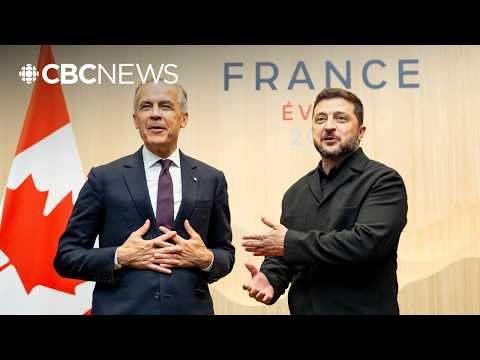
Carney and Zelenskyy: A Bilateral Focused on Ukraine's Fight
Prime Minister Mark Carney and President Volodymyr Zelenskyy devoted their bilateral session to concrete measures that would strengthen Ukraine's defensive capabilities against Russian forces. Carney reiterated Canada's commitment to supplying additional artillery shells and ammunition stocks, building on previous deliveries that have sustained Ukrainian operations through multiple campaigns. The discussion covered the integration of NASAMS air defence systems already positioned at key Ukrainian sites, with Carney confirming further training modules under Operation UNIFIER to ensure Ukrainian crews could maintain and operate the equipment effectively. Zelenskyy requested accelerated delivery timelines for remaining Leopard 2 tanks, noting their role in recent counteroffensives that have shifted momentum along several fronts. Carney responded by outlining Canada's plan to expand the training program, which has already prepared thousands of Ukrainian personnel in Canada and allied locations. The leaders also examined humanitarian aid packages valued in the hundreds of millions, including winterisation supplies and medical equipment. Carney stressed that G7 partners remain united behind Ukraine, a message reinforced by joint planning for the upcoming winter campaign. Zelenskyy expressed appreciation for Canada's consistent contributions while highlighting the need for long-range precision munitions to protect civilian infrastructure. The meeting concluded with agreement on regular video consultations between defence officials to monitor implementation of these commitments.
G7 Declares United Front on Ukraine
G7 leaders issued a coordinated statement affirming continued support for Ukraine, with Prime Minister Carney playing a central role in bridging positions among members. The declaration emphasised practical steps such as synchronised sanctions enforcement and shared intelligence on Russian supply lines. European allies including Germany and the United Kingdom committed additional funding mechanisms, while Carney highlighted Canada's focus on training and equipment sustainment. Differences in approach surfaced regarding the pace of new commitments, particularly with the United States under its current administration prioritising the recent ceasefire agreement with Iran. Nevertheless, the group reached consensus on maintaining pressure through export controls and financial restrictions targeting Russian energy revenues. Carney noted that unity translates into tangible outcomes, such as pooled procurement of artillery ammunition that reduces costs and speeds delivery. The Iran ceasefire provided a temporary distraction during plenary sessions, yet leaders quickly returned to Ukraine as the central security concern. Practical unity also involved coordination on energy security measures to offset any supply disruptions from the Persian Gulf region. Carney positioned Canada as a reliable contributor that avoids dramatic shifts in policy, thereby reinforcing alliance cohesion. The joint commitments signal that G7 members intend to sustain support levels through at least the next fiscal year, with quarterly reviews scheduled to adjust based on battlefield conditions.
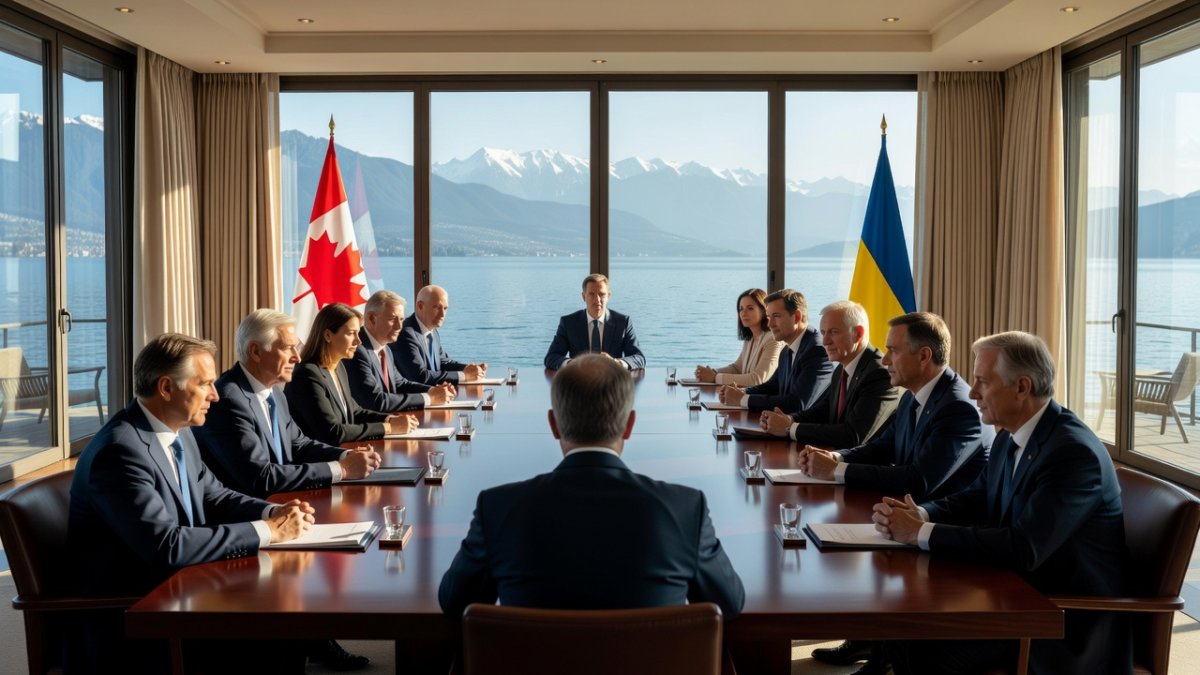
Canada's Ongoing Contribution to Ukraine's Defence
Canada's military assistance to Ukraine has totalled several billion dollars since February 2022, encompassing both lethal equipment and extensive training programs. Operation UNIFIER has trained more than 40,000 Ukrainian soldiers in tactics, logistics, and equipment maintenance across facilities in Canada and partner nations. The program continues to expand with new cohorts arriving for specialised courses on air defence operations. Specific deliveries include a squadron of Leopard 2 tanks that have participated in defensive operations in eastern Ukraine, alongside multiple NASAMS air defence batteries that have intercepted Russian missile and drone attacks. Canadian-supplied artillery systems and associated ammunition have supported sustained fire missions, with additional shipments scheduled through the remainder of 2026. Defence contracts awarded to Canadian firms have ensured steady production of 155-millimetre shells and spare parts for the Leopard fleet. Several Canadian personnel attached to training teams have sustained minor injuries during exercises, though no fatalities have been reported in the mission. Carney confirmed during the Evian meeting that Parliament would consider supplementary estimates to maintain these flows. The combination of equipment, training, and financial support has positioned Canada as a steady contributor within the broader Western effort, with officials tracking delivery metrics through secure channels shared with Ukrainian counterparts.
Why 'The Tide is Turning' Matters for Ukraine and for Canada
Prime Minister Carney's assessment that the tide is turning reflects measurable improvements in Ukraine's defensive posture resulting from accumulated Western aid. Ukrainian forces have regained limited ground in several sectors, aided by the arrival of modern tanks and air defence systems that blunt Russian advances. Russian logistical challenges have intensified under sustained sanctions, reducing the pace of offensive operations. For Canada, this development carries implications for foreign policy and defence planning. Sustained engagement strengthens Canada's voice within NATO, where discussions on burden-sharing and readiness continue ahead of the next alliance summit. Carney has linked support for Ukraine to broader Canadian interests in rules-based international order, arguing that failure to assist would encourage further aggression. The statement also influences domestic debates on defence spending, with opposition parties questioning the balance between international commitments and domestic procurement priorities. Analysts note that Canada's contributions enhance interoperability with European allies, potentially opening avenues for joint equipment programs. The shifting dynamics may also affect the timing and conditions of any future negotiations, as improved Ukrainian leverage could lead to more favourable terms. Carney's remarks therefore serve both diplomatic and domestic purposes, signalling resolve while preparing Canadians for continued involvement.
Broader G7 Summit: Iran, Trade, and Transatlantic Relations
The G7 agenda extended well beyond Ukraine to encompass the newly concluded US-Iran ceasefire, which reshaped energy security calculations for participating nations. Leaders examined ways to stabilise Persian Gulf oil flows while accelerating diversification toward non-Russian sources. Carney advocated for Canadian liquefied natural gas exports as one element of this strategy, noting existing infrastructure projects that could increase supply to Europe. USMCA trade renegotiation talks occupied another session, with Carney stressing the importance of preserving integrated North American supply chains amid global uncertainties. Discussions on artificial intelligence regulation produced a framework for shared standards on safety and transparency, areas where Canada has positioned itself as a constructive middle power. The United States' focus on the Iran agreement created occasional friction with European partners seeking firmer Ukraine commitments, yet Carney facilitated compromise language that preserved overall unity. Canada's role involved bridging transatlantic perspectives, drawing on its membership in both NATO and the G7 to moderate differing priorities. Energy security measures agreed at the summit include coordinated stockpiling targets and investment in renewable alternatives. These wider topics illustrate how the Evian gathering addressed interconnected challenges rather than isolated regional conflicts.
What Happens Next for Ukraine and Canada's Role
Following the Evian bilateral, attention turns to parliamentary processes in Ottawa that will determine funding levels for the next phase of Ukraine assistance. Carney indicated that supplementary estimates would be tabled before the summer recess, covering additional ammunition purchases and training expansions. The NATO summit scheduled for later in 2026 will provide another venue for Canada to align its commitments with alliance targets. Ukrainian officials have signalled interest in exploring negotiated outcomes once battlefield conditions stabilise further, though Carney emphasised that any talks must respect Ukrainian sovereignty. Winter campaign planning will focus on sustaining equipment readiness through harsh weather, with Canadian technicians scheduled to assist in maintenance protocols. Public opinion surveys in Canada show steady majority support for continued assistance, though concerns about domestic economic pressures remain present. Carney's government will monitor these trends while advancing a foreign policy that balances close relations with the United States and deeper engagement with European partners. The G7 outcomes set the stage for incremental rather than dramatic shifts in Canada's Ukraine policy through the remainder of the year.
Canada's participation at the Evian G7 Summit reinforces its position as a reliable middle power capable of sustaining long-term commitments amid shifting global priorities. Observers should watch for the outcome of parliamentary votes on supplementary aid estimates and any adjustments to Operation UNIFIER enrolment targets. The interplay between US-Iran developments and Ukraine support will test Canada's ability to maintain coherent policy across multiple theatres. Carney's emphasis on unity and turning tides provides a framework for continued engagement that aligns with established Canadian foreign policy traditions of multilateral cooperation and rules-based order. How these elements evolve will shape Canada's international standing and domestic defence debates in the months ahead.
By Alex Thompson, Staff WriterThis article was produced with AI-assisted research and editorial support. Reporting is based on sources cited in the article.
What's Your Reaction?
 Like
0
Like
0
 Dislike
0
Dislike
0
 Love
0
Love
0
 Funny
0
Funny
0
 Wow
0
Wow
0
 Sad
0
Sad
0
 Angry
0
Angry
0
Canada Correspondent at Global1.News. Based in Toronto, covering Canadian politics, energy, trade, and US-Canada relations. Provides the Canadian perspective on North American and global affairs.











Comments (0)