
Iran Links Israel-Lebanon Talks to US Deal and Gridlock
In a recent i24NEWS English report titled "Iran is trying to link the deal between Israel and Lebanon to their own deal with the US," the network detailed how Tehran has inserted itself into the Israel-Lebanon border talks. The report highlighted Iran's demands that any US-Iran agreement include an Israeli withdrawal from southern Lebanon, a move that has stalled progress in Wa
In a recent i24NEWS English report titled "Iran is trying to link the deal between Israel and Lebanon to their own deal with the US," the network detailed how Tehran has inserted itself into the Israel-Lebanon border talks. The report highlighted Iran's demands that any US-Iran agreement include an Israeli withdrawal from southern Lebanon, a move that has stalled progress in Washington and raised alarms in Jerusalem and Tel Aviv.

Israel and Lebanon continue negotiations in Washington as Iran seeks to link the talks to its own deal with the United States. (Global 1 News)
Iran's Strategic Linkage Between Lebanon and US Negotiations
Iran has explicitly tied the Israel-Lebanon border talks to its own negotiations with the United States by demanding an Israeli pullback from southern Lebanon as a precondition for any final US-Iran deal. This approach emerged during the Switzerland meetings involving the United States, Iran, Pakistan, and Qatar, where the parties established a High-Level Committee for political oversight.
Tehran views the southern Lebanon file as leverage to extract concessions from Washington on sanctions relief and nuclear issues. Israeli officials in the Prime Minister's Office have rejected this linkage outright, stating that security arrangements along the border with Lebanon remain a sovereign matter for the IDF and cannot be subordinated to US-Iran diplomacy.
The linkage has produced a diplomatic deadlock because Israel refuses to condition its troop presence in the expanded military control zone on progress in the separate US-Iran channel. Foreign Ministry spokespeople in Jerusalem have emphasized that Hezbollah's continued activity near the border necessitates independent Israeli security measures regardless of any Washington-Tehran understanding.
Washington Talks Advance US-Backed Pilot Zones Plan
On June 24, 2026, Israel and Lebanon opened a new round of direct talks in Washington focused on a US-backed pilot program for transferring territory in southern Lebanon to Lebanese government control. The discussions center on specific border sectors where Lebanese forces would assume responsibility under international monitoring.
Lebanon has signaled its determination to continue these bilateral negotiations even as the Iran-US deal casts a shadow over the process. Lebanese negotiators arrived in Washington insisting that the pilot zones must lead to full implementation of UN Security Council resolutions without external interference from Tehran.
Israel has already demarcated an expanded military control zone inside southern Lebanon to address immediate threats from Hezbollah positions. This demarcation directly affects the scope of the pilot program, as Israeli representatives insist that any handover must exclude areas where Hezbollah maintains operational infrastructure close to the border.
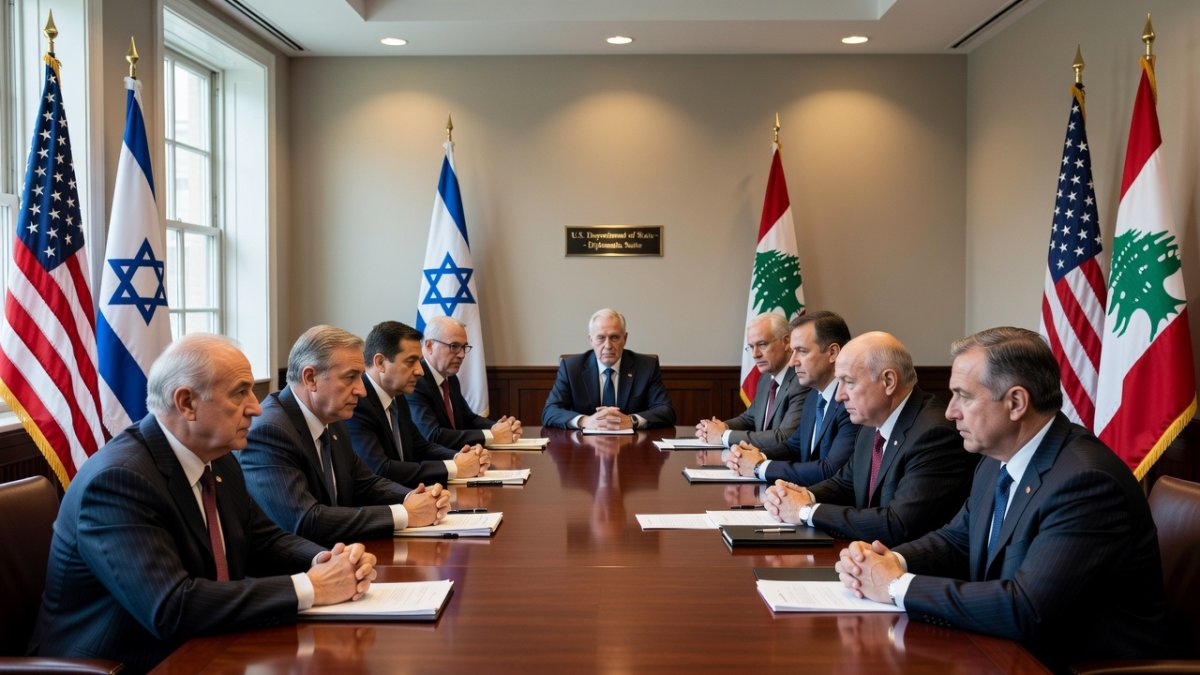
Secretary of State Marco Rubio has been defending the US-Iran deal on a Middle East tour while Washington hosts Israel-Lebanon talks. (Global 1 News)
Israel Maintains Troops in Southern Lebanon for Security
Israel has made clear that it will retain troops in southern Lebanon to prevent Hezbollah from reestablishing attack positions along the frontier. IDF commanders have cited specific intelligence on Hezbollah fighters operating within a few kilometers of Israeli communities in the north.
The Prime Minister's Office has coordinated with the IDF on the boundaries of the control zone, prioritizing the protection of residents in towns such as Metula and Kiryat Shmona. Israeli officials argue that premature withdrawal would repeat the security vacuum that allowed Hezbollah to build its military network after 2000.
Jerusalem has informed Washington that any pilot zone handover must include verifiable guarantees against Hezbollah re-infiltration. The Foreign Ministry has stressed that these conditions stem from operational realities on the ground rather than any connection to the separate US-Iran negotiations.
Hezbollah Leader Welcomes Iran-US Deal as Victory
Hezbollah leader Naim Qassem described the emerging Iran-US deal as a "great victory" that could be used to expel Israeli forces from Lebanon. His statements, delivered from Beirut, framed the agreement as a tool to pressure Israel into full withdrawal from the southern border area.
Qassem's remarks directly referenced the Washington talks, claiming that the Iran-US channel would accelerate Lebanese demands for complete Israeli retreat. Hezbollah maintains that its fighters remain positioned to enforce this outcome if diplomatic efforts stall.
Israeli defense officials monitoring Hezbollah communications have noted increased activity along the border following Qassem's comments. The IDF has reinforced positions in the control zone to counter any attempt by the group to exploit perceived diplomatic momentum.
Secretary Rubio Defends US-Iran Deal on Gulf Tour
Secretary of State Marco Rubio is currently conducting a Middle East tour to explain the US-Iran deal to skeptical Gulf allies in Riyadh, Abu Dhabi, and Manama. The tour follows the Switzerland agreement that created the High-Level Committee involving the United States, Iran, Pakistan, and Qatar.
Gulf leaders have expressed concern that the deal could embolden Iran-backed groups across the region, including Hezbollah in Lebanon. Rubio has assured counterparts that US security commitments to Israel and the Abraham Accords partners remain unchanged despite the new diplomatic track with Tehran.
Israeli diplomats in Washington have followed Rubio's meetings closely, seeking assurances that Gulf states will not pressure Israel to accept linkage between the Lebanon file and the Iran agreement. The Prime Minister's Office has reiterated that security decisions regarding southern Lebanon will be made in Jerusalem, not in multilateral forums.
Regional Implications for Gulf States and Abraham Accords
The Iran-US linkage attempt has prompted Gulf states to reassess their engagement with the Abraham Accords framework. Officials in the United Arab Emirates and Bahrain have privately conveyed to Israeli counterparts that any perceived weakening of Israel's position in Lebanon could affect normalization momentum.
Saudi Arabia has watched the Washington talks and Rubio's tour with particular attention, given its own border concerns with Iran-backed proxies. Riyadh has signaled that progress on regional economic initiatives tied to the Accords depends on clear separation between the Lebanon security file and US-Iran diplomacy.
Israeli analysts in Tel Aviv note that sustained Iranian interference in the Lebanon negotiations risks undermining the quiet security cooperation that has developed under the Accords. The Foreign Ministry continues to brief Gulf partners on the specific Hezbollah threats driving Israel's control zone policy.
Outlook for Israel-Lebanon Relations and US-Iran Deal
The Lebanese president has stated that nothing less than full Israeli withdrawal from southern Lebanon is acceptable, a position that directly conflicts with Israel's security requirements. This stance, combined with Iran's linkage strategy, has narrowed the room for compromise in the Washington channel.
Future rounds of Israel-Lebanon talks will likely focus on technical details of the pilot zones while the broader political questions remain unresolved. The IDF will continue to adjust its control zone based on Hezbollah movements, independent of any US-Iran committee decisions.
For Israeli residents along the northern border, the current deadlock means prolonged military presence in southern Lebanon and continued vigilance against Hezbollah attacks. Jerusalem views the separation of the two negotiation tracks as essential to preventing Tehran from dictating outcomes on Israel's immediate frontier.
By Hannah Berg, Staff WriterThis article was produced with AI-assisted research and editorial support. Reporting is based on sources cited in the article.
What's Your Reaction?
 Like
0
Like
0
 Dislike
0
Dislike
0
 Love
0
Love
0
 Funny
0
Funny
0
 Wow
0
Wow
0
 Sad
0
Sad
0
 Angry
0
Angry
0
Israel Correspondent at Global1.News. Based in Tel Aviv, covering Israeli politics, security, technology, and society. Provides balanced, deeply-sourced reporting on one of the most closely-watched regions in the world.












Comments (0)