
Colombia Floods 2026: 14 Dead, 150,000 Displaced as Climate Crisis Devastates North
In the sodden streets of Tierralta, Córdoba, 42-year-old farmer María Elena Ruiz watched her three children wade through knee-deep water carrying what remained of their belongings. February 2026 brought an unprecedented climate crisis to northern Colombia, killing at least 14 people, displacing up to 252,000 residents, and submerging tens of thousands of hectares of farmland ac
In the sodden streets of Tierralta, Córdoba, 42-year-old farmer María Elena Ruiz watched her three children wade through knee-deep water carrying what remained of their belongings. February 2026 brought an unprecedented climate crisis to northern Colombia, killing at least 14 people, displacing up to 252,000 residents, and submerging tens of thousands of hectares of farmland across seven departments.
Colombia’s North Drowns in Unprecedented La Niña Fury: 14 Dead, 150,000 Displaced as Climate Crisis Exposes Decades of Neglect
Bogotá, Colombia – June 2026 —
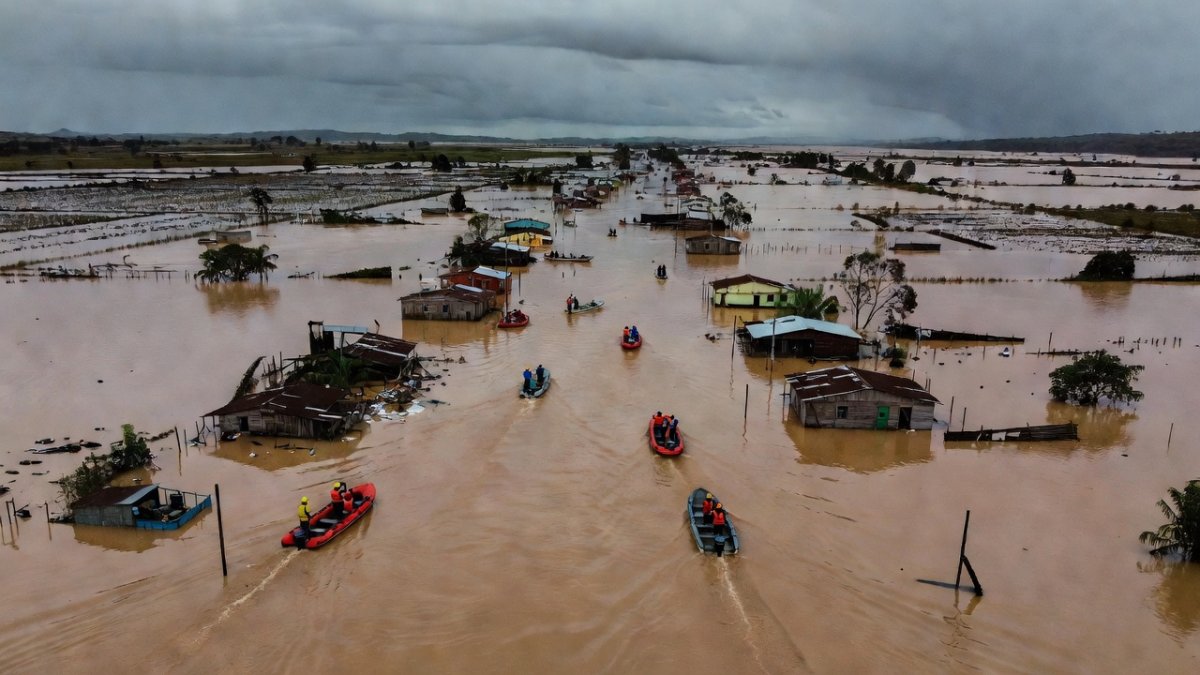
The Deluge: Northern Colombia Under Water
February 2026 delivered catastrophic flooding across northern Colombia that claimed at least 14 lives and left some residents still missing weeks later. The departments of Córdoba, Sucre, Bolívar, Cesar, Magdalena, La Guajira, and Chocó/Urabá bore the brunt, with roughly 50,000 families—between 150,000 and 252,000 people—directly affected. Approximately 9,000 homes were completely destroyed while tens of thousands of hectares of farmland and livestock vanished beneath muddy waters. The Sinú River overflowed its banks, joined by multiple other rivers that burst through weakened levees, turning entire municipalities into inland lakes. Local leaders immediately labeled the disaster a “crisis climática sin precedentes,” an unprecedented climate crisis that exposed how decades of environmental degradation had stripped the region of natural buffers. Families like María Elena Ruiz’s lost not only shelter but also the crops and animals that sustained them, forcing sudden dependence on humanitarian aid. The scale of destruction revealed how quickly climate-amplified rainfall can overwhelm communities already living on the edge of survival in Colombia’s Caribbean lowlands.
La Niña and a Changing Climate
La Niña conditions dramatically enhanced rainfall across northern South America, merging with a frontal system, Amazonian moisture transport, and the active phase of the Madden-Julian Oscillation to produce extreme precipitation totals. IDEAM meteorologists recorded rainfall intensities never previously documented in zones such as Urabá Chocoano, confirming the event exceeded historical norms. The Urrá hydroelectric dam on the Sinú River performed controlled releases intended to safeguard its structure, yet these releases significantly worsened downstream flooding in Córdoba. Critics argued that hydrological models used by dam operators failed to incorporate La Niña-scale scenarios, leaving communities unprotected. Long-term vulnerabilities compounded the crisis: widespread deforestation, land concentration in massive cattle-ranching latifundios, and poorly engineered dikes that altered natural river flows reduced the landscape’s capacity to absorb water. In the broader context of global warming, scientists note that rising temperatures are intensifying hydro-meteorological extremes throughout the tropics, turning what might once have been manageable rainy seasons into existential threats for smallholder farmers and Indigenous communities alike.
Government Response: Emergency Decree and Rescue Operations
President Gustavo Petro declared an economic, social, and ecological emergency across eight departments, unlocking budget reallocations, temporary tax measures, and dedicated funding streams for immediate relief and long-term reconstruction. The Unidad Nacional para la Gestión del Riesgo de Desastres (UNGRD) coordinated a multi-agency operation that deployed boats, rescue teams, and aircraft to conduct rapid assessments while distributing humanitarian kits, food aid, and heavy machinery to clear debris. In Tierralta, Córdoba, new shelter construction projects simultaneously provided temporary housing and generated local employment for displaced residents. Engineers executed river-flow diversions that redirected more than 60 percent of the Cauca River through the Canal de la Esperanza in La Mojana, easing pressure on saturated floodplains. Petro publicly criticized aging hydroelectric infrastructure and advocated breaking select dikes to restore natural river dynamics, arguing that rigid engineering solutions had repeatedly failed vulnerable populations. These measures offered short-term breathing room yet underscored the urgent need for integrated watershed management that prioritizes both human safety and ecological restoration across Colombia’s northern river basins.
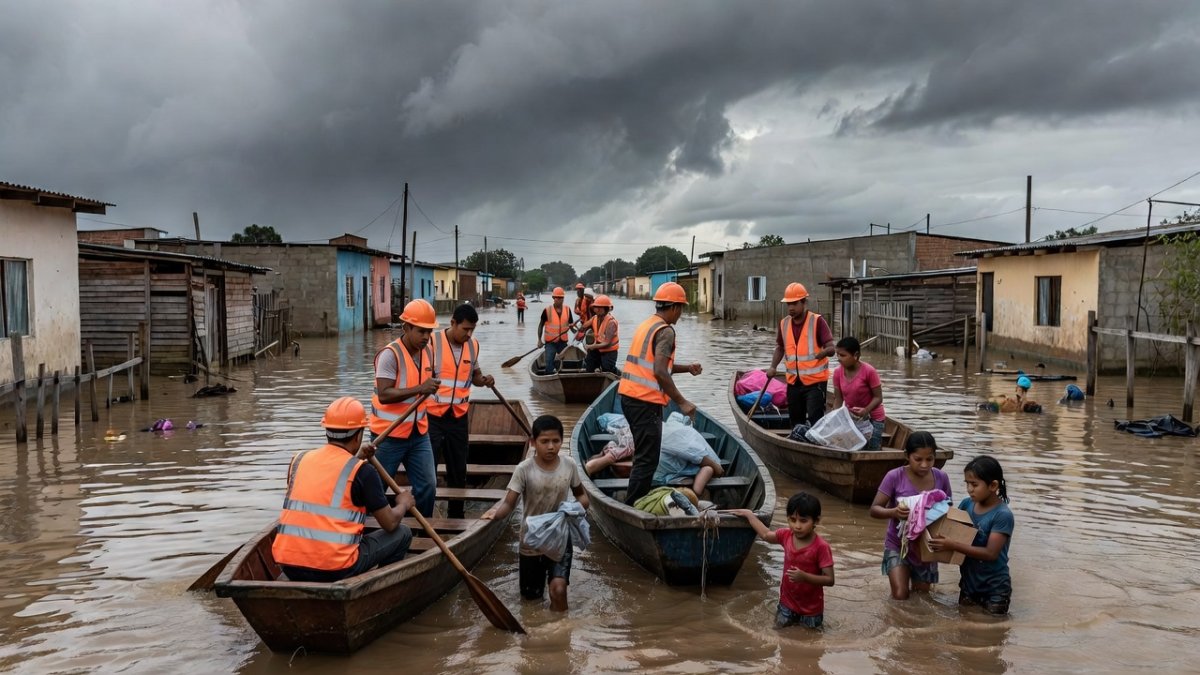
Corruption and the Funding Crisis
Despite the scale of the emergency, UNGRD operations were severely constrained by a massive corruption scandal that allegedly diverted 380 billion pesos—roughly $380 million—through bribes paid to lawmakers. The funding shortfall left rescue teams under-equipped and delayed critical infrastructure repairs in the hardest-hit municipalities. Opposition voices, including Senator Claudia López, accused the government of negligence, noting that January forecasts had already signaled elevated flood risk yet early-warning systems remained inadequate. Critics further charged that political infighting and scapegoating distracted from accountability for the missing resources. The scandal exposed systemic weaknesses in Colombia’s disaster-management architecture, where public funds intended for prevention and response too often vanish before reaching communities on the front lines. Affected families in Sucre and Bolívar reported waiting weeks for promised aid while politicians traded accusations, deepening mistrust toward institutions already strained by overlapping climate shocks. Restoring integrity to UNGRD financing mechanisms now stands as a prerequisite for any credible long-term adaptation strategy in the region.
From Floods to Drought: Colombia’s Climate Whiplash
By June 2026 attention had already pivoted from flood recovery toward El Niño drought preparedness as UNGRD and partner agencies warned of an 82 percent probability that El Niño conditions would consolidate in the coming months. IDEAM continued issuing daily meteorological and hydrological alerts, tracking soil-moisture deficits that threatened the same farmlands recently inundated. The economic emergency decree remained under congressional debate, delaying disbursement of reconstruction funds while communities faced the prospect of back-to-back extremes. Long-term priorities identified by planners include restoring wetlands to support both agriculture and artisanal fishing, rehousing thousands of displaced families in climate-resilient settlements, and strengthening early-warning networks that integrate Indigenous knowledge with satellite data. This rapid swing from deluge to potential drought illustrates the climate whiplash now defining life in northern Colombia, where communities must simultaneously rebuild homes and prepare for water scarcity within a single annual cycle. Without accelerated investment in adaptive infrastructure, the cycle of loss and recovery will only intensify.
What This Means for Latin America
The Colombian floods form part of a broader hemispheric pattern in which La Niña and El Niño cycles are delivering more extreme rainfall and drought across the Andes, Central America, and the Caribbean. Shared river basins and atmospheric moisture flows link Colombia’s northern lowlands to neighboring countries facing similar infrastructure deficits and land-use pressures. Deforestation in the Amazon continues to disrupt regional rainfall regimes, amplifying the very events that devastated Córdoba and La Guajira. Latin American governments increasingly recognize that isolated national responses are insufficient; coordinated early-warning systems, cross-border wetland restoration, and joint financing mechanisms for loss and damage are essential. Colombia’s experience demonstrates both the human cost of delayed action and the political obstacles—corruption, fragmented governance, and short-term electoral cycles—that hinder progress. Regional forums must now translate solidarity statements into concrete investments in climate-resilient agriculture, housing, and water management before the next oscillation of the Pacific brings fresh extremes.
The Bottom Line — Building Resilience in a Warming World
Colombia’s 2026 floods are a stark reminder that climate adaptation is no longer optional but a daily survival imperative for millions across Latin America. Restoring natural river corridors, enforcing land-use regulations against latifundio expansion, and securing transparent disaster funds must become non-negotiable priorities. International support for loss-and-damage finance, paired with domestic accountability reforms, can help communities like those in Tierralta move from repeated crisis response to genuine resilience. The lessons are clear: engineering alone cannot substitute for ecological integrity, and early warnings lose meaning without functioning institutions. As El Niño looms, Colombia and its neighbors have a narrowing window to implement these changes before the next wave of displacement arrives. The people of northern Colombia have already paid too high a price; the region cannot afford further delay.
By Elena Vasquez, Staff Writer
This article was produced with AI-assisted research and editorial support. Reporting is based on sources cited in the article.
What's Your Reaction?
 Like
0
Like
0
 Dislike
0
Dislike
0
 Love
0
Love
0
 Funny
0
Funny
0
 Wow
0
Wow
0
 Sad
0
Sad
0
 Angry
0
Angry
0

Latin America Correspondent at Global1.News. Based in Mexico City, covering politics, economics, energy, and culture across the region. Brings an on-the-ground perspective to stories spanning from the Rio Grande to Patagonia.













Comments (0)