
Hegseth says Europe faces 'invasion' of 'dangerous ideologies' while speaking at D-Day event
Hegseth issues stark warning at Normandy cemetery U.S. Defense Secretary Pete Hegseth used the 82nd anniversary of the D-Day landings to deliver a direct challenge to European governments. Speaking at the Normandy American Cemetery in Colleville-sur-Mer, he described contemporary migration across the Mediterranean as an "invasion of dangerous ideologies" reaching the shores of
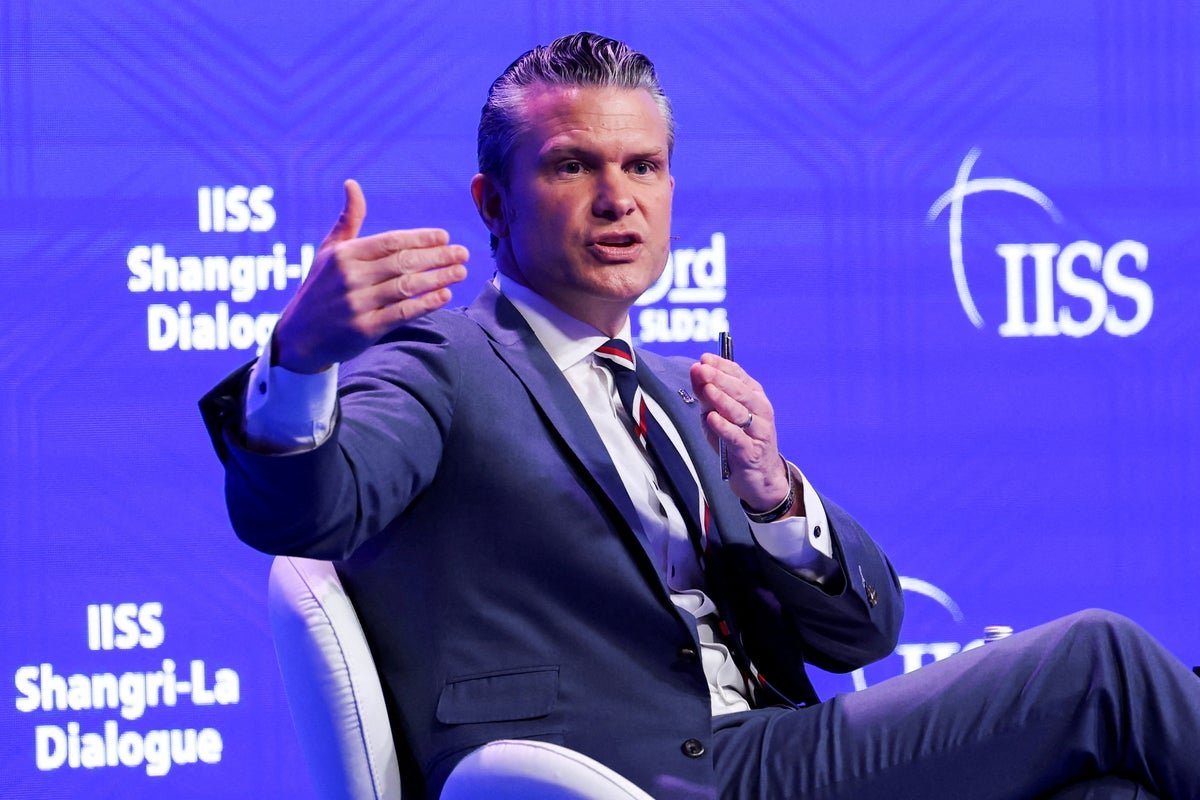
Hegseth issues stark warning at Normandy cemetery
U.S. Defense Secretary Pete Hegseth used the 82nd anniversary of the D-Day landings to deliver a direct challenge to European governments. Speaking at the Normandy American Cemetery in Colleville-sur-Mer, he described contemporary migration across the Mediterranean as an "invasion of dangerous ideologies" reaching the shores of Spain, Italy, Greece and Bulgaria. His remarks drew an explicit parallel between the 1944 Allied operation and present-day arrivals by boat, asking European capitals when they would act and whether it was already too late.
The comments align with long-standing criticisms from President Donald Trump and Vice President JD Vance. Washington has repeatedly pointed to what it sees as weak border controls, excessive bureaucracy and restrictions on nationalist voices. A U.S. National Security Strategy document issued last year warned of "civilisational erasure" unless Europe adjusted its policies to remain a dependable ally.
European governments consider options amid renewed U.S. pressure
Officials in several European capitals have begun examining ways to reduce reliance on American technology and defence equipment. The language from senior Trump administration figures has unsettled assumptions that underpinned the post-war security relationship. While no formal policy shift has been announced, discussions in Brussels and national capitals have focused on diversifying supply chains and strengthening independent capabilities.
France and Germany have already signalled interest in expanding joint procurement programmes. Smaller member states along the Mediterranean route have faced the most immediate political strain, with domestic debates over border management intensifying in recent weeks. European Commission statements have avoided direct confrontation while emphasising the need for coordinated migration management.
Transatlantic alliance faces fresh tests under current U.S. leadership
The intervention at Normandy has reinforced concerns that the close coordination established after 1945 is no longer taken for granted in Washington. Previous U.S. administrations framed NATO as the cornerstone of collective defence; current rhetoric places greater weight on European performance on immigration and spending. This shift has prompted quiet reviews inside foreign ministries about how far traditional assumptions still hold.
Analysts note that the tone marks a departure from the usual diplomatic language surrounding D-Day commemorations. Rather than focusing solely on shared wartime sacrifice, the address introduced contemporary political grievances. European diplomats have responded with measured statements that acknowledge migration pressures without accepting the framing of an existential "invasion".
British perspective on defence spending and relations with Washington
Inside Westminster and the Ministry of Defence, the remarks have prompted renewed attention to Britain's own commitments. The government continues to meet the NATO target of spending two per cent of GDP on defence, yet officials are examining whether further increases will be required to maintain influence in Washington. Discussions in Parliament have touched on the balance between supporting European security initiatives and preserving the close bilateral relationship with the United States.
UK ministers have avoided public criticism of Hegseth's language while stressing the importance of practical cooperation on intelligence sharing and military interoperability. The Prime Minister's office has indicated that migration policy remains a sovereign matter, though cross-Channel cooperation with France continues through existing bilateral agreements. Any perception that Britain is drifting from European partners risks complicating negotiations on trade and regulatory alignment.
D-Day legacy and questions of European sovereignty
The 1944 operation, codenamed OVERLORD, involved more than 195,000 naval personnel and 7,000 vessels delivering nearly 133,000 troops to five Normandy beaches. That coordinated effort across eight allied nations established the framework for post-war security structures, including NATO. Hegseth's decision to invoke the same beaches in the context of current migration has reopened debate about what the D-Day legacy actually requires of European governments today.
Historians and former diplomats have noted that the original landings were directed against a clear military adversary. Contemporary challenges involve different instruments and legal frameworks. Nevertheless, the speech has concentrated attention on whether European states retain sufficient control over their external borders to satisfy American expectations.
NATO cohesion and future defence planning
Allied defence planners are now assessing how the latest statements will affect upcoming NATO meetings and capability targets. Several European members have already accelerated plans to increase munitions production and modernise forces. Britain, as a leading contributor to NATO's standing maritime groups, faces particular scrutiny over whether its current equipment programmes meet the expectations set in Washington.
Officials in Whitehall continue to argue that the transatlantic link remains essential for deterrence against state adversaries. At the same time, contingency work on greater European autonomy has gained momentum. The coming months will show whether the tensions aired at Normandy translate into lasting changes in alliance burden-sharing or remain rhetorical pressure.
By Erica Thornton, Staff WriterThis article was produced with AI-assisted research and editorial support. Reporting is based on sources cited in the article.
What's Your Reaction?
 Like
0
Like
0
 Dislike
0
Dislike
0
 Love
0
Love
0
 Funny
0
Funny
0
 Wow
0
Wow
0
 Sad
0
Sad
0
 Angry
0
Angry
0

US Politics and Policy Correspondent at Global1.News. Based in Washington DC, covering American politics, policy, elections, and the courts. Knows how the system works and tells you what it actually means.















Comments (0)