
Healey Quits as Iran Strikes Trigger UK Defence Crisis
**Keywords:** John Healey resignation, UK defence spending, Iran US airstrikes, Strait of Hormuz, oil price inflation, Starmer government, NATO commitments, Yael Selfin, Channel 4 News Fourcast, British defence readiness The abrupt departure of Defence Secretary John Healey has exposed the fault lines running through Britain's security posture just as American forces launch a s
The abrupt departure of Defence Secretary John Healey has exposed the fault lines running through Britain's security posture just as American forces launch a second day of strikes on southern Iran. With oil markets already jittery and missiles intercepted over Jordan, the timing could scarcely be worse for a government still adjusting to its post-election defence inheritance. Healey's exit over spending plans now forces ministers to confront whether Britain can meet its NATO obligations while energy costs threaten to push inflation higher by autumn.
Defence Resignation Meets Gulf Escalation: Britain's Double Headache
London, UK – 11 June 2026 — John Healey resigned as Defence Secretary on Wednesday afternoon after being informed of the decision earlier in the day, BBC News has confirmed. The move comes amid a rapidly deteriorating security situation in the Gulf, where US airstrikes on southern Iran have prompted Tehran to declare the existing ceasefire "practically meaningless". Channel 4 News's Fourcast, presented by Matt Frei and Mark Urban, immediately began dissecting the implications for a country whose armed forces are already stretched thin.
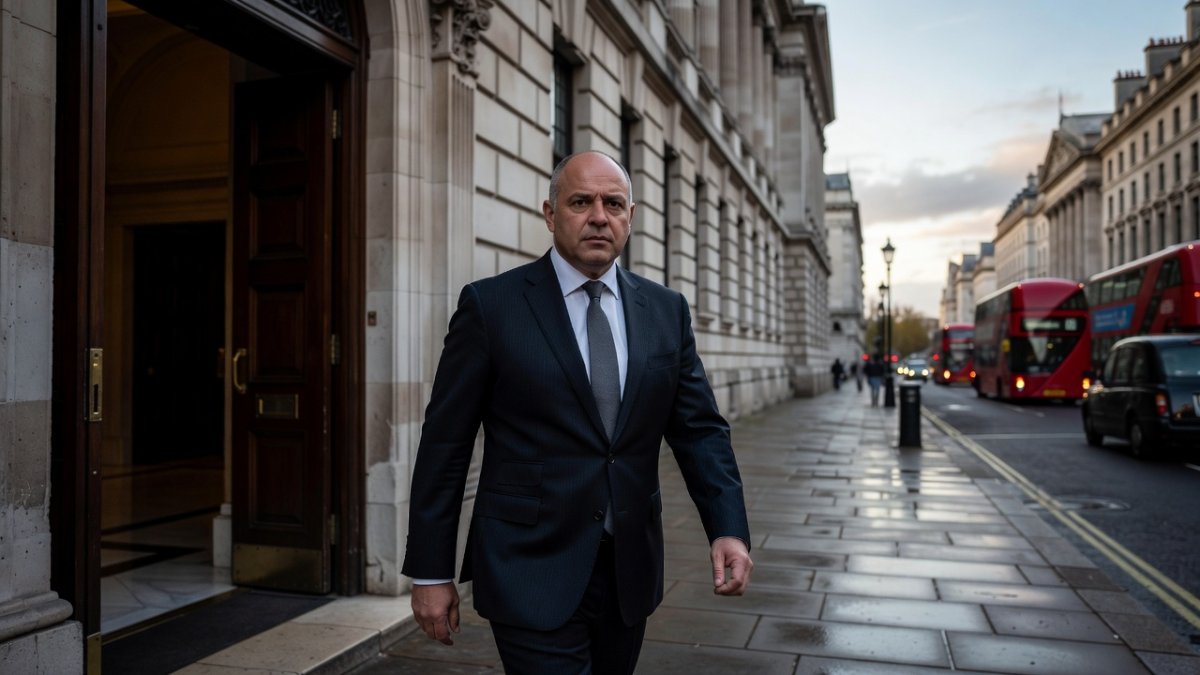
Healey's Resignation: What Happened at the MoD
John Healey had held the defence portfolio since the July 2024 general election, bringing a steady, if unspectacular, hand to a department long accustomed to budgetary turbulence. Sources close to the Ministry of Defence indicated that the resignation stemmed directly from irreconcilable differences over the scale and timing of planned increases in military expenditure. Healey reportedly argued that the current trajectory left the armed forces unable to sustain simultaneous commitments to NATO's eastern flank and emerging Indo-Pacific requirements. BBC reporting confirmed he was told of the Prime Minister's decision on Monday afternoon, giving him limited time to prepare a dignified exit. Colleagues described a minister who had grown increasingly frustrated by Treasury resistance to lifting defence spending above the 2.5 per cent of GDP target discussed during the election campaign. His departure leaves a vacuum at a moment when operational tempo is rising, not least because of the need to reassure allies that Britain remains a reliable contributor to collective defence. The timing also coincides with ongoing procurement decisions affecting shipbuilding in Scotland and armoured vehicle programmes already delayed by inflation. Whitehall insiders suggest the resignation reflects deeper structural problems rather than a simple personality clash, with several senior officers privately voicing concern that equipment budgets have not kept pace with threat assessments. Healey's tenure, though brief, had been marked by attempts to stabilise relations with industry after years of feast-and-famine funding cycles. His exit now places those relationships under renewed strain.
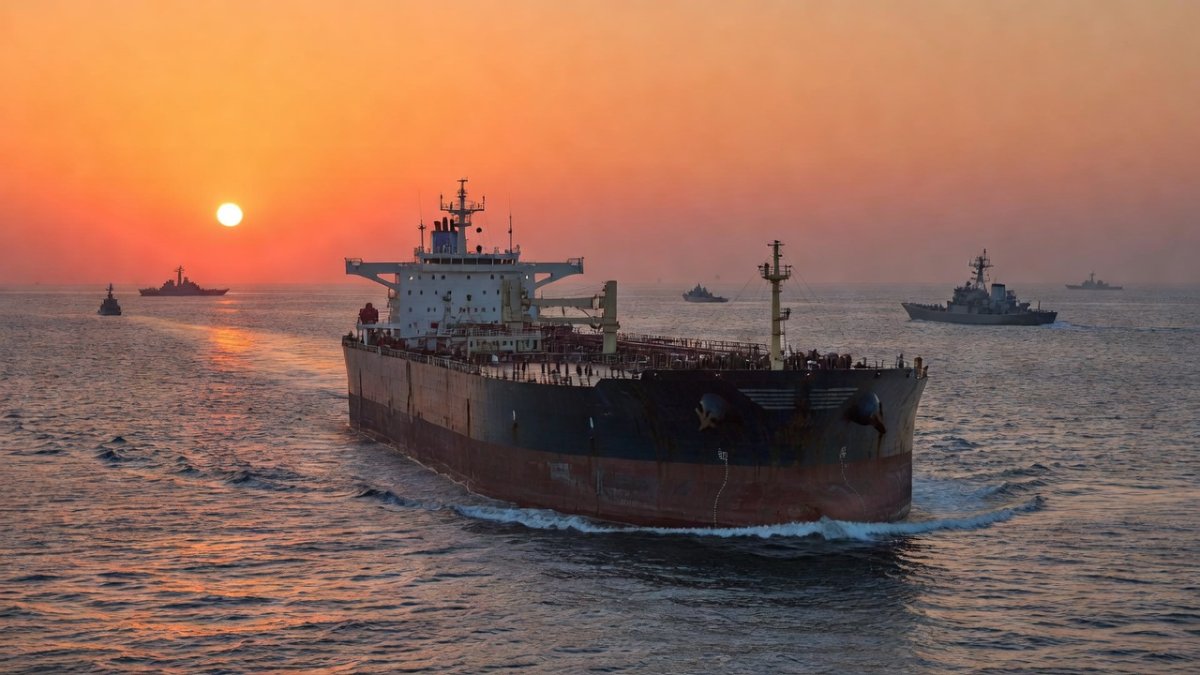
US-Iran Conflict: Escalation Across the Gulf
American forces conducted a second consecutive day of airstrikes against targets in southern Iran, according to multiple defence sources. Tehran responded by stating that the attacks had rendered the existing ceasefire agreement "practically meaningless", raising fears of further Iranian retaliation across the region. Jordanian forces intercepted twenty Iranian missiles during the latest exchanges, demonstrating the kingdom's continued willingness to shield itself from spillover. In Bahrain, an eleven-year-old girl was injured by falling debris, underscoring the civilian risks even in states not directly targeted. Qatar, maintaining its traditional role as regional interlocutor, dispatched a negotiating team to Tehran in an effort to establish a channel for US-Iran talks. Despite repeated warnings of disruption, commercial shipping continues to transit the Strait of Hormuz, with several tankers observed maintaining normal passage speeds on Wednesday. The combination of kinetic action and diplomatic activity has created a fluid environment in which miscalculation remains a constant danger. Mark Urban, the Channel 4 News diplomatic and defence editor, noted on the Fourcast that the speed of escalation has outpaced traditional deconfliction mechanisms. Regional states are now recalibrating their own air-defence postures while attempting to keep maritime trade lanes open. The presence of Qatari negotiators offers a slender thread of dialogue, yet the underlying military dynamics show little sign of immediate de-escalation. For Britain, whose naval assets routinely operate in the Gulf, the situation demands careful calibration of presence and restraint.
What This Means for British Defence Readiness
Mark Urban's analysis on Channel 4 News highlighted the uncomfortable gap between Britain's stated ambitions and current force structure. The Royal Navy's carrier strike group remains committed to NATO tasking, yet maintenance cycles and crewing shortfalls have already forced adjustments to deployment schedules. With Healey's departure, decisions on the next generation of frigates and the renewal of the nuclear deterrent programme now rest with an acting secretary. Scotland's shipyards, already under pressure to deliver Type 26 vessels on time, face renewed uncertainty over long-term funding guarantees. NATO allies will watch closely for any sign that London is retreating from the 2.5 per cent spending aspiration discussed at the recent summit. Equipment budgets remain vulnerable to the same inflationary pressures affecting the wider economy, particularly in electronics and specialised steel. The army's modernisation programme, already scaled back in previous reviews, may face further scrutiny if the Treasury seeks compensatory savings elsewhere. Urban emphasised that operational readiness cannot be switched on and off like a tap; sustained investment over several years is required to regenerate capability once it has been hollowed out. The resignation therefore arrives at a particularly inopportune moment for a department still recovering from post-Afghanistan retrenchment.
Economic Shockwaves: Oil Prices and the British Consumer
Yael Selfin, NIESR Fellow and Chief Economist at KPMG, warned that a sustained 10-15 per cent rise in oil prices would add approximately 0.4 percentage points to UK inflation by autumn. The effect would be felt most acutely at the forecourt, where petrol and diesel prices have already begun to edge higher in anticipation of supply disruption. Lower-income households, still recovering from the cost-of-living pressures of recent years, would face a disproportionate squeeze on disposable income. Selfin's modelling suggests the pass-through to core inflation would be slower but persistent, complicating the Bank of England's efforts to return price growth to target. Energy-intensive industries, including chemicals and logistics, are likely to seek compensatory price increases, feeding through to the broader basket of consumer goods. The continued transit of tankers through the Strait of Hormuz has so far prevented a sharper spike, yet any closure or significant insurance premium rise would amplify the shock. Forecasters at the National Institute expect the autumn statement to contain revised fiscal projections that incorporate these higher energy costs. For an economy still adjusting to post-election tax changes, the additional inflationary impulse represents an unwelcome headwind.
Political Fallout for Starmer's Embattled Government
Opposition parties moved quickly to portray Healey's resignation as evidence of Labour's inability to match defence rhetoric with resources. Conservative MPs highlighted coastal constituencies where shipyard jobs depend on steady procurement pipelines now thrown into doubt. Within Labour's own ranks, backbench concern is growing over the government's willingness to meet NATO spending expectations amid competing domestic priorities. The 2.5 per cent target, once presented as an achievable stretch goal, now appears politically contested. Coastal MPs from both sides of the House have already requested urgent meetings with the acting defence team to safeguard local employment. The timing of the resignation, coinciding with heightened Gulf tensions, has given the government little room to shape the narrative. Parliamentary time is expected to be allocated next week for a statement, though the precise date remains under discussion. Starmer's administration must now demonstrate that the change of personnel will not translate into a change of strategic direction.
Whitehall in Crisis: What Happens Next
Succession planning is already under way, with several names circulating for the vacant post. The new secretary will inherit immediate decisions on budget allocations and urgent operational deployments. Parliamentary committees are likely to request evidence sessions within days, seeking clarity on both the reasons for Healey's departure and the government's response to Gulf developments. The acting minister will face early tests in NATO consultations scheduled for later this month. Budget debates in the Commons will provide further opportunities for scrutiny, particularly from members representing defence industry interests. The civil service is preparing contingency guidance for procurement contracts that may require renegotiation if spending envelopes shift. Observers expect the Prime Minister to make an announcement before the weekend to limit speculation. The speed with which a permanent replacement is installed will be read as a signal of governmental seriousness.
The Bottom Line — What Comes Next for Britain
Britain now confronts a convergence of strategic and economic pressures that will test both political resolve and institutional capacity. Healey's resignation has removed a minister who understood the linkage between resources and credibility at a moment when that linkage is under acute examination. The Gulf crisis adds an external variable whose trajectory remains uncertain, yet whose economic consequences are already measurable. Ministers must therefore navigate simultaneous demands for higher defence outlays and containment of inflation without undermining either objective. The coming weeks will reveal whether the government can restore stability to the defence portfolio while maintaining credible deterrence in a region where miscalculation carries global consequences. For now, the combination of political turbulence at home and kinetic action abroad leaves Britain's security establishment in an uncomfortably reactive posture.
By Erica Thornton, Staff Writer
This article was produced with AI-assisted research and editorial support. Reporting is based on sources cited in the article.
What's Your Reaction?
 Like
0
Like
0
 Dislike
0
Dislike
0
 Love
0
Love
0
 Funny
0
Funny
0
 Wow
0
Wow
0
 Sad
0
Sad
0
 Angry
0
Angry
0

US Politics and Policy Correspondent at Global1.News. Based in Washington DC, covering American politics, policy, elections, and the courts. Knows how the system works and tells you what it actually means.















Comments (0)