
French Heatwave's 1,000 Deaths in 4 Days: A Warning for India's Heat Plans
France recorded approximately 1,000 excess deaths in just four days between June 24 and 27, 2026, as an unprecedented heatwave swept across Western Europe — a public health crisis that holds direct lessons for India, where temperatures above 48°C in Uttar Pradesh, Rajasthan, and Delhi during April-May 2026 have already demonstrated the deadly consequences of inadequate heat pre
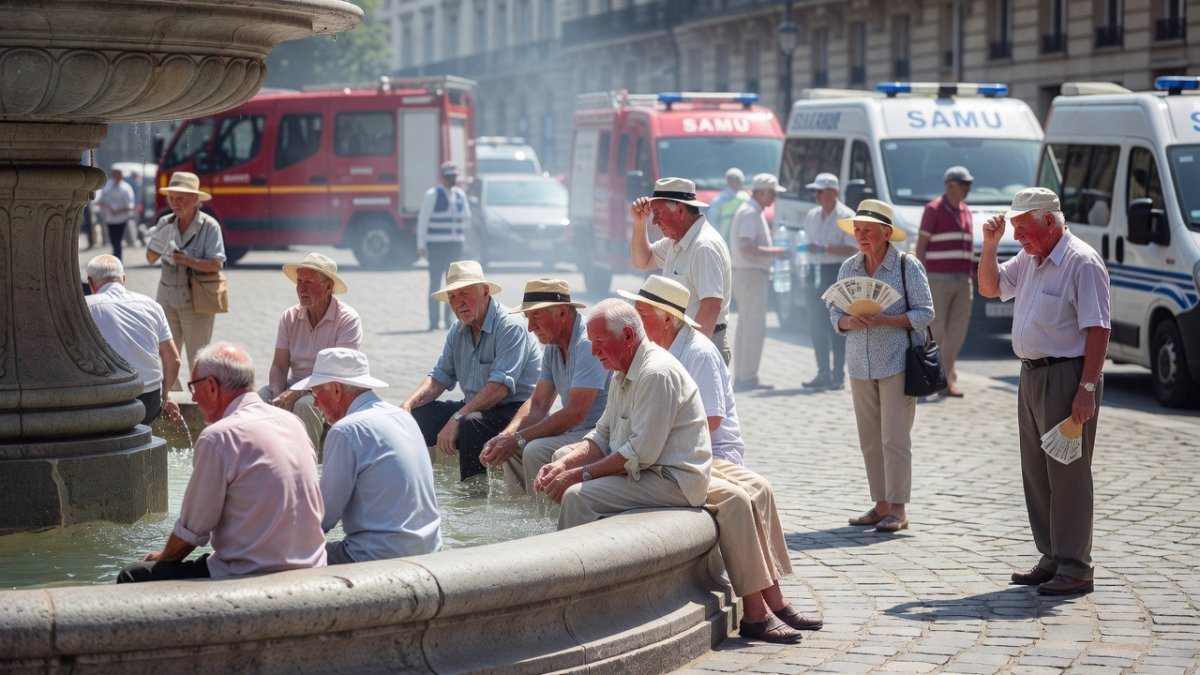
France recorded approximately 1,000 excess deaths in just four days between June 24 and 27, 2026, as an unprecedented heatwave swept across Western Europe — a public health crisis that holds direct lessons for India, where temperatures above 48°C in Uttar Pradesh, Rajasthan, and Delhi during April-May 2026 have already demonstrated the deadly consequences of inadequate heat preparedness. The data from Santé Publique France, the national public health agency, shows daily mortality surging from a baseline of 900-1,000 deaths to over 1,400 during the peak, with 85 percent of victims aged 65 and above. For India, where the elderly population is expanding rapidly and heat action plans remain fragmented across states, these numbers represent a foreseeable emergency rather than a distant European tragedy.
France's Heat Crisis in Numbers — A Breakdown
Santé Publique France figures confirm more than 1,000 excess deaths occurred between June 24 and 27, 2026, underscoring how quickly mortality spikes when temperatures soar, a pattern that Indian states such as Uttar Pradesh must urgently address given their own recent exposure to extreme heat exceeding 48°C. In India the absence of centralized real-time tracking means similar surges often go underreported until hospitals in Rajasthan and Delhi become overwhelmed, highlighting the need for data-driven systems modeled on French reporting. With 85 percent of French victims aged 65 and above, India faces parallel risks as its elderly cohort grows, demanding targeted interventions in rural primary health centers across the Indo-Gangetic plain where cooling resources remain scarce.
Daily deaths in France rose from a baseline of 900 to over 1,400 at peak, illustrating the lethal threshold crossed during prolonged heat, much like the mortality patterns observed in Indian cities during April-May 2026 when Uttar Pradesh and Rajasthan recorded sustained highs above 48°C. This escalation mirrors vulnerabilities in Indian district hospitals that lack surge capacity, where elderly patients from Rajasthan routinely present with heatstroke without adequate monitoring infrastructure. Record temperatures reached 44.3°C and broke a 147-year Paris record, reminding Indian policymakers that Delhi and Lucknow have already shattered local benchmarks, necessitating immediate upgrades to urban heat resilience strategies.
An Omega block weather pattern trapped hot air over Western Europe, a meteorological phenomenon that Indian Meteorological Department forecasts suggest could increasingly affect the subcontinent, particularly Rajasthan and Uttar Pradesh during extended dry spells. In India such patterns compound the challenges faced by nursing homes and prisons without air conditioning, facilities that suffered disproportionately in France and now require mandatory audits before the next summer season arrives in states like Bihar and Madhya Pradesh. Seventy-four drownings occurred as people sought relief in France, a tragic reminder that Indian communities in Delhi often resort to unsafe water bodies during heatwaves, underscoring gaps in public cooling infrastructure.
Prisons, nursing homes, and hospitals without air conditioning bore the brunt of French mortality, exposing institutional weaknesses that resonate strongly with India's rural primary health centers in Uttar Pradesh and Rajasthan where basic cooling remains unavailable. A third heatwave is now forecast for July in Europe, prompting Indian health authorities to accelerate preparations in anticipation of similar back-to-back events that could overwhelm AIIMS Delhi and district facilities already strained by May 2026 admissions. The ensuing political crisis, including a no-confidence motion against Prime Minister Lecornu, demonstrates how heat disasters can destabilize governance, a lesson for Indian assemblies in Rajasthan and Uttar Pradesh that have already debated inadequate state budgets for heat action plans.
Europe's Broader Toll — 1,300 Deaths and Counting
The World Health Organization reports more than 1,300 excess deaths across Europe since June 21, 2026, providing a continental benchmark that Indian institutions must study closely as Uttar Pradesh and Rajasthan confront comparable mortality burdens during their own extreme heat episodes above 48°C. In India the lack of integrated surveillance means such figures often emerge only retrospectively, delaying policy responses in states where elderly populations are expanding at 3 percent annually. Spain alone recorded approximately 900 heat-related deaths in June, a scale that parallels potential losses in densely populated Indian urban centers like Delhi if real-time alerts from the Indian Meteorological Department are not linked directly to health systems.
Context from the 2003 European heatwave, which claimed 70,000 lives, serves as a stark historical parallel for India where single days of extreme heat already correlate with roughly 3,400 excess deaths according to recent studies, emphasizing the urgency of scaling national preparedness beyond fragmented state-level efforts in Rajasthan and Uttar Pradesh. The European Union is warming twice as fast as the global average, a trend mirrored in India where the Indo-Gangetic plain experiences accelerated temperature rises that threaten to multiply heat-related mortality in coming decades. Climate scientists have declared the current European heatwave virtually impossible without climate change, a finding that reinforces Indian projections of more frequent, intense, and prolonged heatwave days across Delhi, Lucknow, and Jaipur.
These broader European statistics highlight systemic vulnerabilities that Indian health infrastructure shares, particularly in facilities serving the 153 million citizens aged 60 and above who require dedicated cooling protocols. Without adopting France's post-2003 national heat watch system, India risks repeating continental-scale tragedies on a larger demographic base, especially when June 2026 proved the fifth driest month in 126 years according to Indian Meteorological Department records. Targeted elderly outreach through primary health centers in rural Uttar Pradesh could mitigate such risks if modeled on successful European interventions that reduced subsequent mortality.
India's 48°C Summer — A Mirror of the French Crisis
India's April-May 2026 temperatures exceeding 48°C in Uttar Pradesh, Rajasthan, and Delhi directly mirror the French crisis, revealing how quickly excess mortality can accumulate when heat action plans lack uniformity across states. A single day of such extreme heat in India equates to approximately 3,400 excess deaths, a figure that demands immediate integration of Indian Meteorological Department alerts with hospital surveillance systems in high-risk districts. The fifth-driest June in 126 years has further intensified vulnerabilities, leaving communities in Rajasthan without adequate water reserves and forcing district hospitals to manage unprecedented caseloads without real-time mortality tracking.
AIIMS Delhi witnessed a sharp surge in heatstroke admissions during May 2026, illustrating the frontline pressure that French hospitals also endured and underscoring India's urgent need for dedicated cooling wards in tertiary care centers. District hospitals across Rajasthan became overwhelmed as elderly patients arrived in critical condition, a scenario that parallels French nursing home failures and calls for mandatory infrastructure audits before 2027. India's absence of real-time mortality surveillance means many heat-related deaths go uncounted until seasonal reports emerge, delaying the kind of rapid response that reduced European fatalities after 2003.
These conditions in Uttar Pradesh and Rajasthan expose how India's expanding elderly population of 153 million faces disproportionate risks without coordinated national frameworks, much like the 85 percent elderly mortality share observed in France. Heat-resilient hospital design must become a priority in the Indo-Gangetic plain where urban heat island effects are driving faster nighttime temperature rises in Delhi and Lucknow. Without such measures, future heatwaves will continue to claim preventable lives across Indian states already struggling with fragmented preparedness.
Health Infrastructure on Both Continents — Shared Vulnerabilities
French hospitals and nursing homes lacking air conditioning recorded the highest mortality rates, a vulnerability replicated in Indian facilities where AIIMS and district hospitals in Uttar Pradesh and Rajasthan still lack dedicated cooling wards despite repeated warnings. India's National Disaster Management Authority heat action plan, though inspired by France's post-2003 national watch system, remains inconsistently implemented at the state level, leaving rural primary health centers in Rajasthan underprepared for surges similar to those that overwhelmed European institutions. The 153 million Indians aged 60 and above, growing at 3 percent annually, require targeted infrastructure upgrades that current budgets in Uttar Pradesh assemblies have failed to prioritize adequately.
India's state-level heat action plans vary widely in effectiveness compared with France's centralized system, resulting in uneven protection for elderly populations in Delhi and Jaipur where nighttime temperatures continue rising due to urban heat island effects. Rural primary health centers across Uttar Pradesh operate with minimal cooling resources, mirroring the institutional gaps that amplified French deaths and necessitating mandatory air-conditioning audits before the 2027 summer. Without linking Indian Meteorological Department forecasts directly to health facility readiness, India risks repeating the mortality patterns seen when European prisons and care homes lacked climate control.
Shared vulnerabilities between continents emphasize that India's elderly care infrastructure must evolve rapidly to accommodate demographic shifts while addressing the same institutional weaknesses exposed in France. District hospitals in Rajasthan, already strained by May 2026 admissions, illustrate how fragmented governance can turn predictable heat events into public health emergencies on a scale exceeding European precedents.
Climate Trends — Why India Faces Greater Long-Term Risk
The European Union warming twice as fast as the global average finds a parallel in India where similar accelerated trends threaten the Indo-Gangetic plain, the region most vulnerable to heat-related mortality as temperatures in Uttar Pradesh and Rajasthan climb beyond historical norms. Urban heat island effects are causing Delhi, Lucknow, and Jaipur nighttime temperatures to rise faster than surrounding areas, compounding risks for the 153 million elderly citizens who lack access to cooled environments during prolonged heatwaves. Indian Meteorological Department projections indicate more heatwave days of longer duration and higher intensity, demanding that heat-resilient hospital infrastructure become a national priority rather than a state-level afterthought.
These climate trajectories place India at greater long-term risk than Europe because of its larger population density and slower adoption of centralized early-warning systems, as evidenced by the fifth-driest June in 126 years exacerbating water scarcity in Rajasthan. The Indo-Gangetic plain's unique topography amplifies heat retention, creating conditions where single extreme days already produce thousands of excess deaths that could multiply without proactive infrastructure investments. France's experience demonstrates that timely adaptation can blunt impacts, yet India continues to lag in scaling such measures across its vast rural health network.
Long-term projections from the Indian Meteorological Department underscore why heat-resilient design in hospitals and old-age homes must receive urgent national funding, particularly in states like Uttar Pradesh where elderly growth rates outpace existing preparedness frameworks. Without these interventions, climate-driven heat events will increasingly overwhelm Indian health systems in ways that exceed the European toll.
Policy Lessons: What India Must Learn from France
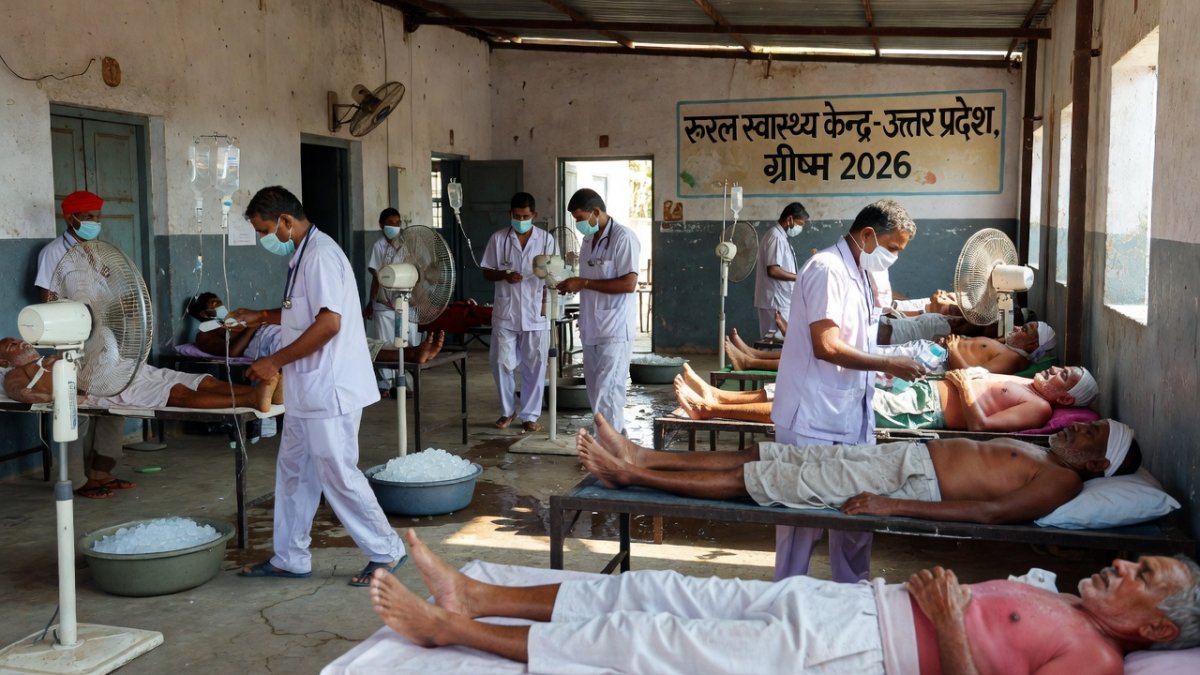
France's national heat watch system established in 2004 successfully reduced mortality compared with 2003 levels, offering India a proven template that the National Disaster Management Authority framework has yet to fully replicate through real-time mortality surveillance. India's current state-level heat action plans suffer from inadequate budgets, as raised in Rajasthan and Uttar Pradesh assemblies, leaving critical gaps that mandatory air-conditioning audits for hospitals and old-age homes could address before the 2027 summer. Real-time mortality tracking linked directly to Indian Meteorological Department alerts would enable the rapid interventions that saved lives in post-2003 Europe.
Targeted programs for the elderly through primary health centers in Uttar Pradesh and Rajasthan represent an essential adaptation of French strategies, ensuring the 153 million citizens aged 60 and above receive prioritized cooling and medical support during heat events. Without such measures, India's fragmented governance will continue to produce preventable deaths on a scale that mirrors or exceeds European experiences. Policy reforms must therefore emphasize national standardization over inconsistent state approaches to safeguard vulnerable populations effectively.
Lessons from France also highlight the political dimensions of heat preparedness, urging Indian policymakers to treat heat action plans as core governance priorities rather than seasonal add-ons. Implementing these changes before recurring heatwaves intensify will determine whether India avoids the institutional failures observed across Western Europe in 2026.
The Bottom Line
France's 2026 heat crisis, with its 1,000 excess deaths and institutional breakdowns, serves as an urgent warning for India where 48°C temperatures in Uttar Pradesh, Rajasthan, and Delhi have already exposed parallel weaknesses in elderly care and surveillance systems. Adopting centralized heat watch mechanisms, mandatory infrastructure audits, and real-time mortality tracking linked to Indian Meteorological Department data can prevent similar tragedies as the elderly population reaches 153 million. The time for fragmented state responses has passed; national prioritization of heat-resilient hospitals and primary health centers across the Indo-Gangetic plain is essential to protect millions from escalating climate risks in the years ahead.
By integrating these policy lessons now, India can transform the French tragedy into a catalyst for resilient health systems that safeguard its rapidly aging population against intensifying heatwaves projected by the Indian Meteorological Department. The human cost of inaction will only grow as temperatures rise and demographic pressures mount, making immediate, data-driven reforms not merely advisable but imperative for the nation's future well-being.
— By Dr. Raj Patel, Staff Writer
This article was produced with AI-assisted research and editorial support. Reporting is based on sources cited in the article.
What's Your Reaction?
 Like
0
Like
0
 Dislike
0
Dislike
0
 Love
0
Love
0
 Funny
0
Funny
0
 Wow
0
Wow
0
 Sad
0
Sad
0
 Angry
0
Angry
0

India/South Asia Correspondent at Global1.News. Analytical voice with a background in science and health journalism. Based in New Delhi, covering Indian politics, education, healthcare, technology, and policy. Breaks down complex data into clear, actionable reporting.













Comments (0)