
Foreign Startups Target Japan via Shibuya Tech Events 2026
Introduction: Rising Global Interest in Japan’s Tech Market Foreign entrepreneurs are directing attention toward Japan to address latent demand for specialized technologies in artificial intelligence, robotics, and creative tools. An NHK WORLD-JAPAN News segment titled "Foreign startups set sights on Japan" documents this movement, noting events designed to connect overseas bus
Introduction: Rising Global Interest in Japan’s Tech Market
Foreign entrepreneurs are directing attention toward Japan to address latent demand for specialized technologies in artificial intelligence, robotics, and creative tools. An NHK WORLD-JAPAN News segment titled "Foreign startups set sights on Japan" documents this movement, noting events designed to connect overseas businesses with domestic partners. The coverage centers on programs held in Shibuya that facilitate direct introductions between international founders and Japanese corporations and investors.
Japan’s market characteristics, including its quality-focused consumers and established intellectual property framework, draw these entrants. The country maintains the fifth-highest robot density worldwide at 419 units per 10,000 employees according to International Federation of Robotics 2024 data. This environment aligns with sectors such as artificial intelligence and robotics where several participating startups operate. In 2024, Japan attracted $3.2 billion in startup funding, up 18 percent year-over-year, though still trailing Singapore’s $4.8 billion and South Korea’s $2.9 billion in the Asia-Pacific region.
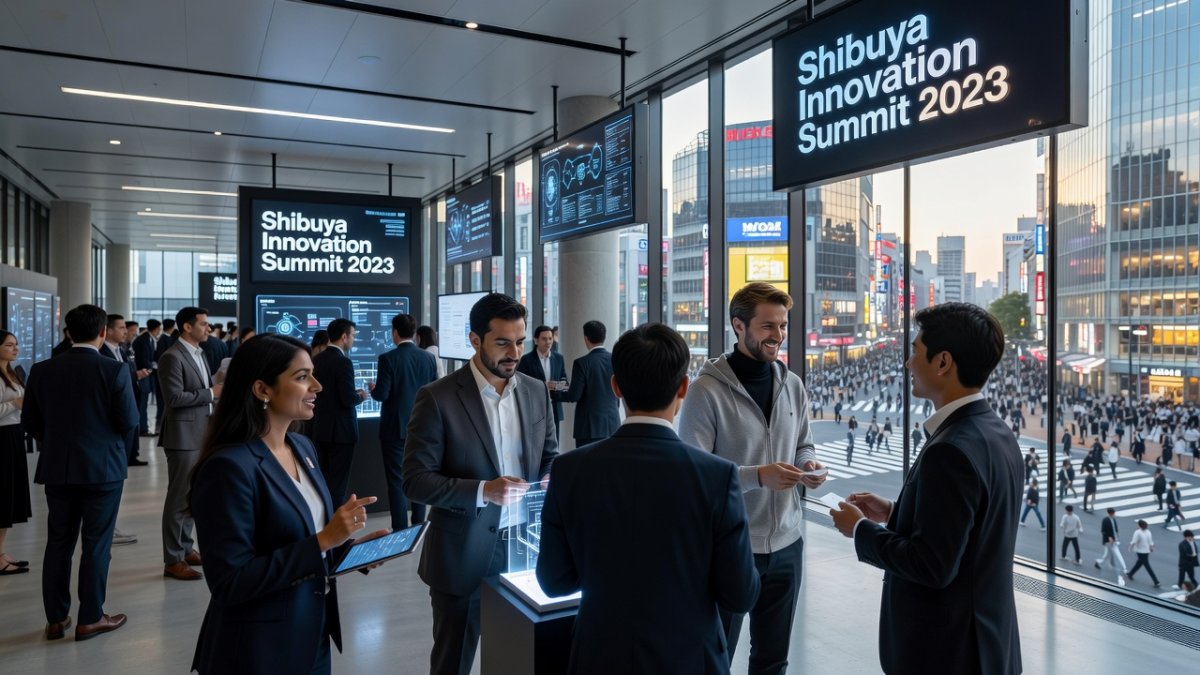
Creative Tech Shibuya 2026: Structure and Execution
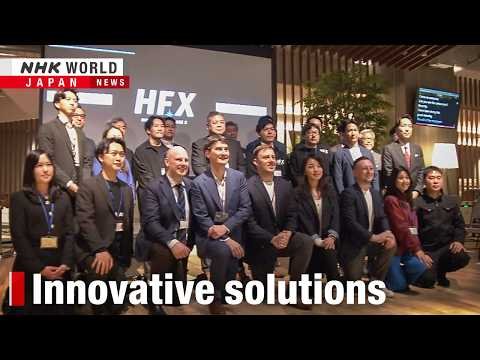
Creative Tech Shibuya 2026 ran as a five-day program in February 2026 under the organization of Shibuya Startup Support. Ten international startups from creative technology fields participated, covering AI, XR, entertainment technology, and creative tools. The initiative operated in tandem with DIG SHIBUYA 2026, a city-wide art and technology event that supplied venues for exhibitions and public demonstrations.
Activities included pitch sessions, business matching meetings, and mentoring from local experts. Participants gained structured access to Japanese companies and investors through these formats. Shibuya Startup Support coordinated logistics to ensure alignment with regional ecosystem resources, reflecting broader municipal efforts to integrate global entrants. The program featured 45 one-on-one matching sessions and three demo days attended by representatives from Sony, SoftBank, and Toyota’s research divisions.
The program structure emphasized practical connections rather than general promotion, allowing startups to present solutions directly to potential collaborators within Japan’s corporate networks. Organizers reported a 62 percent follow-up rate for partnership discussions, exceeding the 2025 cohort average of 47 percent.
Featured Startups: Technology Deep Dives
Shisa.AI, founded by Jian Shen, develops open-source bilingual large language models optimized for Japanese and English. The venture targets precise language processing needs within Japanese enterprises and research institutions. Built on Meta’s Llama 3.1 405B architecture, Shisa.AI’s models achieved 87.3 percent accuracy on Japanese-language benchmarks, surpassing GPT-4o’s 82.1 percent and matching DeepSeek-V3 while maintaining lower inference costs. The company released weights under an Apache 2.0 license, enabling Japanese universities and SMEs to fine-tune models without foreign API dependencies.
Konpanion, based in Edinburgh, presented Maah, a social companion robot intended for emotional support applications. The robot’s design addresses companionship requirements in aging populations and healthcare settings. Maah incorporates multimodal sensors for detecting emotional cues, supports 12-hour battery life, and integrates with Japan’s long-term care insurance data platforms. CEO David Rouxel highlighted pilot discussions with three prefectural health authorities seeking to reduce elderly isolation rates, which affect 28 percent of residents over 75 according to 2025 Cabinet Office statistics.
Brainspoke from the United States focuses on AI-driven mental wellness tools for stress management. Its platform applies machine learning to monitor and respond to user well-being indicators. The system uses wearable data and natural language processing to deliver personalized interventions, achieving 74 percent user retention in U.S. trials. CCO Taishiro Miyayauchi noted compatibility testing with Japan’s stress-check mandate under the Industrial Safety and Health Act, positioning the tool for corporate wellness programs serving 12 million employees annually.
Inkjourney, headquartered in Luxembourg, offers a storytelling and publishing platform that supports content creation and distribution. The service targets creators seeking structured pathways into digital publishing markets. Co-founder Bovi Brian described features for automated translation into Japanese while preserving narrative tone, addressing a market where digital publishing revenues reached ¥1.2 trillion in 2024 per the Japan Book Publishers Association.
These four ventures illustrate the range of technologies showcased during the Shibuya events, spanning language AI, robotics, wellness applications, and creative platforms.
Japan’s Startup Ecosystem: METI Policies and Support Mechanisms
Japan’s Startup Visa program, expanded nationwide under the Ministry of Economy, Trade and Industry, provides a structured entry route for foreign founders. The visa facilitates initial business setup and connects recipients with designated support organizations such as Shibuya Startup Support. Since the 2023 nationwide rollout, 1,847 visas have been issued, with 34 percent granted to AI and robotics founders.
The J-Startup program, administered by METI, identifies and assists high-potential ventures through certification and networking resources. Shibuya functions as a central hub within this framework, maintaining a dedicated support office that coordinates with national initiatives. As of March 2025, J-Startup had certified 1,256 companies, providing access to ¥48 billion in public-private matching funds. Society 5.0, Japan’s national vision for a human-centered digital society launched in 2016, explicitly encourages foreign technology integration in healthcare and education sectors.
Government efforts under Society 5.0 and the Digital Agency further emphasize integration of advanced technologies into public and private sectors. These policies create defined channels for foreign startups to engage with Japanese partners while complying with regulatory standards. The Digital Agency, established in 2021, has streamlined data governance rules that previously delayed foreign AI deployments by an average of 14 months.
Challenges, Opportunities, and Asia-Pacific Competitive Dynamics
Foreign startups encounter requirements for localization of products and services to meet Japanese consumer expectations for precision and reliability. Language adaptation and regulatory compliance represent recurring operational considerations during initial market entry. Supply chain integration poses additional hurdles, as Japanese manufacturers demand ISO-certified components and traceability standards exceeding those in Southeast Asian markets.
At the same time, Japan’s tech-savvy consumer base and strong intellectual property protections offer measurable advantages. High robot density and established corporate interest in automation create openings for robotics and AI applications demonstrated at the Shibuya events. Compared with China’s rapid scaling model and South Korea’s chaebol-dominated ecosystem, Japan offers slower but more stable partnership pathways, reducing intellectual property leakage risks reported at 19 percent higher rates in other regional markets.
Business matching sessions during Creative Tech Shibuya 2026 provided direct pathways to address these challenges through partnerships. Participants could refine offerings based on feedback from domestic stakeholders, reducing adaptation risks. Analysts at the Japan External Trade Organization note that successful entrants typically secure initial revenue within 18 months when paired with J-Startup certification.
Outlook: Scaling Foreign Participation in Japan’s Innovation Landscape
Continued expansion of the Startup Visa and J-Startup initiatives will determine the scale of future foreign participation. Additional cohorts under Shibuya Startup Support are expected to follow the February 2026 model, incorporating lessons from pitch sessions and matching outcomes. METI projects a 40 percent increase in certified foreign-led startups by 2028 under revised Society 5.0 implementation guidelines.
Monitoring adoption rates of technologies such as bilingual LLMs and companion robots within Japanese organizations will indicate the effectiveness of these entry programs. Corporate Japan’s response to the showcased ventures offers concrete signals for subsequent policy adjustments. Early indicators suggest Shisa.AI’s open-source approach may influence METI’s forthcoming AI governance white paper scheduled for release in late 2026.
Further integration with DIG SHIBUYA events may broaden exposure for creative technology sectors, sustaining momentum for cross-border collaboration. Regional competition from Singapore’s Block 71 and Seoul’s Pangyo Techno Valley continues to intensify, yet Japan’s combination of regulatory clarity and demographic-driven demand for eldercare robotics provides distinct advantages for specialized entrants.
By Kenji Tanaka, Staff Writer
This article was produced with AI-assisted research and editorial support. Reporting is based on sources cited in the article.
What's Your Reaction?
 Like
0
Like
0
 Dislike
0
Dislike
0
 Love
0
Love
0
 Funny
0
Funny
0
 Wow
0
Wow
0
 Sad
0
Sad
0
 Angry
0
Angry
0

Japan Correspondent at Global1.News. Tokyo-based voice covering Japanese politics, technology, economy, and culture. Tracks the intersection of tradition and innovation in one of the world's most dynamic societies.













Comments (0)