
Erdogan Threatens Military Action Against Israel Over Lebanon, Syria Strikes
In a recent i24NEWS English report, Turkish President Recep Tayyip Erdogan escalated rhetoric against Israel to a new level, declaring that Israeli military operations in Lebanon and Syria now directly threaten Turkey itself. The report examines how Ankara's warnings — including thinly veiled threats of military action — signal a dangerous new phase in rapidly deteriorating Tur
In a recent i24NEWS English report, Turkish President Recep Tayyip Erdogan escalated rhetoric against Israel to a new level, declaring that Israeli military operations in Lebanon and Syria now directly threaten Turkey itself. The report examines how Ankara's warnings — including thinly veiled threats of military action — signal a dangerous new phase in rapidly deteriorating Turkey-Israel relations, with implications for the Eastern Mediterranean, NATO cohesion, and Israel's multi-front security posture.
Erdogan Warns Israel's Operations in Lebanon and Syria Threaten Turkey — Netanyahu Fires Back
Jerusalem, Israel – This week — Turkish President Recep Tayyip Erdogan told lawmakers from his ruling AK Party in parliament on Wednesday that Israel's attacks on Syria and Lebanon had reached a point where they also threaten Turkey, adding that Israeli "aggression" posed a threat to the whole world and must be stopped. The statement marks a significant escalation in rhetoric from Ankara, which has already halted all trade with Israel and pursued legal measures against Jerusalem at international courts.
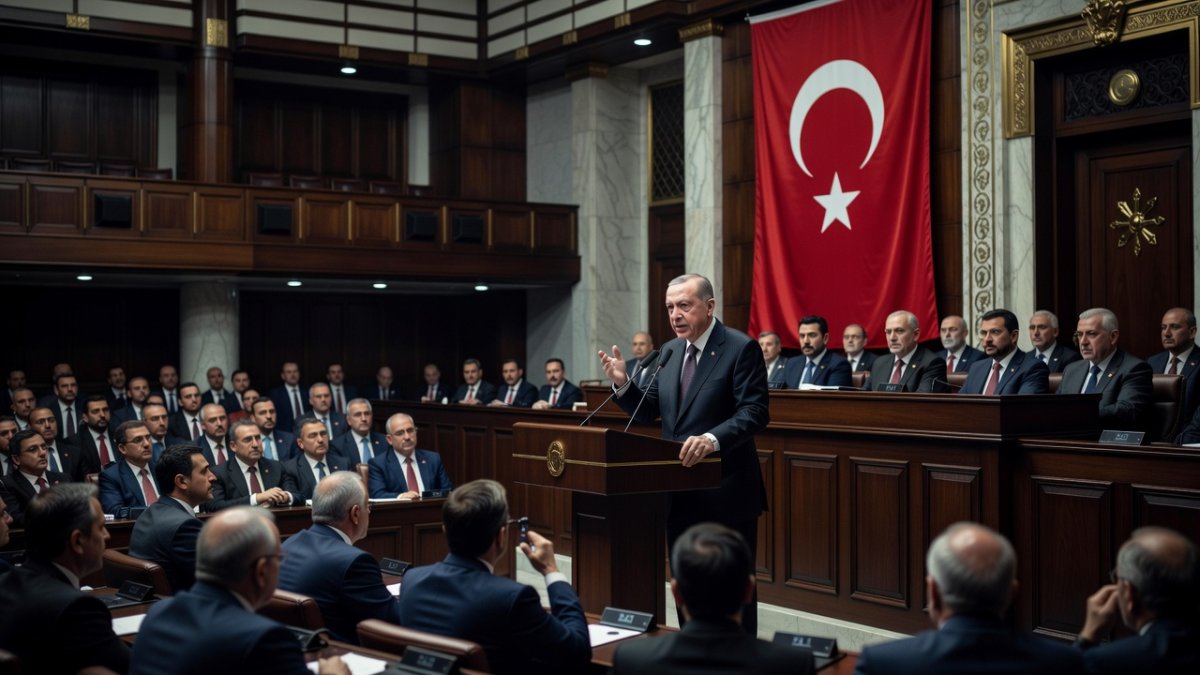
Erdogan Links Israeli Operations to Broader Destabilization Efforts
Erdogan stated that Israel was leading a "sneaky effort" to destabilize African countries and the Mediterranean by igniting "the fire of discord" on the ethnically split island of Cyprus. He warned that "small entities, whose ambitions far exceed their size, have boarded Israel's boat of mischief, taken on the role of Zionist subcontractors, and are pursuing some pipe dreams in the Eastern Mediterranean." These remarks target Israeli energy partnerships with Cyprus and Greece that involve offshore gas fields in the region.
The Turkish president emphasized that "if the rights of Turkey and Turkish Cypriots are violated in the Eastern Mediterranean, our response will be very clear and very strong." Israeli energy companies operating from Haifa port facilities have participated in joint exploration projects with Cypriot authorities in blocks near the island. Such warnings from Ankara directly impact planning at Israel's Ministry of Energy and the security assessments conducted by the IDF regarding naval routes in the Mediterranean.
Regional dynamics in the Eastern Mediterranean have shifted since Israel restored diplomatic ties with Turkey in 2022, which included security cooperation and trade exceeding six billion dollars annually. The current rhetoric reverses those gains and affects tourism flows from Turkey to Eilat and Tel Aviv. Israeli analysts at the Institute for National Security Studies in Tel Aviv assess that Cyprus-related disputes could complicate naval exercises involving the Israeli Navy and Greek forces in the coming months.
Turkey Halts Trade and Pursues International Measures Against Israel
NATO member Turkey has been one of the fiercest critics of Israel's military operations against Iran, Gaza, and Lebanon. Turkey has halted all trade with Israel and called for measures against it at international courts. This economic step, implemented in 2024, ended shipments through Turkish ports that previously supported Israeli exports to European markets and affected supply chains for defense-related components sourced from Turkish manufacturers.
Erdogan urged world powers to take a clearer stance against Israel, saying it was emboldened by the "silence of the international community." He added that "pulling Israel back to within the bounds of the rule of law has become a shared duty not just for certain countries, but for all of humanity." Israeli diplomats at the United Nations in New York have countered these calls by highlighting Hamas operations from Gaza and Hezbollah attacks from Lebanon that prompted the current IDF responses.
The trade halt has immediate effects on Turkish construction firms that previously worked on projects in Israeli cities such as Beersheba and Netanya. Turkish Airlines flights between Istanbul and Ben Gurion Airport ceased, reducing connectivity for business travelers and affecting the tourism sector in Jerusalem's Old City. Israeli importers have shifted sourcing to alternative suppliers in Greece and India to maintain production lines in factories around the Haifa industrial zone.
Netanyahu Responds Directly to Erdogan Accusations
Prime Minister Benjamin Netanyahu hit back on X, stating that "the antisemitic dictator Erdogan, who is committing genocide against the Kurds, backing the Hamas terrorist organization, oppressing his own people, and imprisoning his political rivals, is the last person who should be lecturing the State of Israel." The response from the Prime Minister's Office in Jerusalem frames the Turkish statements as attempts to deflect from domestic issues in Ankara.
Netanyahu added that "the State of Israel and the IDF, the most moral military in the world, will continue to act decisively against Iran and its proxies, which threaten the Middle East and the entire world." IDF spokespersons have confirmed ongoing strikes on Hezbollah targets in the Bekaa Valley of Lebanon and Iranian Revolutionary Guard positions in Syria. These operations aim to prevent further rocket attacks on Israeli communities in the Galilee region.
The exchange occurs as the Knesset Foreign Affairs and Defense Committee reviews intelligence assessments on Turkish military movements near the Syrian border. Israeli intelligence agencies including Mossad and Shin Bet track Turkish support for Hamas operatives in Gaza and the West Bank. Netanyahu's statement reinforces the government's position that operations against Iranian proxies remain essential for protecting civilians in Sderot and Ashkelon from ongoing threats.
Historical Shifts in Israel-Turkey Relations Since 2022 Normalization
Israel-Turkey relations were normalized in 2022 after years of tensions, with restored ambassadors and security cooperation. The relationship included significant trade exceeding six billion dollars annually, tourism, and intelligence sharing on regional threats. All of that has reversed since the Gaza war began on October 7, 2023, when Hamas launched attacks from Gaza that killed over 1,200 Israelis.
Erdogan has repeatedly compared Netanyahu to Hitler in public statements since the conflict escalated. Turkish authorities closed airspace to Israeli aircraft and ended joint military training programs that previously took place in the Negev desert. Israeli defense exporters lost contracts for drone components previously supplied to Turkish forces operating in northern Syria.
The collapse affects intelligence channels that once allowed sharing on Iranian activities in the region. Israeli officials in the Foreign Ministry now route communications through other NATO capitals rather than direct Ankara contacts. Tourism from Turkey to sites in Jerusalem and the Dead Sea has dropped sharply, impacting hotel revenues in those areas during the current summer season.
Eastern Mediterranean Energy Disputes Involve Multiple Regional Actors
The Eastern Mediterranean dimension involves competing maritime claims, energy exploration rights, and the status of Cyprus. Israel has partnered with Greece, Cyprus, and Egypt on energy projects, excluding Turkey. These partnerships include the EastMed pipeline proposal and joint gas field development in waters south of Crete and west of Cyprus.
Erdogan previously threatened military intervention in April 2026 if Israeli strikes on Iran and Lebanon did not cease. Turkish naval vessels have increased patrols near disputed maritime zones claimed by the Turkish Republic of Northern Cyprus. Israeli naval assets based in Haifa monitor these movements while protecting gas platforms operated by companies such as Chevron in the Leviathan field.
Turkish Cypriot authorities in Nicosia have objected to Israeli-Cypriot agreements on offshore blocks. The Foreign Ministry in Jerusalem maintains that these agreements respect international law and support energy security for European markets seeking alternatives to Russian supplies. Any Turkish military response would require coordination with NATO allies and could affect joint exercises between the IDF and Greek forces in the region.
Implications for Israeli Security and Diplomatic Posture
The latest escalation in rapidly deteriorating Turkey-Israel relations carries direct consequences for IDF planning against Hezbollah in Lebanon and Iranian targets in Syria. Israeli security officials assess that Turkish statements could encourage further proxy actions by groups supported from Ankara. The IDF Home Front Command continues preparations for multi-front scenarios involving northern and southern borders.
Turkey has blamed Israel's "provocations" for starting the US-Iran war according to Erdogan's remarks. This narrative influences positions at the Arab League and Organization of Islamic Cooperation meetings where Turkish representatives advocate additional sanctions on Israel. Israeli diplomats counter these efforts by presenting evidence of Iranian weapons shipments through Syrian territory to Hezbollah units near the Litani River.
Daily security assessments in the Prime Minister's Office incorporate Turkish fleet movements and statements from Erdogan. The Foreign Ministry coordinates responses with the United States and European Union to prevent further isolation attempts at international forums. Israeli citizens in Tel Aviv and Haifa follow these developments through local media while reservists remain on standby for potential escalation along the Lebanon frontier.
By Hannah Berg, Staff Writer
This article was produced with AI-assisted research and editorial support. Reporting is based on sources cited in the article.
What's Your Reaction?
 Like
0
Like
0
 Dislike
0
Dislike
0
 Love
0
Love
0
 Funny
0
Funny
0
 Wow
0
Wow
0
 Sad
0
Sad
0
 Angry
0
Angry
0
Israel Correspondent at Global1.News. Based in Tel Aviv, covering Israeli politics, security, technology, and society. Provides balanced, deeply-sourced reporting on one of the most closely-watched regions in the world.













Comments (0)