
El Mencho Death Triggers Violence Wave Across Mexico
In a recent DW News report titled "El Mencho: Mexico shuts down as wave of violence sweeps country," viewers saw the immediate aftermath of the army operation that ended the life of Nemesio Ruben Oseguera Cervantes on Sunday, February 23, 2026, in Tapalpa, Jalisco. The 59-year-old former police officer who built the Jalisco New Generation Cartel into one of Mexico's most powerf
In a recent DW News report titled "El Mencho: Mexico shuts down as wave of violence sweeps country," viewers saw the immediate aftermath of the army operation that ended the life of Nemesio Ruben Oseguera Cervantes on Sunday, February 23, 2026, in Tapalpa, Jalisco. The 59-year-old former police officer who built the Jalisco New Generation Cartel into one of Mexico's most powerful criminal organizations died during a coordinated strike involving six helicopters and air force overwatch. His death has sent shockwaves through communities from the colonias of Guadalajara to the rural ejidos of Michoacan, leaving at least 74 dead and disrupting daily life across 20 of Mexico's 32 states.
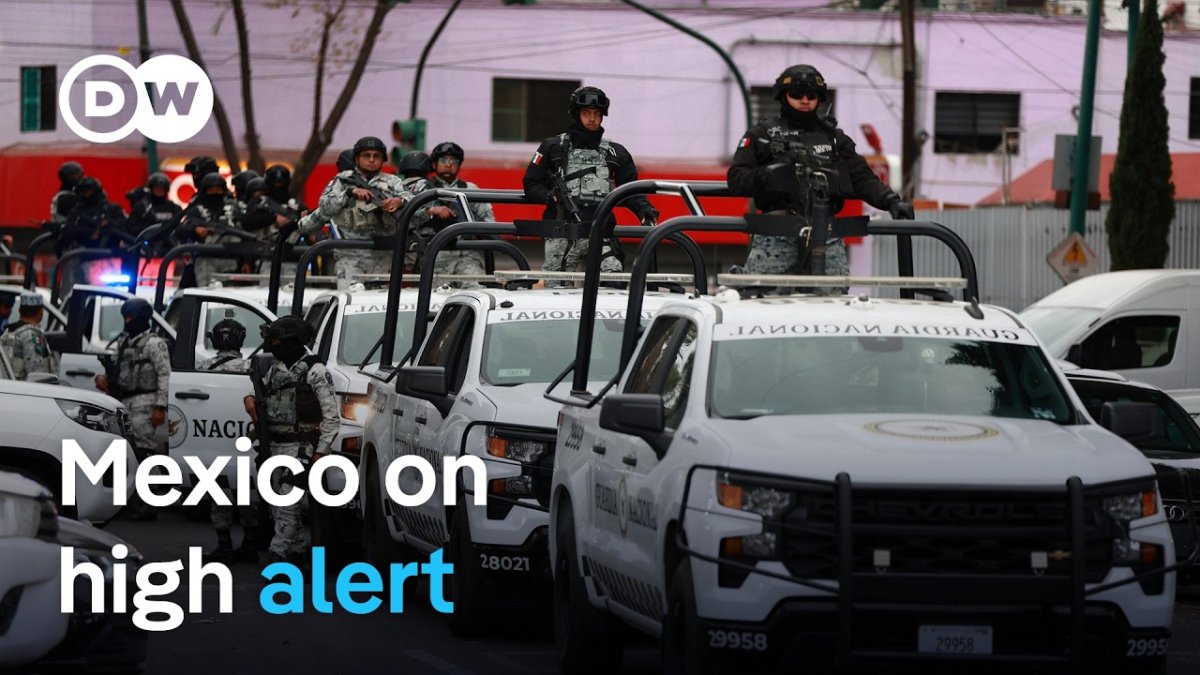
The Killing of El Mencho in Tapalpa
Nemesio Ruben Oseguera Cervantes, known as El Mencho, died Sunday, February 23, 2026, in Tapalpa, Jalisco, during a joint operation involving six helicopters and Mexican Air Force units. The 59-year-old former police officer had led the Jalisco New Generation Cartel since around 2010. U.S. authorities had placed a $15 million bounty on him. Defense Secretary Ricardo Trevilla of SEDENA confirmed that intelligence from the United States and tracking of an associate of his girlfriend guided the raid. Oseguera previously served time in the United States during the 1990s.
Residents near Tapalpa reported hearing sustained gunfire and explosions that morning. Local families described rushing children indoors as military vehicles blocked access roads. The operation marked a clear departure from the previous “hugs not bullets” approach under former President Andrés Manuel López Obrador. David Mora of the International Crisis Group called the event a potential turning point in Mexico’s security strategy.
El Mencho’s death immediately triggered coordinated attacks by CJNG members in multiple states. The cartel, designated a foreign terrorist organization by the United States in 2025, controls major routes for cocaine, fentanyl, and methamphetamine shipments. Uppsala Conflict Data Program data attributes more than 75,000 deaths to CJNG activities since its founding.
Wave of Violence Engulfs 20 States
Following the announcement of El Mencho’s death, CJNG cells attacked targets in 20 of Mexico’s 32 states. Jalisco, Michoacán, Aguascalientes, Tamaulipas, and Guanajuato recorded the heaviest incidents. Gunmen burned vehicles on highways, blocked major roads with hijacked trucks, and assaulted banks, petrol stations, and shops. At least 74 people died in the first 48 hours: 25 security forces, 30 criminal suspects, one prison guard, one prosecutor’s agent, and one unidentified woman.
In Guadalajara, families living near the cartel’s traditional strongholds reported power outages after attackers torched electrical substations. Shop owners in Zapopan closed early on Monday, February 24, fearing further arson. In Morelia, Michoacán, residents described masked men firing at police patrols near the city center. The violence reached as far as Reynosa in Tamaulipas, where gun battles closed the international bridge for several hours.
Human rights groups documented dozens of families displaced from rural communities in Jalisco’s southern mountains. Many sought shelter in churches or with relatives in Guadalajara. The rapid spread of attacks showed the cartel’s remaining operational capacity despite losing its top leader.
Government's Swift Response and Deployment
President Claudia Sheinbaum addressed the nation during her Monday mañanera press conference, stating, “Today there is more calm and there is a government.” She ordered 2,500 additional troops into Jalisco, where 7,000 soldiers were already stationed. SEDENA reported 70 arrests across seven states by Tuesday morning. Authorities also seized multiple vehicles loaded with weapons and fuel.
Security forces established checkpoints on the Guadalajara-Colima highway and near Puerto Vallarta. Local police in Tlaquepaque worked alongside federal agents to reopen blocked avenues. The government emphasized coordination with U.S. agencies that had supplied real-time intelligence during the Tapalpa operation.
Community leaders in affected neighborhoods welcomed the visible military presence but expressed concern about potential reprisals. In Aguascalientes, parents formed neighborhood watches after reports of suspicious vehicles near schools. The rapid deployment demonstrated the shift in federal strategy under Sheinbaum’s administration.
Disruption to Daily Life: Schools, Airports, and Sports
Officials canceled classes Monday in Jalisco, Michoacán, Aguascalientes, Tamaulipas, and Guanajuato, affecting hundreds of thousands of students. Teachers in Guadalajara reported empty classrooms even after the official suspension lifted on Tuesday. Many parents kept children home out of fear of renewed roadblocks.
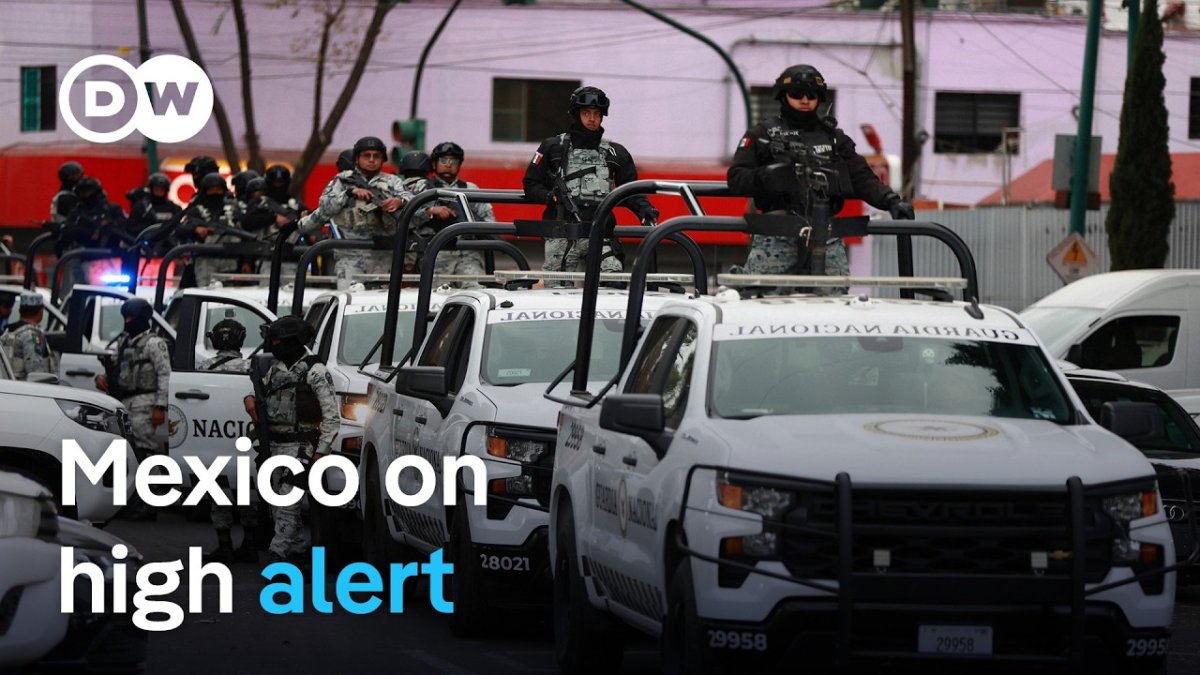
Puerto Vallarta’s international airport closed temporarily after gunmen set vehicles ablaze near the access road. Air Canada, United, Aeromexico, and American Airlines suspended flights for 24 hours. Tourists posted videos showing thick black smoke rising over the bay. Air Canada resumed service Tuesday; flights to Guadalajara restarted Wednesday.
Four soccer matches were postponed, including Querétaro versus FC Juárez and the Chivas versus América women’s game. The Mexican Open tennis tournament in Acapulco continued under heightened security. The U.S. State Department issued a shelter-in-place advisory for American citizens in western Mexico, directly affecting expatriate communities in Puerto Vallarta and Ajijic.
International Reactions and US Involvement
President Donald Trump publicly urged Mexico to “step up” its actions against remaining cartel structures. The U.S. Embassy in Mexico City coordinated with SEDENA on intelligence sharing that contributed to the Tapalpa raid. American tourists stranded in Puerto Vallarta described long lines at the airport once flights resumed.
Canadian consular officials assisted citizens whose flights were canceled. Several families from Vancouver and Toronto reported spending an extra night in hotels near the airport while monitoring updates on social media. The violence also prompted travel advisories from European governments for their nationals planning spring visits to Jalisco beaches.
Business groups in Guadalajara expressed worry about the city’s upcoming role as a 2026 World Cup host. Hotel occupancy rates dropped sharply in the days after the attacks, threatening local economies that rely heavily on tourism revenue.
Implications for Mexico's Future and Cartel Dynamics
Analysts note that El Mencho’s removal creates uncertainty within CJNG leadership ranks. Lieutenants based in Michoacán and Colima may compete for control of fentanyl routes into the United States. Mexican security officials warned that splinter groups could intensify violence in the coming weeks as they seek to assert dominance.
Residents of rural Jalisco communities that have suffered repeated extortion by CJNG expressed cautious hope that the cartel’s grip might weaken. However, many recalled previous leadership changes that led to even bloodier succession battles. The government’s decision to deploy thousands more troops signals a sustained campaign rather than a one-time operation.
Schools in affected states reopened Wednesday with extra police patrols. Families in Tapalpa began returning to normal routines while military checkpoints remained on surrounding roads. The coming months will test whether Mexico’s security institutions can prevent further nationwide upheaval following the death of one of its most powerful criminal figures.
By Rosa Martinez, Staff WriterThis article was produced with AI-assisted research and editorial support. Reporting is based on sources cited in the article.
What's Your Reaction?
 Like
0
Like
0
 Dislike
0
Dislike
0
 Love
0
Love
0
 Funny
0
Funny
0
 Wow
0
Wow
0
 Sad
0
Sad
0
 Angry
0
Angry
0
Latin America/Andes Correspondent at Global1.News. Based in Bogota, covering politics, environment, energy, and social movements across the Andean region. Passionate about environmental journalism and communities protecting their land.









Comments (0)