
DepEd Phases Out Grade Transmutation Policy in PH Schools
The Department of Education's decision to phase out grade transmutation marks a meaningful shift for every Filipino household with school-age children. Families across the country, from bustling barangays in Manila to quiet towns in the provinces, have long navigated report cards that sometimes masked a child's true progress. This change, rooted in DepEd Order No. 15, s. 2026,
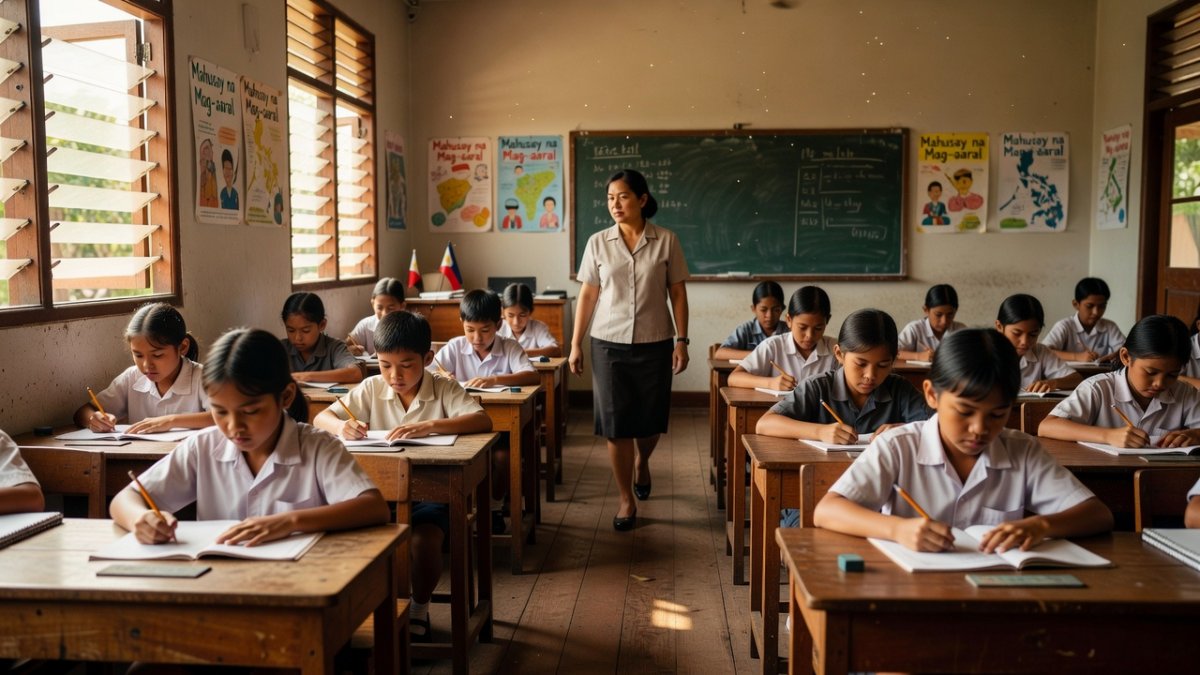
The Department of Education's decision to phase out grade transmutation marks a meaningful shift for every Filipino household with school-age children. Families across the country, from bustling barangays in Manila to quiet towns in the provinces, have long navigated report cards that sometimes masked a child's true progress. This change, rooted in DepEd Order No. 15, s. 2026, aims to bring greater clarity so parents and teachers can work together more effectively.
(Global 1 News)
DepEd's Clear Message on Genuine Learning
Education Secretary Sonny Angara emphasized that a child's advancement must rest on real understanding rather than adjusted numbers. In the DepEd press release issued on June 22, he noted in Filipino that removing transmutation strengthens accountability from curriculum delivery all the way to classroom support. This approach resonates with the everyday experience of Filipino parents who want honest feedback about how their children are doing in school.
Many kapitbahay already share tips during neighborhood gatherings about helping kids with homework. The new policy gives those conversations a firmer foundation, allowing neighbors to discuss actual learning needs instead of puzzling over converted scores that once turned a raw 60 into a passing 75.
The Careful Timeline for Implementation
DepEd Order No. 15, s. 2026, lays out a measured rollout that begins with adjustments rather than abrupt cuts. For school year 2026–2027, transmutation remains but uses a revised table where a raw score of 70 now maps to the passing mark of 75. This step gives schools time to prepare without sudden disruption to current grading practices.
Full removal arrives in school year 2027–2028 for grades 4 through 12, when a raw score of 75 stands as the final grade with no conversion applied. At the same time, kindergarten through grade 3 moves toward a descriptive, non-numerical system that focuses on observations of skills and growth. The department has stressed that these stages are coming into force gradually to avoid confusion for learners and families.
Shifting Focus in Daily Classroom Assessment
Under the order, formative assessments such as daily quizzes will no longer factor into final grades. Instead, they serve purely as tools for teachers to spot gaps and adjust instruction on the spot. Summative work, including written outputs, performance tasks, and exams, will carry the weight of grading, though the order recommends limits on their volume each term to reduce overload on students.
This adjustment directly touches the lives of working parents who often review thick folders of quiz papers at the end of the week. With formative checks now guiding teaching rather than counting toward marks, families may see report cards that more accurately reflect what a child has mastered through major tasks. The policy also reassures communities that promotion decisions will continue to follow existing rules, and the removal of transmutation is not meant to increase retention rates automatically.
New Rules on Artificial Intelligence in Schools
For the first time, DepEd has set clear categories for AI use during assessments: prohibited, limited, or guided. Supervised exams remain closed to AI tools unless special approval is granted for accessibility reasons. Teachers cannot input personal learner information or official DepEd documents into AI platforms, and any allowed use must be properly documented and disclosed.
These guidelines protect the integrity of student work while acknowledging that technology is part of modern life. Parents in many communities already discuss how to guide children responsibly with digital tools, and the order provides a shared reference point for those conversations at home and in the barangay.
Learning from EDCOM 2 Recommendations
The policy follows the final report of the Second Congressional Commission on Education, released in January, which called for phasing out transmutation to address what it described as de facto mass promotion. EDCOM 2 observed that the original system, introduced in 2015 with the K to 12 transition, was meant to standardize grades across schools but sometimes hid low raw performance behind converted passing marks.
By responding to this recommendation, DepEd connects national reform efforts to the daily realities of classrooms. Families who have long wondered why some students seemed to advance despite evident struggles now have a clearer path toward earlier identification of support needs.
Supporting One Another Through Kapitbahay Spirit
Filipino families thrive on mutual aid, whether organizing carpool arrangements for school or sharing review materials before exams. The removal of transmutation invites the same bayanihan approach as parents, teachers, and local leaders come together to understand the new tables and descriptive systems. Schools can hold simple orientation sessions where kapitbahay explain the changes to one another in familiar language.
Ordinary households stand to benefit most. A tricycle driver checking his child's progress or an OFW parent receiving updates from relatives will encounter grades that more closely match actual classroom performance. This transparency helps communities rally around learners who need extra help before gaps widen.
The Department of Education has made clear that the goal is earlier and more accurate support, not harsher outcomes. As the phased changes unfold over the coming school years, Filipino families can draw on their strong sense of community to navigate the transition with care and confidence.
By Bella Reyes, Staff WriterThis article was produced with AI-assisted research and editorial support. Reporting is based on sources cited in the article.
What's Your Reaction?
 Like
0
Like
0
 Dislike
0
Dislike
0
 Love
0
Love
0
 Funny
0
Funny
0
 Wow
0
Wow
0
 Sad
0
Sad
0
 Angry
0
Angry
0

Africa Correspondent at Global1.News. Based in Lagos, covering politics, business, technology, and culture across the continent. Focused on telling African stories beyond the headlines — the innovation, entrepreneurs, and communities shaping the region's future.














Comments (0)