
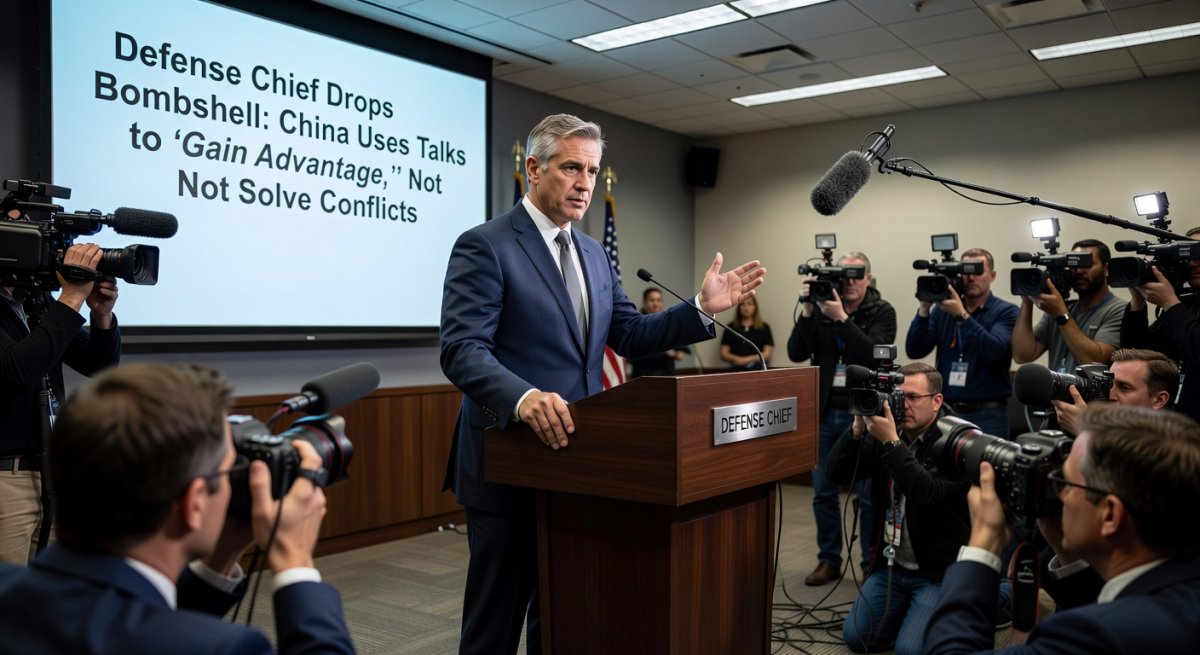
Defense Chief Drops Bombshell: China Uses Talks to 'Gain Advantage,' Not Solve Conflicts
Defense Chief Drops Bombshell: China Uses Talks to 'Gain Advantage,' Not Solve Conflicts The Philippines is done being played for a fool. Defense Secretary Gilberto Teodoro Jr. delivered a blistering assessment of Beijing's negotiating tactics at the Shangri-La Dialogue security forum in Singapore this week — making it crystal clear that Manila sees through China's so-called "p
Defense Chief Drops Bombshell: China Uses Talks to 'Gain Advantage,' Not Solve Conflicts
The Philippines is done being played for a fool.
Defense Secretary Gilberto Teodoro Jr. delivered a blistering assessment of Beijing's negotiating tactics at the Shangri-La Dialogue security forum in Singapore this week — making it crystal clear that Manila sees through China's so-called "path to negotiations."
"For the PRC, in the Philippine experience, negotiations are therefore not a path to conflict resolution, but a means of gaining advantage," Teodoro said. "And we must, we will not be deceived."
His message was blunt, direct, and left no room for diplomatic ambiguity — and it tapped directly into the rising tensions that have had Filipinos searching "Scarborough Shoal" at elevated rates this week.
Code of Conduct: Who's Really the Problem?
Teodoro turned the tables on Beijing's go-to talking point — the push for a Code of Conduct (COC) in the South China Sea — and asked a question that few in ASEAN have dared to pose publicly.
"Why is there a need for a Code of Conduct when we have peremptory norms such as UNCLOS, such as the UN Charter?" he said, according to a Philstar.com report. "The Code of Conduct is a collective code by a group of nations on the one side and with a single actor on the other. So perhaps the problem does not lie within ASEAN. The problem lies with the counterparty to the Code of Conduct."
He explicitly named China as that counterparty, accusing Beijing of stalling the COC process to bargain for the status quo — where its expansive maritime claims in the South China Sea go unchecked.
Constitutional Line in the Sand
The defense chief anchored the Philippines' position in its Constitution, stressing that territorial integrity and sovereignty are non-negotiable.
"To do so would be to subvert the popular, democratic and free mandate that the people gave our political leaders," Teodoro said, drawing a sharp contrast with what he called "autocratic systems where the mandate comes from above, dictated down."
He emphasized that the Philippines has consistently adhered to the United Nations Convention on the Law of the Sea (UNCLOS) and its dispute settlement mechanisms — including the 2016 arbitral ruling that Beijing has refused to recognize.
"Any diminution of UNCLOS cannot be accepted under the Philippine Constitution," he said.
China's Refusal to Honor the Ruling
Teodoro called out what he described as China's double standard: demanding a return to negotiations while simultaneously refusing to participate in the international arbitral process and denying the validity of its award.
"Instead of honoring their obligations under UNCLOS, the PRC exhorts the Philippines to return to the path of negotiations," he said.
The Philippines won the landmark 2016 arbitral ruling against China's nine-dash line claims. But Beijing has treated the ruling as a dead letter, continuing its aggressive posture in the South China Sea — including around Scarborough Shoal, where Chinese and Philippine vessels have had frequent confrontations in recent months.
US Steps Up — Decommisioned Cutter Heads to Manila
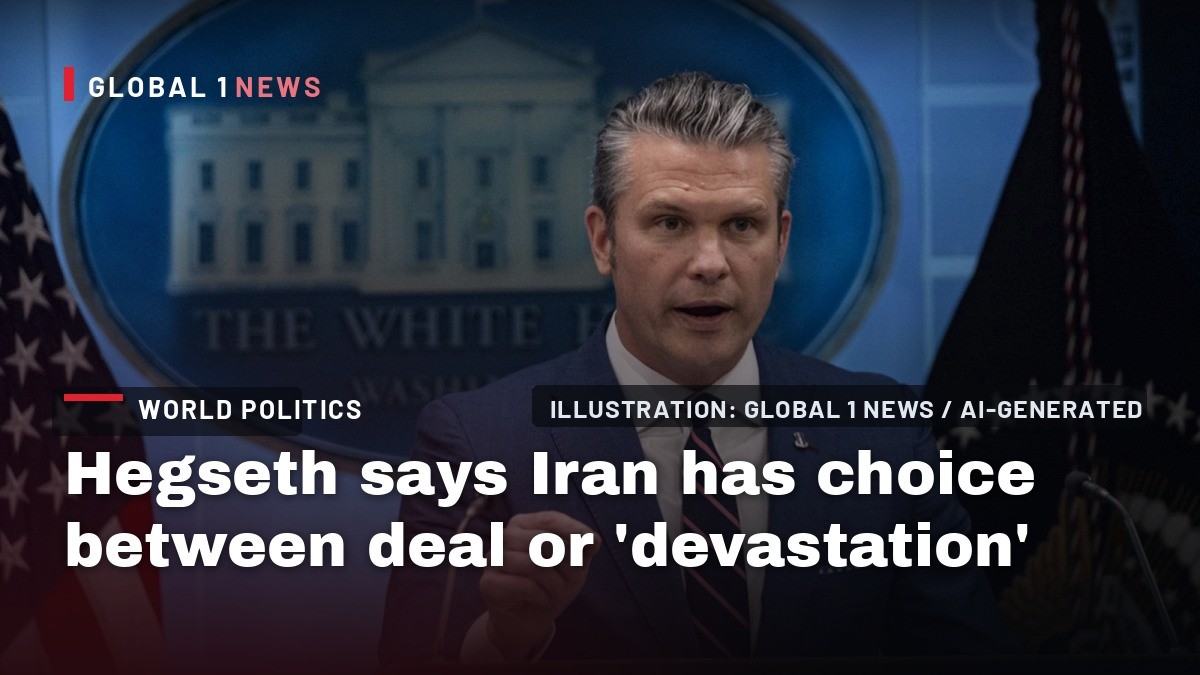
On the sidelines of the same Shangri-La Dialogue, US Defense Secretary Pete Hegseth met with Teodoro and announced that Washington will provide a decommissioned US Coast Guard cutter to the Philippine Coast Guard to bolster the country's ability to protect its interests in the region.
The two defense chiefs also signed a new 15-year Communications Interoperability and Security Memorandum of Agreement to streamline secure information sharing, and welcomed the conclusion of the 41st Exercise Balikatan — which included groundbreaking training in joint fires, coastal defense, and maritime security.
The Armed Forces of the Philippines and the US Coast Guard also conducted a maritime cooperative activity near Panatag Shoal in the West Philippine Sea from late May, involving naval and air units from both countries.
What This Means for Filipinos
Teodoro's remarks at the Shangri-La Dialogue mark one of the most direct and confrontational statements by a Philippine official against China's negotiating tactics. It signals that Manila — under President Bongbong Marcos — is shifting toward a more assertive posture in defending its maritime claims.
For ordinary Filipinos, the stakes couldn't be higher. The West Philippine Sea is not just a geopolitical flashpoint — it's a fishing ground, an energy frontier, and a matter of national sovereignty. Every confrontation near Scarborough Shoal or Second Thomas Shoal reinforces the urgency of the Philippines' position.
Teodoro's message was unmistakable: Manila knows what Beijing is doing. And it's not going to pretend anymore.
— Bella Reyes, Global 1 News
This article was produced with AI-assisted research and editorial support. Reporting is based on sources cited in the article.
What's Your Reaction?
 Like
0
Like
0
 Dislike
0
Dislike
0
 Love
0
Love
0
 Funny
0
Funny
0
 Wow
0
Wow
0
 Sad
0
Sad
0
 Angry
0
Angry
0

Philippines/Southeast Asia Correspondent at Global1.News. Manila-based journalist covering Philippine politics, environment, maritime security, and social issues. Passionate about marine conservation and the communities protecting the Philippines' natural heritage.











Comments (0)