
Colombia Election Threatens Amazon Future
The razor-thin victory of Abelardo de la Espriella in Colombia's June 21, 2026 presidential runoff marks a seismic reversal for the Amazon, shifting the country from Petro-era protections toward aggressive extraction that threatens 483,000 square kilometers of rainforest and the communities defending it. With a margin of just 250,000 votes, the far-right outsider's "Defensores
The razor-thin victory of Abelardo de la Espriella in Colombia's June 21, 2026 presidential runoff marks a seismic reversal for the Amazon, shifting the country from Petro-era protections toward aggressive extraction that threatens 483,000 square kilometers of rainforest and the communities defending it. With a margin of just 250,000 votes, the far-right outsider's "Defensores de la Patria" platform promises expanded fossil fuels, fracking, and 300,000-plus hectares of bioherbicide fumigation, directly endangering record coca zones and biodiversity hotspots. This outcome arrives as deforestation had fallen sharply but now faces renewed pressure from legal mining and enforcement-first policies.
De la Espriella Triumph Threatens Colombia's Amazon Heartland
Bogotá, Colombia – June 23, 2026 — Abelardo de la Espriella's narrow presidential win has placed Colombia's Amazon at immediate risk, reversing years of declining deforestation and exposing Indigenous territories to intensified fossil fuel expansion and coca eradication campaigns. The millionaire lawyer secured 49.66 percent of the vote against Iván Cepeda's 48.70 percent in the closest election in national history, with record 63.59 percent turnout among more than 26 million voters. His August 7, 2026 inauguration will usher in policies prioritizing legal mining and "responsible fracking" over the previous administration's conservation focus.
Amazon at the Crossroads
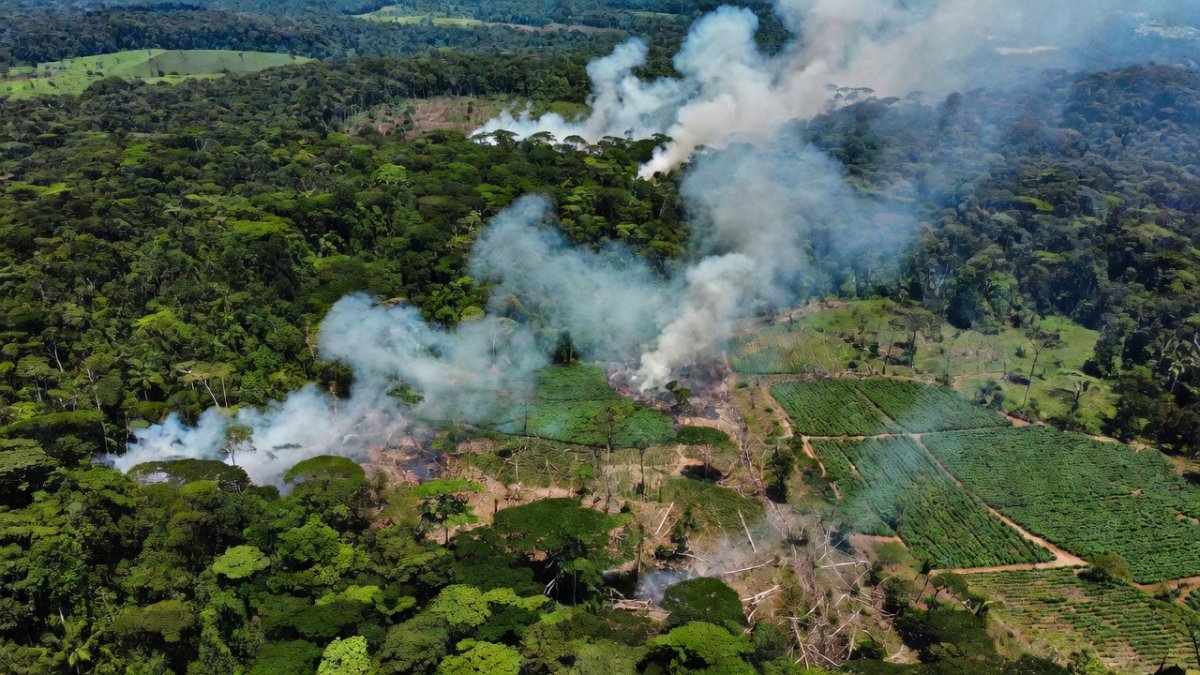
Colombia's 483,000 square kilometers of Amazon territory, representing 42 percent of the national landmass, stand at a critical inflection point following de la Espriella's victory. This region holds the planet's highest biodiversity per square meter, yet it overlaps directly with coca cultivation hotspots in Caquetá, Putumayo, Guaviare, and Nariño where slash-and-burn clearing has historically driven deforestation. The incoming administration's emphasis on territorial control and enforcement rather than negotiated protections signals a return to aggressive intervention that could accelerate habitat loss across protected areas and Indigenous reserves. Global climate regulation depends on maintaining this forest cover, but de la Espriella's platform favors economic extraction through expanded legal mining and fossil fuel production. Páramos vital for downstream water supplies now face heightened mining pressure without guaranteed free, prior, and informed consent processes. The shift threatens to undo recent gains in forest preservation while empowering armed actors tied to illegal economies. Latin America's environmental future hinges on whether enforcement-heavy strategies can succeed where substitution programs previously reduced clearing rates.
The Closest Election in Colombian History
Abelardo de la Espriella defeated Iván Cepeda by roughly 250,000 votes on June 21, 2026, capturing 49.66 percent or 12.879 million ballots against Cepeda's 48.70 percent or 12.617 million in Colombia's tightest presidential contest ever recorded. Record turnout reached 63.59 percent with more than 26 million citizens participating, reflecting deep national polarization over security, economy, and environmental governance. De la Espriella, a far-right political outsider backed by the "Defensores de la Patria" movement, enters office without an outright congressional majority, complicating legislative passage of his extraction-focused agenda. His campaign rejected negotiations with armed groups involved in cocaine production, favoring instead a "mano dura" security doctrine and Plan Colombia II-style eradication. Cepeda's alternative platform had centered Amazon protection, an end to new oil and gas projects, and voluntary coca substitution under the Paz Total framework. The fragmented legislature may force de la Espriella to rely on executive decrees for rapid policy implementation, heightening risks of bypassing Indigenous consultation requirements. Market analysts anticipate positive reactions to promised fiscal consolidation, yet environmental groups warn this electoral outcome accelerates biodiversity loss in the world's most species-rich nation.
De la Espriella's Environmental Vision: Extraction and Enforcement
De la Espriella's environmental blueprint centers on expanding fossil fuel output through responsible fracking, aggressive legal mining to spur economic growth, and 300,000-plus hectares of bioherbicide fumigation targeting coca crops. His "mano dura" approach prioritizes eradication over voluntary substitution programs, explicitly rejecting talks with armed factions controlling cocaine production zones. Amazon defense will occur via territorial control and intensified enforcement rather than expanded protected areas or energy transition investments. This vision directly contrasts with Cepeda's commitments to halt deforestation, ban fracking, formalize artisanal mining, and enforce free, prior, and informed consent for Indigenous territories. Fragmented congressional support may limit sweeping reforms, yet executive authority could fast-track mining concessions in páramos and buffer zones surrounding national parks. Positive market signals are expected from investors favoring deregulation, but critics highlight how such policies historically fueled conflict and displacement in Caquetá and Putumayo. The incoming president's outsider status leaves unclear how he will navigate local resistance from communities long opposed to aerial spraying and open-pit operations. Overall, the platform signals a decisive pivot toward resource extraction as the primary development engine for Amazonian departments.
Coca and Deforestation: What the Numbers Show
UNODC data documents coca cultivation climbing from 230,000 hectares in 2022 to 253,000 hectares in 2023 and a record 258,000 hectares in 2024, with the vast majority concentrated in Amazonian departments including Caquetá, Putumayo, Guaviare, and Nariño. Slash-and-burn clearing tied to these plantations has long been the leading deforestation driver, though IDEAM figures show national forest loss dropping from a 174,000-hectare peak in 2021 to 79,000 hectares by 2023 under prior conservation policies. Some 2025 estimates indicate a potential 43 percent rebound, underscoring the fragility of recent gains. Illegal mining has already degraded more than 69,000 hectares, much of it inside protected zones and Indigenous reserves. De la Espriella's pledge to fumigate over 300,000 hectares using bioherbicides revives Plan Colombia-era tactics that previously displaced communities without curbing cultivation long-term. Cepeda's substitution model had contributed to the documented decline in clearing rates, yet the new administration's enforcement priority risks repeating cycles of temporary reductions followed by rebounds. These overlapping pressures on the Colombian Amazon threaten irreversible biodiversity collapse and carbon release with global climate consequences.
Indigenous Communities Face a New Reality
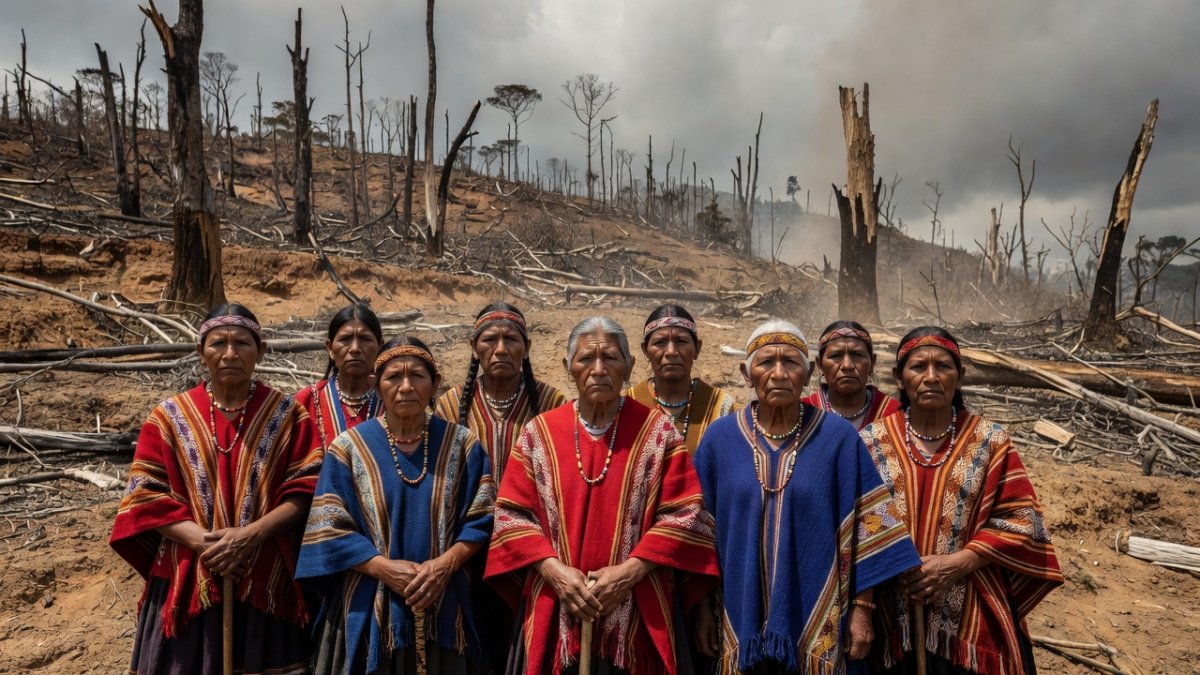
The Nasa people of Cauca, organized through the Consejo Regional Indígena del Cauca, confront heightened vulnerability as de la Espriella's mining and fumigation agenda threatens to sidestep consulta previa requirements. Aída Quilcué, the Nasa leader who ran as Cepeda's vice-presidential candidate, embodied community demands for territorial autonomy and environmental safeguards now at risk. Colombia's Amazonian Indigenous groups have relied on guardia indígena patrols to monitor and protect lands from illegal incursions, yet legal mining expansion could open páramos and reserves to industrial activity. Cauca remains one of the deadliest zones for land defenders, where enforcement-first policies historically escalated confrontations rather than resolving underlying conflicts. The incoming government's rejection of negotiations with armed actors involved in coca economies may leave communities caught between intensified spraying and retaliatory violence. Free, prior, and informed consent processes championed under Cepeda now face dilution, potentially accelerating displacement from ancestral territories. Water sources originating in highland moorlands stand exposed to contamination from expanded extraction. This political transition tests the resilience of Indigenous governance structures built over decades of resistance.
Environmental Defenders Under Threat
Colombia consistently ranks among the world's most dangerous countries for environmental defenders, with Latin America accounting for 82 percent of global killings in recent years. De la Espriella's security doctrine emphasizing territorial control over dialogue raises alarms that risks to activists in Amazonian departments will intensify. The previous administration's focus on voluntary substitution and community engagement had coincided with reduced deforestation, yet enforcement-heavy alternatives often correlate with spikes in targeted violence against those opposing mining or fumigation. Nasa guardia indígena and similar groups have filled protection gaps left by state absence, but expanded legal mining concessions could criminalize territorial defense. Record coca cultivation zones overlap precisely with high-risk areas for defenders, creating conditions where eradication campaigns may provoke backlash against local leaders. International observers note that 82 percent of Latin American killings occur in countries pursuing similar resource-extraction priorities. The narrow electoral margin leaves little political buffer for moderating these security approaches. Communities fear that August 7 policy shifts will erode hard-won gains in defender protection mechanisms.
What This Means for Latin America
De la Espriella's triumph reverberates across Latin America by modeling a return to extraction-led development at the expense of Amazon conservation successes achieved under progressive governments. Neighboring countries monitoring Colombia's coca and mining policies may face renewed cross-border pressures as enforcement displaces rather than resolves cultivation. The region's biodiversity corridors and climate regulation capacity depend on coordinated protection, yet Colombia's pivot threatens to fragment these efforts. Indigenous movements from the Andes to the basin now confront emboldened extractive interests citing Colombian precedent. Energy transition advocates lose a key ally that had prioritized no new fossil fuel expansion, while fracking proponents gain momentum. The 483,000 square kilometers of Colombian Amazon represent a global commons whose fate influences rainfall patterns far beyond national borders. Fragmented congressional dynamics may slow implementation, offering civil society windows for resistance, but executive actions on fumigation and mining could proceed rapidly. Latin American environmental governance faces a test of whether enforcement models can deliver sustainable outcomes or merely repeat historical cycles of conflict and degradation.
The Bottom Line — What Comes Next
De la Espriella assumes office August 7, 2026, with a mandate to implement extraction and enforcement policies that directly challenge recent deforestation reductions from 174,000 hectares to 79,000 hectares. The 258,000-hectare coca peak and 69,000-plus hectares of illegal mining damage set the stage for intensified interventions whose ecological and social costs remain uncertain. Indigenous communities and defenders must adapt to a landscape where consulta previa and Paz Total approaches yield to mano dura tactics and 300,000-hectare fumigation targets. Market optimism around fiscal reforms may attract investment, yet biodiversity and water security in the 483,000 square kilometers of Amazon hang in the balance. Civil society mobilization, international scrutiny, and congressional fragmentation offer potential checks, but the narrow 250,000-vote margin underscores deep societal divisions that could fuel further polarization. The coming months will reveal whether enforcement succeeds where prior strategies fell short or accelerates the very deforestation and violence the new administration claims to combat. Latin America's Amazonian future depends on outcomes in Colombia's most contested election.
By Elena Vasquez, Staff Writer
Keywords: Colombia election 2026, Amazon deforestation, de la Espriella, Indigenous rights, coca fumigation, environmental defenders, fracking Colombia, Latin America biodiversity, Caquetá Putumayo, illegal mining, Nasa people, deforestation data, Paz Total, Plan Colombia II, páramos protectionThis article was produced with AI-assisted research and editorial support. Reporting is based on sources cited in the article.
What's Your Reaction?
 Like
0
Like
0
 Dislike
0
Dislike
0
 Love
0
Love
0
 Funny
0
Funny
0
 Wow
0
Wow
0
 Sad
0
Sad
0
 Angry
0
Angry
0

Latin America Correspondent at Global1.News. Based in Mexico City, covering politics, economics, energy, and culture across the region. Brings an on-the-ground perspective to stories spanning from the Rio Grande to Patagonia.















Comments (0)