
Chinda: Only Speaker can declare lawmaker’s defection during plenary – Lawyers
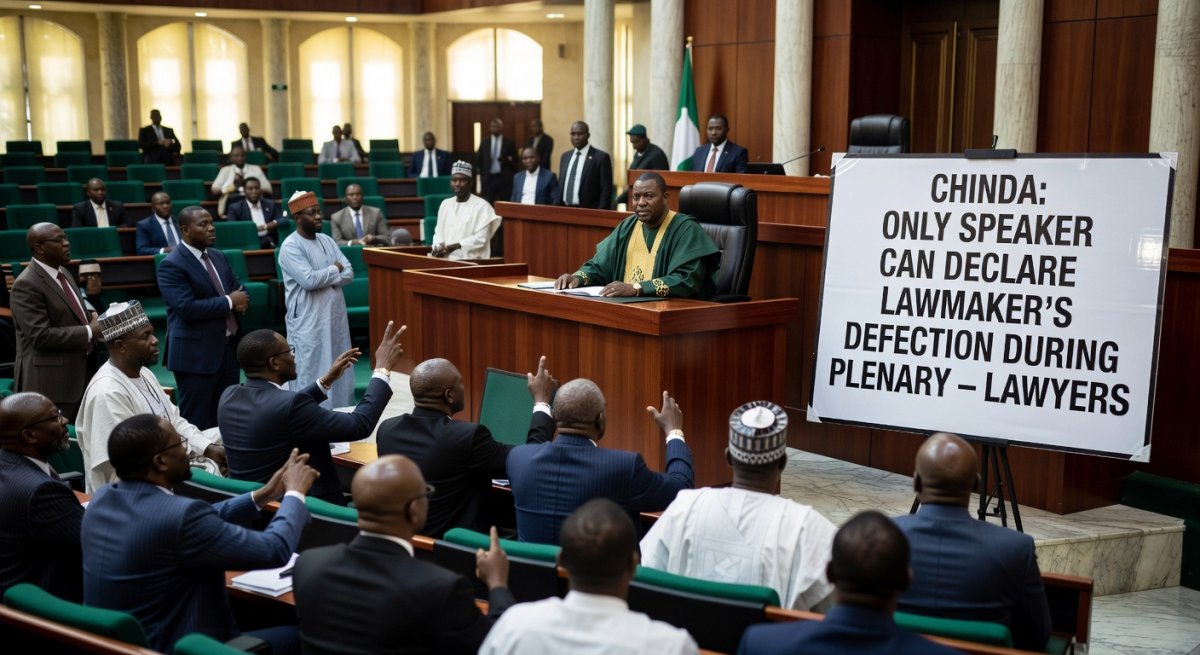
The legal position advanced by a body of legislative drafting experts has placed fresh scrutiny on the procedural requirements for recognising changes in party affiliation within Nigeria’s House of Representatives, at a moment when several members are navigating shifts between major political platforms.
Lawyers grouped under the Association of Legislative Drafting and Advocacy Practitioners have maintained that any formal declaration of a lawmaker’s defection must occur through the Speaker during a plenary sitting. They have applied this view directly to the recent move by the Minority Leader, Kingsley Chinda, from the Peoples Democratic Party to the All Progressives Congress, describing the step as lacking legal effect until the prescribed process is followed.
This stance underscores the distinction between a member’s personal decision to change parties and the institutional act of recording that change on the floor of the House. The lawyers’ intervention arrives as the chamber continues its regular sittings, raising questions about how leadership roles and committee assignments tied to party affiliation will be treated until any formal declaration is made.
The Lawyers’ Core Position
The Association of Legislative Drafting and Advocacy Practitioners has framed its argument around the standing orders and constitutional provisions that govern the conduct of plenary sessions. According to the group, only the Speaker possesses the authority to announce or record a defection while the House is sitting. This procedural requirement, the lawyers argue, prevents unilateral or extra-parliamentary claims of changed allegiance from taking immediate effect within the legislative record. In the case of the Minority Leader, the association has stated that the transition from the Peoples Democratic Party to the All Progressives Congress cannot be regarded as complete under House rules until the Speaker makes the necessary declaration during plenary. The emphasis on this single procedural gateway reflects a broader concern for maintaining order in the documentation of party representation.Why the Timing Matters
The House of Representatives is currently managing its legislative calendar, including debates on appropriations and oversight activities. Any uncertainty surrounding the status of a principal officer such as the Minority Leader can affect the allocation of speaking slots, the composition of delegations, and the arithmetic used to determine quorum or voting majorities on party lines. By insisting that only the Speaker can effect the declaration, the lawyers are highlighting a safeguard that channels such announcements through an officer who is bound by the rules of the House rather than through media statements or party communiqués. This approach, they contend, protects the integrity of the chamber’s internal records during periods of political movement.Implications for Leadership and Representation
The Minority Leader occupies a statutory role that carries specific responsibilities in the organisation of opposition business. Should the Speaker eventually make a declaration regarding Kingsley Chinda’s affiliation, the House would need to consider how that change interacts with the designation of minority positions. Until that moment, the existing leadership structure remains in place under the current parliamentary record. The lawyers’ statement therefore serves as a reminder that changes in party affiliation do not automatically translate into changes in official status inside the legislature. The procedural step of a plenary declaration functions as the point at which the House acknowledges and acts upon the new alignment.Background on Legislative Procedure
Nigeria’s constitutional framework assigns the regulation of proceedings in the House of Representatives to its own rules, subject to the overriding provisions of the 1999 Constitution. Provisions relating to the vacation of seats upon defection have historically been interpreted through judicial pronouncements and internal resolutions. The Association of Legislative Drafting and Advocacy Practitioners has positioned its current intervention within that established framework, stressing that the Speaker’s role is not merely ceremonial but determinative during sitting hours. The insistence on a plenary declaration aligns with the principle that the official journal of the House reflects decisions taken on the floor rather than announcements made elsewhere. This distinction has been cited in previous parliamentary practice when questions of membership status have arisen.Forward-Looking Considerations
The next development expected is any response the Speaker may choose to make, either by addressing the matter during a scheduled sitting or by allowing the issue to be raised through points of order. Should the Speaker proceed with a declaration, the House would then confront the practical consequences for committee assignments and leadership designations that flow from recognised party affiliation. Observers will watch whether the Association of Legislative Drafting and Advocacy Practitioners or other legal voices offer further guidance on the sequence of steps that must follow any such declaration. In the interim, the position articulated by the lawyers continues to frame the debate over the proper channel for recording changes in party representation.By Sarah Okafor, Staff Writer
This article was produced with AI-assisted research and editorial support. Reporting is based on sources cited in the article.
What's Your Reaction?
 Like
0
Like
0
 Dislike
0
Dislike
0
 Love
0
Love
0
 Funny
0
Funny
0
 Wow
0
Wow
0
 Sad
0
Sad
0
 Angry
0
Angry
0

Sarah Okafor
Africa Correspondent at Global1.News. Based in Lagos, covering politics, business, technology, and culture across the continent. Focused on telling African stories beyond the headlines — the innovation, entrepreneurs, and communities shaping the region's future.















Comments (0)