
Environmentalists turn out in force to oppose Trump coal ash rollbacks
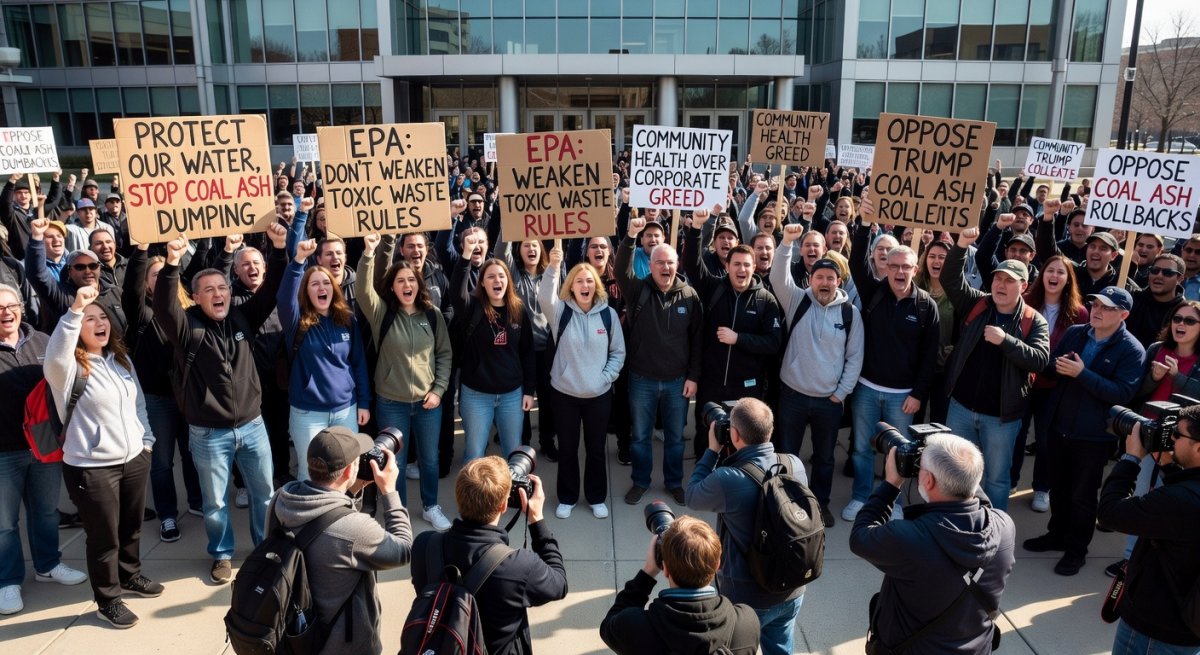
A virtual hearing convened by the US Environmental Protection Agency on Thursday drew sustained opposition from environmental advocates who argued against proposed regulatory adjustments that would reduce obligations on utilities to address toxic coal ash at hundreds of sites. The turnout reflects continued public attention to how federal rules govern the handling of power plant residues and the potential effects on surrounding communities and water resources.
The session allowed participants to register comments directly, and a substantial number of speakers used the opportunity to challenge the direction of the changes under consideration. Because the hearing occurred in a virtual format, the format enabled broad participation without geographic limits, resulting in an extended sequence of statements focused on preserving existing cleanup standards.
Scope of the Issue
Coal ash, the residue left after coal combustion, contains substances that require careful management to limit migration into soil and groundwater. The current framework sets expectations for utilities to monitor, contain, and remediate this material at disposal locations nationwide. The proposals discussed at the hearing would modify those expectations, prompting the organized response from groups concerned with long-term environmental outcomes. Advocates emphasized that any relaxation of requirements could affect the pace and thoroughness of work already underway at many locations. Their comments centered on the need to maintain accountability for operators responsible for these sites, particularly where proximity to residential areas or waterways increases the stakes of incomplete cleanup.Regulatory Background
Federal oversight of coal ash has evolved through successive administrations, with standards refined to address documented cases of leakage and structural concerns at impoundments. The latest proposals represent an effort to revisit certain provisions, shifting the balance between operational flexibility for utilities and the stringency of remediation steps. Thursday’s hearing served as one formal channel for input during the comment period. The volume of participation indicates that stakeholders view the outcome as consequential for how responsibilities are assigned and enforced going forward. Environmental organizations framed their remarks around the principle that existing rules were developed in response to specific risks and should not be scaled back without equivalent safeguards.Stakeholder Perspectives
Speakers at the session presented a consistent message that weakening the rules could slow progress on site assessments and corrective actions. They highlighted the role of enforceable timelines and technical criteria in ensuring utilities complete necessary work rather than deferring it. The virtual setting allowed these points to be delivered sequentially, creating a cumulative record of concern. Utilities and industry representatives have historically noted the costs and engineering challenges associated with full compliance, yet the hearing itself focused primarily on the opposing viewpoint. The EPA will now compile the submitted comments as part of its review process before any final determinations.Next Steps in the Process
Following the hearing, the agency is expected to evaluate the full range of public input alongside technical and legal considerations. Any resulting rule changes would typically include provisions for implementation and potential judicial review. Observers anticipate that the volume and substance of comments received on Thursday will factor into the agency’s assessment of whether adjustments are warranted or whether further study is needed. The outcome will influence how hundreds of sites are managed in coming years, affecting both the resources utilities allocate to remediation and the level of oversight applied by regulators. Continued monitoring of the rulemaking docket will clarify the timeline and specific modifications that ultimately take effect.By Jessica, Staff Writer
This article was produced with AI-assisted research and editorial support. Reporting is based on sources cited in the article.
What's Your Reaction?
 Like
0
Like
0
 Dislike
0
Dislike
0
 Love
0
Love
0
 Funny
0
Funny
0
 Wow
0
Wow
0
 Sad
0
Sad
0
 Angry
0
Angry
0

Jessica Ali
Editor-in-Chief at Global1.News. Atlanta-based journalist who cuts through the BS and tells it like it is. Lead anchor, host, and the voice you hear when the spin stops and the truth starts.















Comments (0)