China touts stronger trade ties, says Canada can surpass export target

May 30, 2026 - 00:30
0
China touts stronger trade ties, says Canada can surpass export target
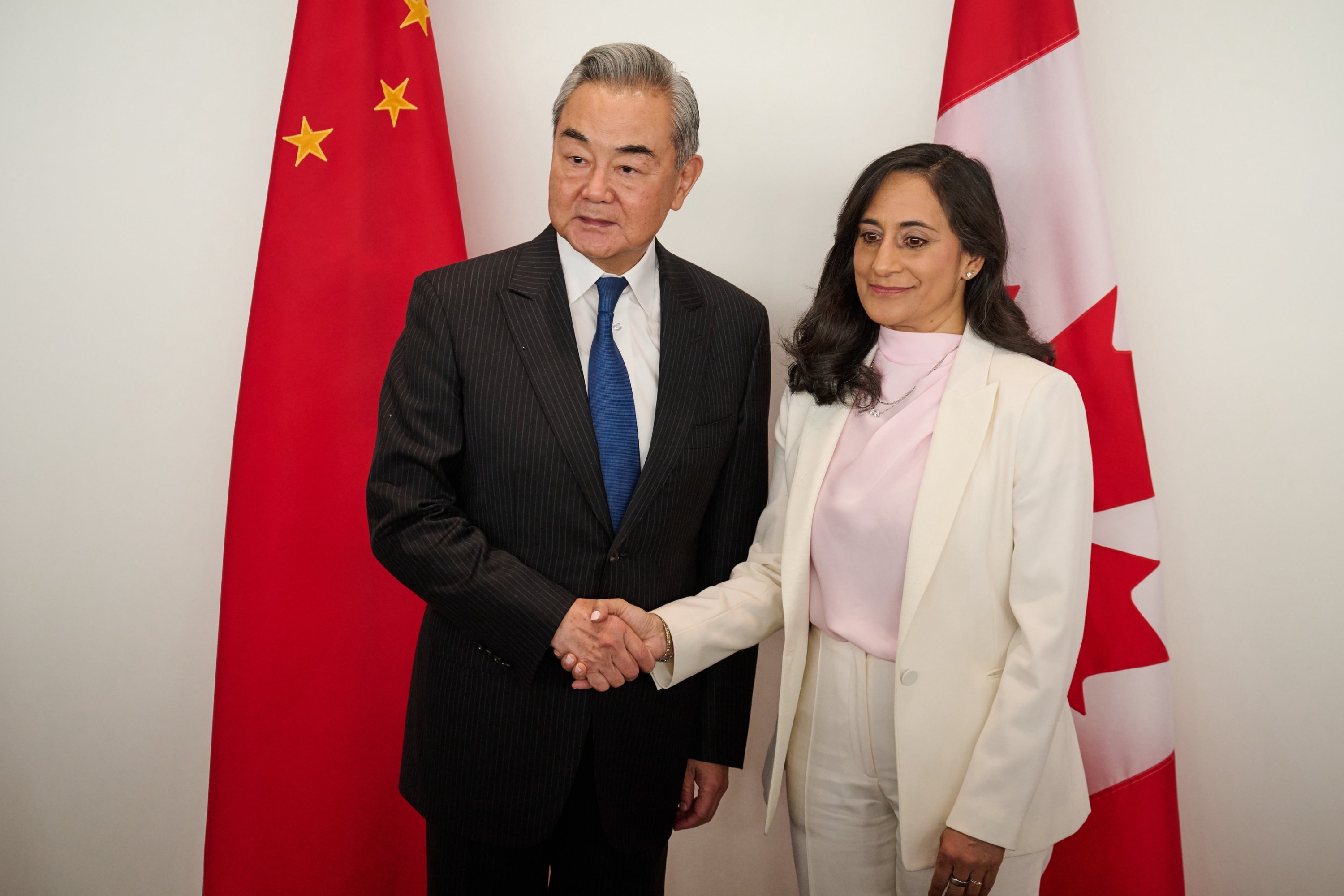
**China touts stronger trade ties, says Canada can surpass export target** China’s Foreign Minister Wang Yi told Canadian officials on Friday that Ottawa could exceed its target of raising merchandise exports to China by 50 percent by 2030, according to a joint readout issued by China’s Ministry of Foreign Affairs. The remarks came during virtual and in-person meetings held in Beijing as part of the annual Canada-China Strategic Economic Dialogue. Wang Yi stated that “Canada possesses the capacity to surpass the 50 percent export-growth benchmark well before 2030 if both sides remove remaining non-tariff barriers.” Canadian Trade Minister Mary Ng participated in the session and confirmed the exchange in a subsequent statement released by Global Affairs Canada.

The Meeting and Immediate Statements

The dialogue, held on 15 November, focused on agricultural products, critical minerals, and clean-technology supply chains. Wang Yi cited Statistics Canada data showing Canadian exports to China reached C$28.4 billion in 2023, up from C$19.1 billion in 2019, and noted that the trajectory already places the 2030 goal within reach. Ng replied that Canada remains committed to diversifying markets while preserving existing trade volumes with China. Both sides agreed to resume technical talks on canola seed certification and to establish a working group on lithium and rare-earth export protocols. No new binding agreements were signed.

Background on Bilateral Trade Targets

Canada set the 50 percent export-growth target in its 2022 Indo-Pacific Strategy, which identified China as one of several priority markets despite ongoing political frictions. The figure is measured against the 2019 baseline using Statistics Canada customs data for goods only. Services trade and investment flows are tracked separately by the Department of Foreign Affairs. China is Canada’s second-largest trading partner after the United States. Key Canadian exports include canola, pork, lobster, wood pulp, and nickel concentrates. China’s exports to Canada are dominated by machinery, electronics, and consumer goods. Bilateral trade has fluctuated since 2018 because of regulatory actions on both sides, including China’s restrictions on Canadian canola and meat products.

Official Positions and Data Sources

In the Friday readout, Wang Yi referenced figures compiled by China’s General Administration of Customs, which recorded US$56.8 billion in two-way goods trade in 2023. Global Affairs Canada’s own data for the same year shows a Canadian goods-trade deficit of approximately C$9.2 billion with China. Ng emphasized that any expansion must occur “within the framework of Canada’s existing export controls and human-rights reporting requirements,” according to the Canadian statement. She did not commit to new volumes but welcomed the resumption of technical-level meetings suspended since 2021.

Industry and Sector Context

Canadian agricultural exporters have tracked the impact of prior market-access interruptions. Canola shipments, valued at C$3.7 billion in 2023, remain below 2018 peaks after China imposed additional inspection requirements. Industry group Canola Council of Canada stated that full restoration of pre-2019 volumes would contribute roughly 15 percentage points toward the overall 50 percent target. Critical-minerals producers have also followed the dialogue. Companies such as Cameco and First Quantum Minerals have existing offtake arrangements with Chinese refiners. The new working group is expected to address permitting timelines for mine expansions rather than negotiate fresh quotas.

Response from Other Governments and Observers

The United States Trade Representative’s office declined to comment on the specific bilateral target. A spokesperson noted only that Washington continues to monitor supply-chain dependencies in critical minerals. The European Commission issued no immediate reaction. Analysts at the Canadian International Council and the Asia Pacific Foundation of Canada described the exchange as a return to routine technical engagement rather than a policy shift. Both organizations cited publicly available trade statistics to support their assessments.

Next Steps and Timeline

The two ministries agreed to hold the next round of technical talks in Ottawa in the first quarter of 2025. Progress reports on the working groups are scheduled for release through official channels in June 2025. Any new phytosanitary protocols would require approval by the Canadian Food Inspection Agency and China’s General Administration of Customs before taking effect. Further updates will be provided as the technical consultations progress.

This is Malik Hassan for Global1 News, reporting from Beirut. 🇱🇧

What's Your Reaction?

Like Like 0
Dislike Dislike 0
Love Love 0
Funny Funny 0
Wow Wow 0
Sad Sad 0
Angry Angry 0

Comments (0)

User