
Canada's metal industries brace for impact as US tariff changes reshuffle trade
The shifting landscape of American tariff policy is sending fresh shockwaves through Canada's metals sector this week, as new changes to US duties on copper and aluminum force Canadian producers, automakers, and provincial leaders to scramble for footing. While the White House has adjusted some tariff rates on Canadian metals, the overall uncertainty continues to exact a heavy
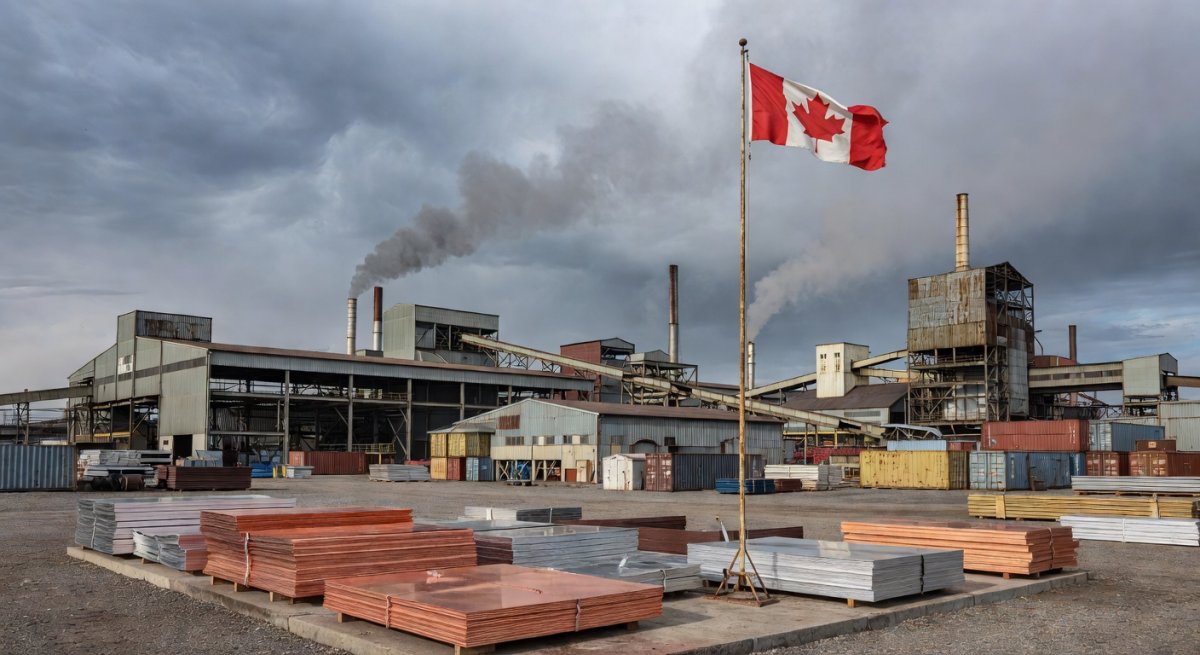
The shifting landscape of American tariff policy is sending fresh shockwaves through Canada's metals sector this week, as new changes to US duties on copper and aluminum force Canadian producers, automakers, and provincial leaders to scramble for footing. While the White House has adjusted some tariff rates on Canadian metals, the overall uncertainty continues to exact a heavy toll on businesses and workers across the country.
Here's what's happening right now and what it means for Canadians from Ontario to British Columbia.
What changed with copper and aluminum tariffs
The United States has made targeted adjustments to its tariff regime on Canadian copper and aluminum imports, though the core 25 per cent duties on most steel and aluminum products remain in place, according to reports from Global News and the Canadian Press. The modifications apply to specific downstream products and have been described by trade analysts as a "narrow recalibration" rather than a broad rollback.
Canadian Trade Minister Mary Ng has maintained that Ottawa continues to push for the complete removal of what it calls "unjustified" tariffs, with Canada's WTO challenge still active. The partial adjustments come amid broader tariff negotiations between the two countries, with Prime Minister Mark Carney's government seeking permanent exemptions on Canadian metals.
Auto industry at a crossroads
The tariff uncertainty has placed Canada's automotive sector at an "inflection point," according to a recent RBC report covered by Global News. The report warned that without tariff-free access to the US market, Canada's auto assembly plants could face closure by the end of this decade. However, in an optimistic scenario with restored free trade, production could climb to two million vehicles annually.
"Canada is at a strategic crossroads when it comes to the future of its auto industry and essential to that future is securing free trade with the United States," said Jordan Brennan, managing director at RBC Thought Leadership and author of the report, in an interview cited by Global News. The stakes are enormous — auto assembly plants anchor entire ecosystems of parts suppliers and service industries that employ tens of thousands of Canadians.
Despite the headwinds, General Motors announced this week it will invest 91 million in its St. Catharines Propulsion Plant to support production of its latest V-8 engines. GM Canada president Jack Uppal said the investment confirms St. Catharines' role in one of its core vehicle programs. The move signals that some automakers are betting on Canada's long-term viability even as tariff clouds linger.
Quebec furniture maker becomes tariff casualty
The human cost of the trade war was on full display this week as South Shore Furniture, a family-owned Quebec manufacturer with 86 years of history, announced it would shut down all operations. The company cited a 77 per cent drop in sales over the past three years, pointing directly at US tariffs on Canadian goods combined with Chinese and Vietnamese furniture dumping into the North American market.
"It is an extremely difficult situation for our family, but also for our employees who have shown exceptional dedication and resilience in recent months," said general director Charles Laflamme in a statement. The closure will affect 126 workers at facilities in Sainte-Croix and Coaticook. Jean Laflamme, chair of the board, warned that "if furniture is sold at prices below our raw material costs, very few Canadian companies can survive."
Provincial leaders push back
Canadian premiers are taking the tariff fight directly to American audiences. Ontario Premier Doug Ford recently received an honorary doctorate from Saginaw Valley State University in Michigan, where he used his commencement speech to deliver a blunt warning about the dangers of protectionism.
"Over the last year and a half, that partnership between the US and Canada has been tested by tariffs and trade wars," Ford said, calling the relationship "strained" and "shaken and undermined." He argued that "protectionism has never worked in the history of the world and it won't work now," citing former US president Ronald Reagan's own criticism of tariffs.
Meanwhile, Alberta Premier Danielle Smith is set to meet with Quebec Premier Christine Fréchette in Quebec City this week, with talks expected to cover energy corridors, trade diversification, and provincial autonomy from the US market. Smith has previously urged Quebec to develop its natural gas resources to reduce dependence on American energy imports.
Federal response and what comes next
Ottawa has announced a .5 billion support package for industries hit by tariffs, including steel, aluminum, and copper producers. Energy Minister Tim Hodgson announced an additional 2 million investment in British Columbia's forestry sector this week, saying the funding will prioritize projects that use low-carbon wood technology or are Indigenous-operated.
Hodgson described the investment as part of Canada's strategy to diversify wood production and become less reliant on the United States amid "unjust" tariffs. British Columbia Premier David Eby had criticized the federal government for omitting lumber from the earlier support package, but Hodgson said the feds are working "constructively" with the province.
Trade experts say Canada faces a long road ahead. The US is Canada's largest trading partner, with nearly 00 billion in two-way trade annually. Any sustained disruption to metals, auto parts, and lumber flows carries consequences that ripple across the entire Canadian economy. For now, businesses, workers, and provincial leaders are watching closely as the next round of negotiations unfolds.
Alex Thompson, Global 1 News — Canada
This article was produced with AI-assisted research and editorial support. Reporting is based on sources cited in the article.
What's Your Reaction?
 Like
0
Like
0
 Dislike
0
Dislike
0
 Love
0
Love
0
 Funny
0
Funny
0
 Wow
0
Wow
0
 Sad
0
Sad
0
 Angry
0
Angry
0

Canada Correspondent at Global1.News. Based in Toronto, covering Canadian politics, energy, trade, and US-Canada relations. Provides the Canadian perspective on North American and global affairs.













Comments (0)