
Canada Selects ThyssenKrupp Marine Systems as Preferred Supplier for New Submarine Fleet
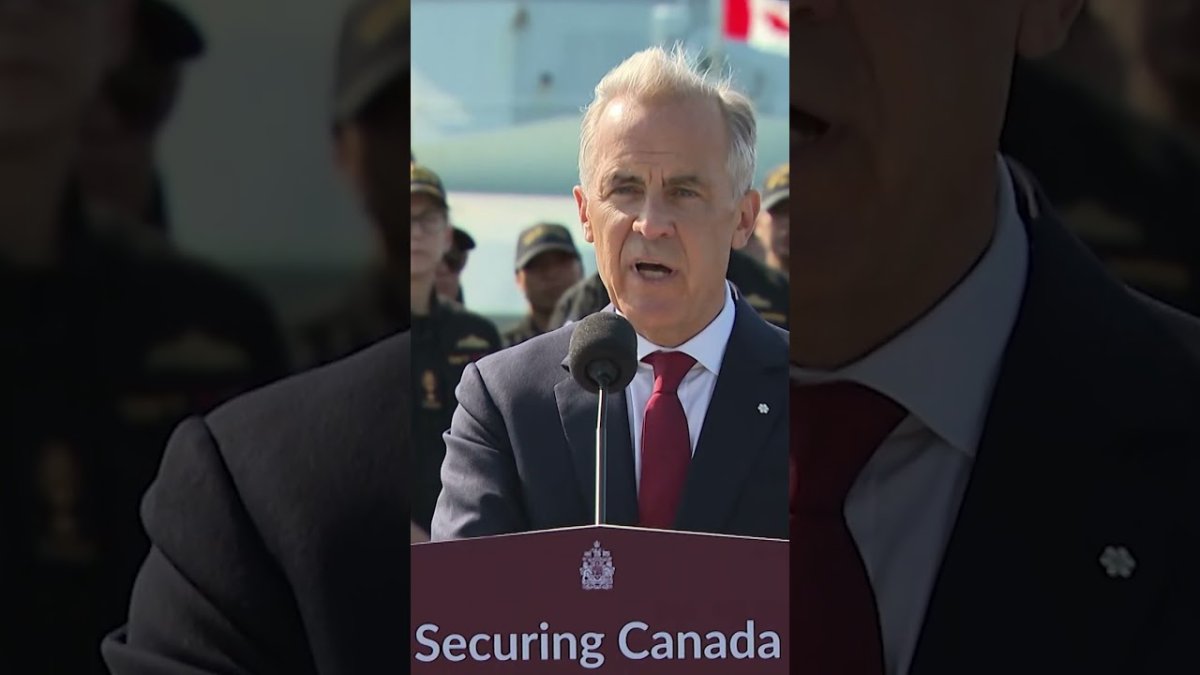
The CBC News video from CFB Halifax shows Prime Minister Mark Carney announcing Germany's ThyssenKrupp Marine Systems as the preferred supplier for Canada's new submarine fleet. The report covers the $24 billion CAD acquisition under the Canadian Patrol Submarine Project and its strategic importance. It also highlights the competitive process and economic benefits expected acro
The CBC News video from CFB Halifax shows Prime Minister Mark Carney announcing Germany's ThyssenKrupp Marine Systems as the preferred supplier for Canada's new submarine fleet. The report covers the $24 billion CAD acquisition under the Canadian Patrol Submarine Project and its strategic importance. It also highlights the competitive process and economic benefits expected across the country.
Canada Selects ThyssenKrupp Marine Systems as Preferred Supplier for New Submarine Fleet
Halifax, Nova Scotia — In a recent CBC News report from CFB Halifax, Prime Minister Mark Carney announced on July 6, 2026 that Germany's ThyssenKrupp Marine Systems has been chosen as the preferred supplier under the Canadian Patrol Submarine Project. The decision names ThyssenKrupp Marine Systems the preferred supplier for up to 12 Type 212CD submarines to replace the Victoria-class fleet at CFB Halifax in Nova Scotia. Carney described the decision as the largest defence procurement in Canada's history, with an estimated $24 billion CAD for acquisition and up to $100 billion CAD including lifetime costs. The Prime Minister stated that negotiations with ThyssenKrupp Marine Systems will begin immediately and are expected to last approximately 18 months. Defence Minister David J. McGuinty stood alongside Carney during the announcement and confirmed that the project aligns with Canada's Defence Industrial Strategy. Industry Minister Mélanie Joly also attended and emphasised immediate application of the Industrial and Technological Benefits Policy.
Project Specifications and Timeline
The Canadian Patrol Submarine Project will deliver the first four Type 212CD submarines by 2034, with the full fleet replacing the aging Victoria-class boats that will remain operational into the mid-to-late 2030s. The four Victoria-class submarines were built in the United Kingdom in the 1980s and acquired by Canada in 1998, making them nearly four decades old by the time the first replacements arrive. The Build-Partner-Buy framework was created to speed up military acquisitions and allows Canada to adopt a proven design already in production for other navies. ThyssenKrupp Marine Systems already builds Type 212CD submarines for Germany and Norway, providing Canada with a proven design under the Build-Partner-Buy framework. The first boats are scheduled for delivery in 2034 while the Victoria-class submarines continue patrols focused on Arctic sovereignty and underwater surveillance capabilities. Defence Minister David J. McGuinty highlighted that the project will generate strong economic benefits and jobs across the country through the Industrial and Technological Benefits Policy.
The Type 212CD Submarine and Its Capabilities
The Type 212CD submarine features advanced air-independent propulsion, enhanced stealth characteristics, and modular combat systems designed for operations in both littoral and open-ocean environments. ThyssenKrupp Marine Systems has already delivered or is delivering these boats to the German Navy and the Norwegian Navy, giving Canada access to an established production line and shared logistics support. The design includes improved battery technology and fuel-cell systems that extend submerged endurance beyond previous Canadian submarine generations. These capabilities directly support Canada's priorities for Arctic sovereignty patrols and continuous underwater surveillance in the Atlantic and Pacific approaches. Secretary of State for Defence Procurement Stephen Fuhr noted that the Type 212CD meets all Canadian requirements without requiring extensive redesign work. The submarines will integrate Canadian-specific weapons systems and sensors while maintaining interoperability with NATO allies already operating the same class.
Competitive Selection Process
ThyssenKrupp Marine Systems defeated South Korea's Hanwha Ocean, which had offered the KSS-III submarine, in a competitive process completed in roughly eight months. Hanwha Ocean sent a KSS-III submarine to Victoria, British Columbia in May 2026 to demonstrate capabilities to Canadian officials and naval personnel. The visit included dockside tours and technical briefings at the Canadian Forces Base in Victoria. Stephen Fuhr said the process was completed in record time of about eight months versus typical years-long Canadian defence procurement timelines. Industry Minister Mélanie Joly confirmed that the government will apply the Industrial and Technological Benefits Policy to create good-paying jobs and strengthen domestic supply chains. The evaluation considered technical performance, cost, industrial benefits, and strategic alignment with NATO partners.
Economic Benefits and Job Creation Across Canada
The Industrial and Technological Benefits Policy requires ThyssenKrupp Marine Systems to direct a significant portion of contract value into Canadian companies, creating jobs in shipbuilding, electronics, and advanced manufacturing. Supply chains will span Nova Scotia, British Columbia, Quebec, and Ontario, with work packages for hull construction, combat systems integration, and maintenance infrastructure. Defence Minister David J. McGuinty stated that these investments will support thousands of positions in the marine and defence sectors over the next two decades. Canadian firms will participate in European supply chains for future Type 212CD production runs, opening export opportunities beyond the domestic fleet. The project aligns with Canada's Defence Industrial Strategy and builds on existing shipyard capabilities at Irving Shipbuilding in Halifax and Seaspan in Vancouver. Industry Minister Mélanie Joly emphasised that the policy will prioritise high-skill positions in engineering, welding, and systems integration across multiple provinces.
Political Context Under Prime Minister Carney
Under Carney, Canada has made the largest increase in defence investment in a generation, with the submarine project forming a central element of that commitment. The record-speed procurement reflects the Build-Partner-Buy framework introduced to accelerate acquisitions that previously stretched over many years. Stephen Fuhr highlighted that completing the competitive evaluation in eight months demonstrates the government's ability to deliver major projects on accelerated timelines. The announcement reinforces Carney's broader agenda of modernising the Canadian Armed Forces while generating domestic economic returns. The $24 billion acquisition cost and up to $100 billion lifetime expenditure represent the single largest defence outlay in Canadian history. Political observers note that the decision strengthens Carney's position ahead of future budget discussions on sustained defence spending increases.
Strategic Shift Toward European Partners and NATO
Carney emphasised that the submarines will strengthen Canada's defence industrial base, deepen partnerships with trusted allies, and open new opportunities for Canadian businesses in European supply chains. Centre for International Governance Innovation expert Wesley Wark stated that the NATO element was ultimately the decider, as Carney prioritises European defence ties to reduce dependence on the United States. Canada became the first non-EU member to join the European defence procurement scheme under Carney's leadership, aligning the submarine project with broader transatlantic security goals. The selection positions Canada within an established network of more than one-third of NATO members already operating ThyssenKrupp Marine Systems submarines. This network provides shared training facilities, spare parts pools, and operational doctrine that will reduce long-term sustainment costs. The move supports Carney's pivot away from exclusive reliance on U.S. defence suppliers toward diversified European partnerships.
Diplomatic Implications at the NATO Summit
The announcement came one day before the NATO Summit in Turkey, where South Korean President was also expected to attend, adding diplomatic weight to the European-focused decision. Carney used the timing to signal Canada's commitment to European security cooperation while maintaining respectful relations with South Korea. The decision carries implications for future bilateral defence discussions between Ottawa and Seoul on other procurement files. German Chancellor Friedrich Merz welcomed the selection as a strong signal in support of transatlantic and European cooperation in the defence industry. ThyssenKrupp Marine Systems CEO Oliver Burkhard confirmed the company's readiness to deliver world-class submarine capability to Canada. Hanwha Canada CEO Glenn Copeland expressed disappointment but pointed to South Korea's defence industrial base potential for future opportunities.
What Happens Next
If negotiations with ThyssenKrupp Marine Systems fail, Canada can turn to Hanwha Ocean as the reserve supplier, ensuring continuity for the Canadian Patrol Submarine Project. The $70 billion CAD estimated lifetime cost covers maintenance, infrastructure upgrades at Halifax and other bases, and weapons systems integration across the fleet. This procurement directly addresses Canada's need to modernise its undersea capabilities while supporting domestic shipbuilding and technology sectors in Nova Scotia, British Columbia, and Quebec. ThyssenKrupp Marine Systems already supplies submarines to more than one-third of NATO members, positioning Canada within an established alliance network for maintenance and training support. The decision strengthens Canada's role in collective defence planning and Arctic surveillance missions shared with European allies. Carney's government will now focus on finalising contract terms by the end of 2027 while advancing infrastructure preparations at east and west coast bases.
By Alex Thompson, Staff WriterThis article was produced with AI-assisted research and editorial support. Reporting is based on sources cited in the article.
What's Your Reaction?
 Like
0
Like
0
 Dislike
0
Dislike
0
 Love
0
Love
0
 Funny
0
Funny
0
 Wow
0
Wow
0
 Sad
0
Sad
0
 Angry
0
Angry
0

Canada Correspondent at Global1.News. Based in Toronto, covering Canadian politics, energy, trade, and US-Canada relations. Provides the Canadian perspective on North American and global affairs.














Comments (0)