
Atemoya Trade Tensions: China's Leverage Over Taiwan
Atemoya Trade Tensions Highlight China's Economic Leverage Over Taiwan The Atemoya as a Symbol of Cross-Strait Economic Friction The atemoya, a hybrid custard apple variety prized for its creamy texture and cultivated primarily in Taiwan's Taitung county, has surfaced as the latest point of contention in Beijing's multifaceted approach to the island. Chinese companies recently
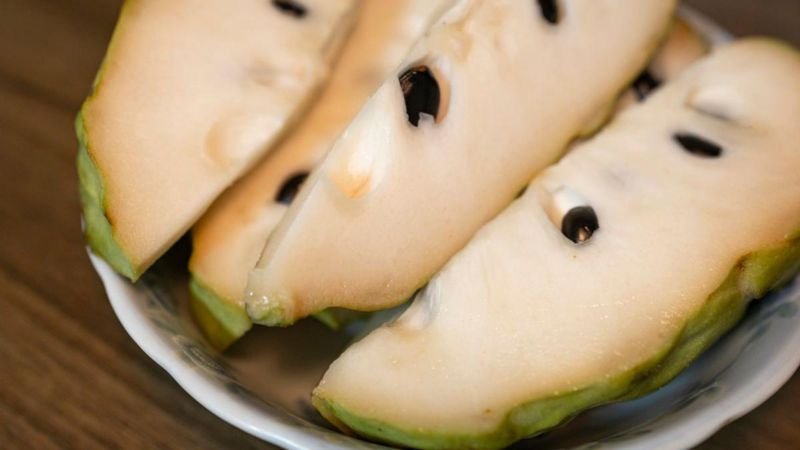
The Atemoya as a Symbol of Cross-Strait Economic Friction
The atemoya, a hybrid custard apple variety prized for its creamy texture and cultivated primarily in Taiwan's Taitung county, has surfaced as the latest point of contention in Beijing's multifaceted approach to the island. Chinese companies recently pledged expanded purchases of the fruit during a forum in Xiamen, part of efforts to increase imports of Taiwanese agricultural goods including fish and tea. Taiwan's agriculture ministry responded by characterizing the move as a "classic example of China's 'raise, trap, kill' process," in which initial large-scale buying fosters dependence before abrupt policy shifts expose producers to volatility.
Historical Patterns of Import Disruptions
Similar dynamics played out with Taiwanese pineapples in 2021, when Beijing halted imports citing pest concerns and triggered significant economic strain for farmers. Imports of atemoyas themselves faced suspension in 2021 on comparable grounds, partial resumption in 2023, and the introduction of taxes in 2024. These sequenced actions have created repeated instability for the sector. Taiwan's agriculture ministry has noted that Beijing is simultaneously expanding its own domestic atemoya cultivation, which could further erode Taiwan's market position over time.
Beijing's Strategic Calculus in Non-Military Pressure
China maintains its claim over Taiwan and has intensified military exercises near the island, including simulated blockades. Parallel non-military measures, such as targeted trade restrictions on agricultural products, serve to apply economic pressure without immediate escalation to armed conflict. By creating and then withdrawing market access, Beijing tests Taiwan's resilience while signaling the costs of maintaining separate governance. This approach aligns with broader objectives of technological self-sufficiency and regional influence, as disruptions in one sector can ripple into political calculations about unification.
Taiwan's Policy Response and Diversification Efforts
Taiwan's agriculture ministry has stated its intent to prioritize sustainable agricultural development and stable farmer incomes through measures such as guidance toward diversified processing. This includes production of frozen fruit products, puree, and wines. The Mainland Affairs Council has issued warnings regarding participation by Taiwanese officials in the Xiamen forum, indicating potential investigations. These steps reflect an effort to reduce vulnerability to unilateral import decisions while preserving export opportunities where feasible.
Domestic Political Divisions in Taiwan
Opposition figures, including lawmakers from the Kuomintang, have criticized the government's warnings as an attempt to politicize the atemoya industry, arguing that such rhetoric risks harming farmers' livelihoods. Taipei Mayor Chiang Wan-an has described the atemoya as the "TSMC of the fruit world" and accused the Mainland Affairs Council of using the issue to "bully and oppress" producers. These exchanges underscore ongoing partisan differences over how best to manage economic ties with the mainland amid Beijing's territorial claims.
Implications for Regional Trade and Global Supply Chains
The pattern of conditional market access carries second-order effects beyond Taiwan. ASEAN economies that export similar tropical fruits may observe the risks of concentrated dependence on Chinese demand. The European Union and Global South nations engaged in agricultural trade with China could likewise assess the durability of existing arrangements. Taiwan's experience illustrates how economic leverage can influence political alignment without direct confrontation, prompting other actors to consider supply-chain diversification strategies.
By Prof. Marcus Chen, Staff WriterThis article was produced with AI-assisted research and editorial support. Reporting is based on sources cited in the article.
What's Your Reaction?
 Like
0
Like
0
 Dislike
0
Dislike
0
 Love
0
Love
0
 Funny
0
Funny
0
 Wow
0
Wow
0
 Sad
0
Sad
0
 Angry
0
Angry
0

World Politics Analyst at Global1.News. Based in Beijing, covering US-China relations, global trade, and geopolitical strategy. Brings deep analytical perspective to the power dynamics shaping international affairs.














Comments (0)