
Archaeological Treasures Emerge Beneath Notre Dame Forecourt
Archaeological Treasures Emerge Beneath Notre Dame Forecourt While tourists queue in the summer sun to ascend Notre Dame Cathedral and admire its iconic gargoyles, a remarkable archaeological excavation is unfolding just four metres beneath their feet. This deep dive into Paris's past, reaching back 2,000 years to Roman times, follows the cathedral's 2019 fire and subsequent pl
Archaeological Treasures Emerge Beneath Notre Dame Forecourt
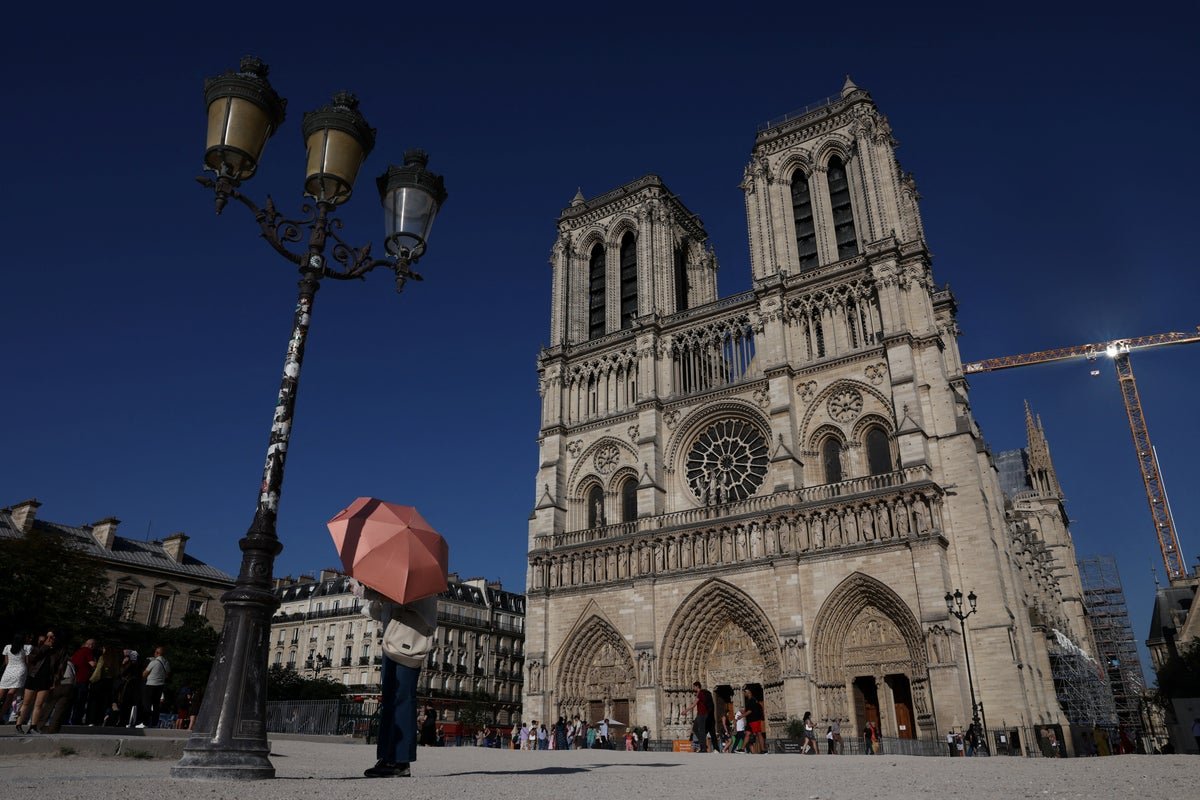
While tourists queue in the summer sun to ascend Notre Dame Cathedral and admire its iconic gargoyles, a remarkable archaeological excavation is unfolding just four metres beneath their feet. This deep dive into Paris's past, reaching back 2,000 years to Roman times, follows the cathedral's 2019 fire and subsequent plans to revitalise its forecourt. The cathedral reopened in late 2024.
Urban Renewal Prompts Meticulous Excavation
As part of wider urban renewal, Paris aims to transform the currently stark square into a shaded, tree-lined space. In a city steeped in history, no ground can be disturbed without first meticulously excavating what lies beneath, safeguarding against potential damage to invaluable historical artefacts. A section of Notre Dame's forecourt has thus become an active excavation site, cordoned off by barriers and traversed by a wooden walkway mere steps from the bustling tourist queues.
Layers of History Revealed in Four Metres of Earth
Camille Colonna, the lead archaeologist for the current dig, explained that at the cathedral's birth in 1163 the entire square was densely packed with medieval houses bisected by a single street. As the team digs deeper, they have uncovered the cellars of these medieval homes. Below these lie Merovingian and Carolingian grain pits dating from the sixth to the tenth centuries. Deeper still, a dense Roman quarter from the fourth and fifth centuries has been revealed. In total, 20 centuries of history are stacked within just four metres of earth.
Significant Finds Include Constantine Coin and Mysterious Pottery
Among the hundreds of objects unearthed so far are a fourth-century coin bearing the image of Emperor Constantine and fragments of medieval pottery. These shards feature faint, undeciphered markings painted on their interior. The coins initially appeared as black, rust-eaten discs; under X-ray the face of Constantine, the Roman emperor who reigned in the early 300s AD, was revealed. Valentine Breloux, another archaeologist on the unit, noted the rarity of complete ceramics retrieved from deep pits that served as both latrines and rubbish dumps.
Public Fascination and Expert Reflections
French media have already dubbed it the dig of the century. Lucie Altenburg, a conservator with the Paris archaeology unit, highlighted the profound importance of the project. The ongoing discoveries have captivated visitors, including Emily Carter, 34, a tourist from Manchester, who remarked that it makes Notre Dame feel alive again. Yasmine Benali, a 22-year-old archaeology student observing from behind the barriers, reflected on the layers of medieval Paris, Roman Paris and possibly earlier periods.
Comparisons with Other Historic Cities
This phenomenon is a common thread in ancient cities where history lies directly beneath the streets. Rome has seen its ground level ascend by approximately nine metres since the fall of its empire in the fifth century AD. When Athens constructed its metro system for the 2004 Olympics, it triggered the largest excavation in Greek history, yielding tens of thousands of artefacts now displayed within the stations themselves. Paris, originating on the Ile de la Cite in the Seine, is no different.
By Erica Thornton, Staff WriterThis article was produced with AI-assisted research and editorial support. Reporting is based on sources cited in the article.
What's Your Reaction?
 Like
0
Like
0
 Dislike
0
Dislike
0
 Love
0
Love
0
 Funny
0
Funny
0
 Wow
0
Wow
0
 Sad
0
Sad
0
 Angry
0
Angry
0

US Politics and Policy Correspondent at Global1.News. Based in Washington DC, covering American politics, policy, elections, and the courts. Knows how the system works and tells you what it actually means.















Comments (0)