
AI Translation Aids Foreign Students in Kyoto Classrooms
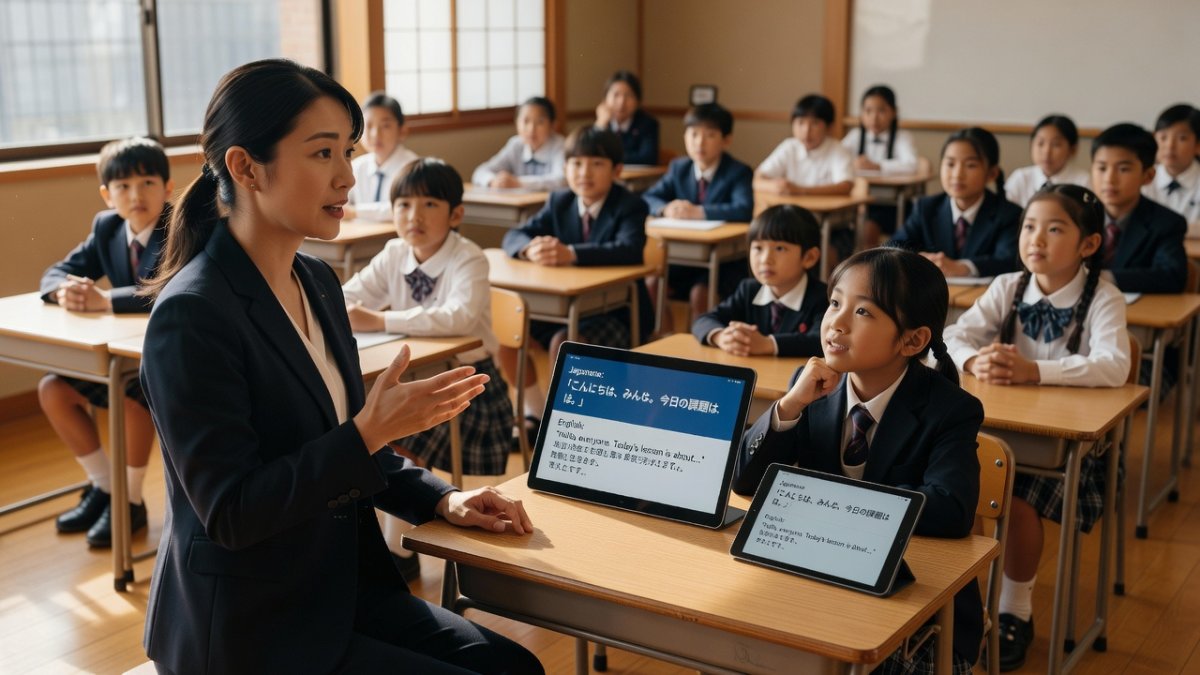
The NHK WORLD-JAPAN report details a pilot at a Kyoto elementary school where an AI-powered translation system provides real-time support for children who have not yet mastered Japanese. As overseas enrollment rises, the system converts classroom instruction into students' native languages, enabling participation in lessons and peer interactions. The Kyoto Elementary School Pil
The NHK WORLD-JAPAN report details a pilot at a Kyoto elementary school where an AI-powered translation system provides real-time support for children who have not yet mastered Japanese. As overseas enrollment rises, the system converts classroom instruction into students' native languages, enabling participation in lessons and peer interactions.
The Kyoto Elementary School Pilot
The initiative addresses practical classroom needs. Teachers deliver standard lessons while the AI system processes spoken Japanese and displays translated text or audio on screens. Students follow content without constant individual assistance, reducing isolation during group activities.
School staff note improved engagement among participants. The approach focuses on immediate comprehension rather than replacing Japanese language instruction, which continues alongside the tool.
Policy Framework Supporting AI in Education
Japan's Ministry of Education, Culture, Sports, Science and Technology (MEXT) has examined digital tools for language support amid rising foreign resident numbers. The 2025 AI Basic Plan outlines expectations for AI to reshape operations in education and other sectors, though specific school-level rollout timelines remain under phased evaluation.
Society 5.0 promotes integration of AI across public services, including classrooms. The Digital Agency encourages adoption of such technologies in government-linked institutions, with education listed among priority areas. These frameworks provide directional support without mandating immediate nationwide deployment.
Technological Advancements in AI Translation
Recent progress in Japanese-language AI models has improved accuracy for educational contexts. Systems developed by firms including DeepL and domestic providers now handle classroom vocabulary and sentence structures more reliably than earlier versions.
The Kyoto pilot uses these capabilities for live conversion during instruction. Limitations persist with specialized terms or rapid speech, requiring teacher oversight to maintain lesson flow. Developers continue refining models based on feedback from such trials.
Regional Approaches in the Asia-Pacific
Other Asia-Pacific education systems face similar enrollment growth from international families. Singapore incorporates AI-assisted language tools in select primary programs to bridge gaps for non-native speakers. Australia has tested translation applications in schools with high migrant populations, focusing on integration during core subjects.
These efforts share the goal of maintaining academic progress while students acquire the host language. Japan's approach emphasizes alignment with national digital strategies, differing from more decentralized pilots observed elsewhere in the region.
Implications for Japanese Society and Economy
Increased foreign enrollment reflects broader demographic shifts and labor needs. Effective language support tools could ease transitions for families, supporting workforce participation by parents and long-term retention of skilled residents.
Corporate Japan and local governments monitor these developments for potential scalability. METI's semiconductor and Green Transformation strategies indirectly benefit from a more inclusive education environment that prepares diverse talent pools for future industries.
What to Watch For in Coming Years
Further data from the Kyoto trial will inform decisions on expansion. MEXT continues to assess integration standards, while the Digital Agency tracks public-sector AI performance metrics.
Observers should note any updates to the AI Basic Plan that specify education targets. Cross-border collaboration on translation standards may also emerge as regional education ministries compare results from their respective programs.
By Kenji Tanaka, Staff Writer
This article was produced with AI-assisted research and editorial support. Reporting is based on sources cited in the article.
What's Your Reaction?
 Like
0
Like
0
 Dislike
0
Dislike
0
 Love
0
Love
0
 Funny
0
Funny
0
 Wow
0
Wow
0
 Sad
0
Sad
0
 Angry
0
Angry
0

Japan Correspondent at Global1.News. Tokyo-based voice covering Japanese politics, technology, economy, and culture. Tracks the intersection of tradition and innovation in one of the world's most dynamic societies.













Comments (0)