
South Korea's Critical Mineral Supply Chains: Selective Diversification Amid Enduring Chinese Dominance
The Structural Vulnerabilities in Korea's Export Economy South Korea's export performance in key technology sectors continues to demonstrate remarkable resilience, yet this strength rests upon a foundation of critical mineral imports that remains heavily concentrated. Trade statistics from the Korea Mineral Import Statistics system, known as KOMIS, covering the full year 2025 r
The Structural Vulnerabilities in Korea's Export Economy
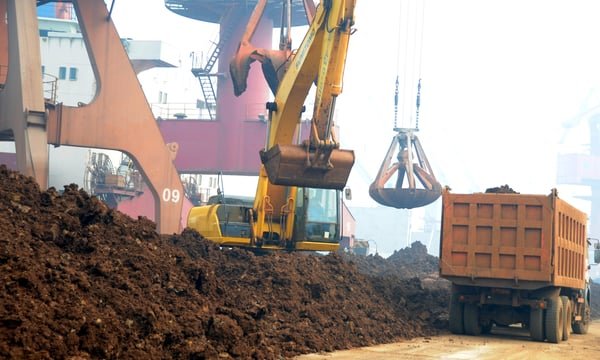
South Korea's export performance in key technology sectors continues to demonstrate remarkable resilience, yet this strength rests upon a foundation of critical mineral imports that remains heavily concentrated. Trade statistics from the Korea Mineral Import Statistics system, known as KOMIS, covering the full year 2025 reveal a pattern of uneven progress in supply chain resilience. The data underscore how industries such as semiconductors, electric vehicle batteries, and advanced displays depend on a narrow range of inputs, with China retaining dominant positions in several categories despite targeted diversification efforts.
Net import reliance on critical minerals exceeds 99.7 percent according to analysis from the Korea Institute of Geoscience and Mineral Resources. This extreme dependence creates strategic exposure for an economy where semiconductors alone surpassed $30 billion in monthly exports during early 2026. The upstream concentration in mineral sourcing therefore represents not merely a logistical concern but a core element of national economic security.
Evidence of Diversification Following Chinese Export Controls
Analysis of import shares across six strategically vital minerals shows clear bifurcation. For gallium and germanium, shares from China declined sharply after Beijing announced export controls in July 2023. Gallium imports from China fell from 73.9 percent in 2023 to 26.0 percent in 2025, with Germany, the United States, and Japan each contributing roughly equal shares to fill the gap. Germanium sourcing shifted even more decisively, with Canada accounting for 70.7 percent of South Korean imports by 2025 and China reduced to 14.8 percent from a prior level of 59.3 percent.
Similar movement occurred with antimony following Chinese export controls imposed in September 2024. China's share of South Korean antimony imports dropped from 69.0 percent in 2024 to 27.2 percent in 2025, while Thailand emerged as the leading supplier at 48.6 percent. These cases illustrate how external policy shocks from China can accelerate sourcing adjustments when alternative processing capacity exists in allied or partner nations.
Deepening Concentration Where Controls Have Not Been Applied
In contrast, three minerals exhibit the opposite trend of increasing reliance on Chinese sources. Indium imports reached 94.2 percent from China in 2025, graphite stood at 70.8 percent, and tungsten at 51.3 percent. None of these minerals have been subject to recent Chinese export controls, and South Korean diversification efforts have produced minimal shifts in sourcing patterns. The absence of external pressure appears to have reduced incentives for rapid supply chain reconfiguration in these categories.
This divergence highlights how market signals alone have proven insufficient to drive meaningful change. Without regulatory or geopolitical triggers comparable to the 2023 gallium and germanium measures, entrenched supplier relationships persist even when they concentrate risk within a single country.
Strategic Significance for Korean Technology Sectors
The minerals in question underpin core strengths of the Korean economy, including flat-panel displays, infrared optics, fiber optic infrastructure, and radar systems. Indium's role in transparent conductive layers for touchscreens and advanced displays makes its 94.2 percent Chinese import share particularly consequential for firms operating at the forefront of consumer electronics. Gallium's importance for GaN semiconductors and defense-related radar applications further ties mineral security to both commercial competitiveness and national defense capabilities.
These dependencies intersect with Korea's broader industrial policy priorities, where maintaining technological leadership requires uninterrupted access to specialized inputs. The data suggest that diversification success remains contingent rather than structural, tied to specific external events rather than comprehensive upstream strategy.
The Limits of Apparent Supply Chain Shifts
Even where diversification statistics appear favorable, deeper examination reveals potential limitations. In the case of antimony, the rise of Thailand as a supplier at 48.6 percent does not necessarily indicate fully independent upstream sourcing. China remains the world's dominant producer and refiner of antimony while functioning as a net importer of concentrates from countries including Thailand, Myanmar, and Russia. South Korean customs records showing increased Thai-origin shipments may therefore reflect rerouted material rather than genuine expansion of non-Chinese production capacity.
This distinction carries implications for assessing true supply security. A final shipment originating outside China does not automatically reduce overall exposure if processing and refining stages remain concentrated within Chinese territory. Policymakers must therefore examine the full value chain rather than relying solely on country-of-origin statistics.
Policy Implications for Long-Term Resilience
The 2025 KOMIS data provide a clear empirical basis for prioritizing future diversification initiatives. Minerals that have not yet faced Chinese export controls, such as indium, graphite, and tungsten, warrant particular attention given their current concentration levels and strategic applications. Sustained progress will likely require proactive measures that do not depend on external shocks to stimulate change.
Regional dynamics further complicate these efforts. Korea's geographic position and historical trade patterns with Northeast Asian partners create both opportunities and constraints in developing alternative supply routes. The experience with gallium and germanium demonstrates that partnerships with established processing nations can yield results, yet replicating such outcomes across additional minerals demands coordinated investment and diplomatic engagement over extended periods.
By Prof. David Park, Staff WriterThis article was produced with AI-assisted research and editorial support. Reporting is based on sources cited in the article.
What's Your Reaction?
 Like
0
Like
0
 Dislike
0
Dislike
0
 Love
0
Love
0
 Funny
0
Funny
0
 Wow
0
Wow
0
 Sad
0
Sad
0
 Angry
0
Angry
0

East Asia/Technology Correspondent at Global1.News. Seoul-based voice covering Korean politics, technology, business, and culture. Analyzes how technology and geopolitics intersect across East Asia.













Comments (0)